1963 Volvo PV544 + Dethleffs Beduin – Klassikwelt Bodensee 2017
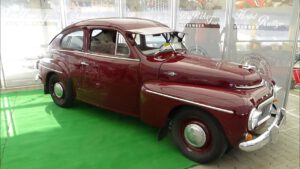
This 1963 Volvo PV544 is displayed with a 1963 Dethleffs Beduin caravan. It symbolizes a distinctly Central European vision of postwar mobility: compact, reliable and designed for long journeys rather than glamour. The combination of the Volvo PV544 and the Dethleffs Beduin also reflect a changing travel culture of the early 1960s. More families were discovering independent road travel, and this Swedish-German pairing connected robust Scandinavian engineering with the rapidly expanding caravan industry of southern Germany.
Technical Details
The 1963 Volvo PV544 was powered by Volvo’s B18 inline four-cylinder engine, an overhead-valve unit that became known for reliability and longevity. Depending on specification, the 1.8-litre engine produced around 75 to 90 horsepower and was paired with a four-speed manual gearbox. The Volvo PV544 used rear-wheel drive, independent front suspension with coil springs and a live rear axle. Disc brakes became available on later versions, while Volvo’s emphasis on safety included three-point seatbelts, which the company had introduced as standard equipment only a few years earlier. The car’s strong unibody construction and relatively high torque output made it suitable for towing small caravans such as the Beduin.
The 1963 Dethleffs Beduin caravan was comparatively lightweight for its time and intended for middle-class touring holidays. It featured an overrun braking system, compact dimensions and an aerodynamic rounded body that reduced drag behind smaller towing vehicles. Inside, the Beduin typically included a folding seating area that converted into a bed, storage compartments, a small kitchenette with gas cooker and large windows that brought considerable daylight into the interior. Gas heating systems supplied by Truma were common, helping extend the camping season into colder months. Even by modern standards, the Beduin remained a practical travel trailer because of its manageable weight and straightforward construction.
- Manufacturer: Volvo / Dethleffs
- Model name: Volvo PV544 with Dethleffs Beduin caravan
- Year of manufacturing: 1963
Design
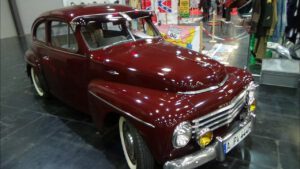
The Volvo PV544 retained styling themes that reached back to the 1940s. Its curved roofline, separated front fenders and rounded rear section gave it the appearance of an earlier generation automobile at a time when competitors were becoming increasingly angular. Yet the design aged surprisingly well. The high roof created generous headroom, while the upright windshield and narrow pillars provided good visibility. Chrome trim remained restrained compared with many contemporary American cars, reinforcing Volvo’s practical image. Inside, the dashboard was simple and functional, with large instruments and durable materials intended for long-term use rather than visual drama.
The Dethleffs Beduin’s rounded silhouette echoed the softer forms common in postwar industrial design. Small polished trim pieces, compact wheels and wide side windows created a welcoming appearance rather than a luxurious one. Interiors in early Beduin caravans often used light wood veneers, patterned fabrics and compact multifunctional furniture to maximize the limited space. The atmosphere was domestic and carefully organized, reflecting the growing optimism surrounding family tourism during the Wirtschaftswunder years in West Germany.
Historical Significance
By 1963, the Volvo PV544 represented the final phase of a model line that had helped establish Volvo’s international reputation. Although newer Volvo models such as the Amazon were already available, the Volvo PV544 remained popular because buyers trusted its durability, particularly in rural regions and export markets with rough roads. The B18 engine introduced important mechanical improvements and became one of Volvo’s most respected powerplants. The Volvo PV544 also earned attention in rally competition, where drivers such as Tom Trana achieved success in demanding Scandinavian events. These victories reinforced Volvo’s image as a builder of dependable and mechanically tough vehicles.
The Dethleffs Beduin emerged during a period when caravan tourism expanded rapidly across Europe. Dethleffs itself had pioneered caravan production in Germany decades earlier, and by the early 1960s the company benefited from rising automobile ownership and improved highway infrastructure. The Beduin appealed to customers seeking affordable travel independence without requiring large American-style towing vehicles. In many ways, the caravan represented the democratization of tourism. Families who previously relied on hotels or rail transport could now travel at their own pace across Germany, Austria, Switzerland or the Mediterranean coast.
Together, the Volvo PV544 and Beduin combination illustrated a broader transformation in European leisure culture. Compact yet capable cars increasingly served as tow vehicles for lightweight caravans, enabling practical long-distance touring without excessive fuel consumption or mechanical complexity.
Quirks and pop culture
The Volvo PV544 became widely known by the nickname “Buckelvolvo” in German-speaking countries because of its rounded rear profile. Enthusiasts appreciated not only its reliability but also its unusual ability to combine toughness with a surprisingly comfortable driving experience. In Scandinavian rally history, the model developed an almost legendary reputation for endurance on gravel roads and winter stages.
The Dethleffs Beduin gained attention decades later among vintage caravan enthusiasts because surviving examples often retained original camping accessories from the 1960s. Owners occasionally discovered preserved cookware, awnings, travel documents and furniture still stored inside caravans after decades in storage. This contributed to the Beduin’s reputation as a rolling time capsule of postwar family tourism.
Display and preservation
This car was filmed at the Klassikwelt Bodensee 2017. The show demonstrated how dynamic classic vehicle preservation can be when brought to life beyond static displays. Attracting nearly 39,000 visitors from 17 countries, the event combined exhibitions across ten halls with live demonstrations on land, water, and in the air. Historic aircraft, racing cars, and motorcycles were not only displayed but actively showcased, reinforcing their mechanical vitality. Special exhibitions and club presentations added depth, while around 600 privately owned classics integrated visitors into the display itself. This immersive format highlighted preservation as an experience—where history is not only protected, but continuously lived and shared.
Conclusion
The 1963 Volvo PV544 offered dependable engineering, mechanical simplicity and enough strength for long-distance towing, while the Dethleffs Beduin provided compact comfort for a generation discovering independent travel. Together they represented an era when durability and practicality mattered more than speed or luxury. More than sixty years later, the pairing still captures attention because it reflects a slower, deliberate style of motoring and tourism that has largely disappeared from modern roads.