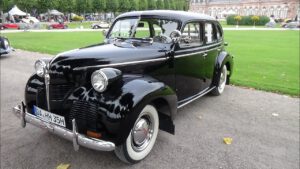
1966 Volvo Amazon – Classic Expo Salzburg 2015
By 1966, the Volvo Amazon had already become a familiar sight across Scandinavia, yet the car’s importance extended far beyond Sweden. It combined clean, restrained styling with engineering that tolerated rough roads, long winters and extremely high mileages. While many mid-sized family sedans of the era were designed primarily around comfort or appearance, the Volvo Amazon quietly developed a reputation for structural strength and everyday dependability.
The 1966 model year also arrived during an important phase in Volvo’s development. Safety innovations, export growth and motorsport visibility were increasingly shaping the company’s identity, and the Volvo Amazon stood at the center of that transformation.
Technical Details
The 1966 Volvo Amazon was offered with several versions of Volvo’s B18 inline four-cylinder engine, a durable overhead-valve powerplant that had become one of the company’s defining mechanical components. Depending on specification and market, outputs ranged from approximately 75 to over 100 horsepower. Single-carburetor and twin-carburetor versions were available, particularly in the sport-oriented 122S models. The engine was paired with a four-speed manual gearbox, while overdrive systems were offered on certain variants to improve long-distance cruising efficiency.
Rear-wheel drive remained standard, with power delivered through a robust live rear axle. The front suspension used unequal-length control arms and coil springs, while the rear relied on leaf springs engineered for durability and load carrying. By 1966, front disc brakes were becoming increasingly common on higher-specification Amazons, improving braking consistency under demanding conditions.
Volvo engineers emphasized mechanical longevity throughout the car. Strong steel construction, corrosion-resistant treatments and conservative engine tuning contributed to the Volvo Amazon’s reputation for reliability. Many examples accumulated exceptionally high mileages with relatively routine maintenance, particularly in Nordic countries where the cars were used year-round in severe weather.
- Manufacturer: Volvo
- Model name: Volvo Amazon
- Year of manufacturing: 1966
Design
The Volvo Amazon balanced elegance with restraint. Its bodywork featured subtle curves and carefully proportioned surfaces rather than dramatic fins or aggressive ornamentation. The front fascia used a simple rectangular grille framed by round headlights, while restrained chrome trim highlighted the car’s clean lines without overwhelming them.
The side profile appeared particularly balanced. A relatively upright greenhouse improved visibility and interior space, while the gently curved roofline softened the otherwise practical proportions. Compared with some competitors of the period, the Volvo Amazon looked conservative, yet that understatement became part of its appeal. The car projected durability and calm confidence rather than fashion-driven excess.
Inside, the design focused on clarity and usability. Large instruments, clearly marked controls and durable materials reflected Volvo’s functional Scandinavian approach. Seats were designed for long-distance comfort, an important consideration in countries where journeys between towns could involve extended driving in difficult weather conditions. Interior ventilation and heating systems were also highly regarded, especially in northern Europe.
Two-door, four-door and station wagon body styles were available, allowing the Volvo Amazon to serve multiple roles ranging from family transportation to commercial use. The estate version in particular became popular among professionals and rural drivers who required additional cargo space without moving to a larger vehicle.
Historical Significance
The Volvo Amazon, introduced in the mid-1950s, became one of the company’s defining postwar models. By 1966, it had evolved into a mature and highly refined platform that supported Volvo’s expanding export ambitions. The model achieved strong sales not only in Scandinavia but also in markets such as the United Kingdom, the Netherlands and North America.
Safety development formed a central part of the Volvo Amazon’s historical importance. Volvo engineer Nils Bohlin’s three-point seatbelt design had been introduced earlier in the model line, and by the 1960s Volvo was actively promoting safety as a core engineering principle rather than a niche feature. The Volvo Amazon therefore helped establish Volvo’s global reputation for occupant protection long before the brand became universally associated with automotive safety.
The model also earned respect in international rally competition. Drivers appreciated the Volvo Amazon’s durable chassis, reliable drivetrain and predictable handling on gravel and snow-covered roads. Swedish rally successes during the 1960s strengthened the connection between Volvo and endurance-based motorsport rather than pure speed.
Production methods associated with the Amazon additionally reflected Sweden’s rapidly modernizing industrial economy during the postwar decades. The model became both a domestic success and an export symbol of Scandinavian engineering reliability.
Quirks and pop culture
In Sweden, the Volvo Amazon became closely tied to everyday life during the 1960s and 1970s. Families used the cars for commuting, long-distance summer travel and rural transportation, while tradespeople valued their ability to carry heavy loads despite relatively compact dimensions.
Interestingly, the car was officially marketed as the Volvo Amazon only in certain regions because of naming disputes with a German motorcycle manufacturer. In some export markets, Volvo instead used numerical designations such as 121 and 122S. Despite this, the Volvo Amazon name remained widely associated with the model among enthusiasts and collectors.
The Volvo Amazon later developed a strong following within historic rally communities. Modified examples continue to compete in vintage endurance events across Scandinavia and continental Europe. Their combination of mechanical simplicity and strong construction makes them well suited to historic motorsport decades after production ended.
The estate versions have also become especially collectible in recent years. Their practical proportions and unmistakably Scandinavian appearance fit well with contemporary interest in mid-century industrial design and analog-era touring culture.
Display and preservation
This car was filmed at the Classic Expo Salzburg 2015, Austria’s leading platform for classic vehicle preservation and presentation. With over 250 exhibitors from eleven nations across 40,000 square meters, the event combined commercial exchange with historical appreciation. Beyond the extensive parts market and private sales hall, special displays—such as historic emergency vehicles and a dedicated Jaguar anniversary exhibition—added thematic depth. Live elements like the Salz & Öl Rallye brought motion into the experience, echoing past eras. The integration of auctions, exhibitions, and active participation illustrated how preservation thrives through both display and continued engagement.
Conclusion
The 1966 Volvo Amazon succeeded because it avoided unnecessary complexity while excelling in the areas that mattered most to everyday drivers: durability, safety, visibility and mechanical reliability. Its restrained styling aged gracefully, while its robust engineering allowed countless examples to remain operational long after many contemporaries disappeared from the roads.
More than simply a successful family sedan, the Amazon helped define Volvo’s long-term identity. It connected Scandinavian design principles with practical engineering solutions and introduced safety innovations that would influence the wider automotive industry for decades.