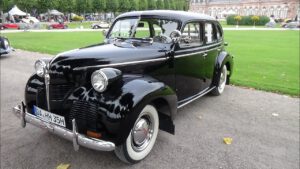
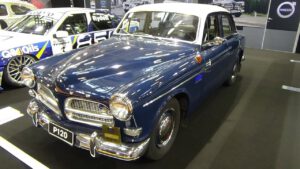
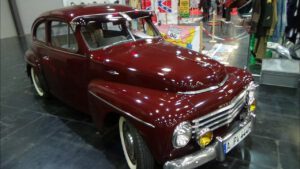
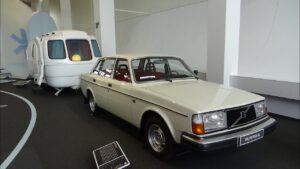
1953 Volvo PV444 – Auto Show Veterama 2014
In 1953, the Volvo PV444 was no longer a curiosity from Sweden’s small automotive industry. It had become an established presence on Nordic roads and one of the clearest signs that private motoring was expanding beyond wealthy buyers. Compact and mechanically conservative, the car nevertheless introduced a level of structural solidity that distinguished it from many European competitors of the early postwar period.
The Volvo PV444 also arrived at a moment when automotive tastes were changing rapidly. American styling trends were influencing manufacturers across Europe, yet fuel prices, road conditions and household incomes still demanded smaller, more economical cars. Volvo’s answer was a sedan that blended transatlantic visual inspiration with Scandinavian practicality.
Technical Details
The 1953 Volvo PV444 was equipped with Volvo’s B4B inline four-cylinder engine, a 1.4-litre overhead-valve unit producing approximately 44 horsepower. Though modest in output, the engine was designed for durability and dependable cold-weather operation. Power was delivered to the rear wheels through a three-speed manual gearbox, typically operated via a column-mounted shifter. The drivetrain emphasized smooth torque delivery and mechanical simplicity rather than sporting performance.
The car used unitary body construction, an engineering approach that provided greater rigidity and reduced weight compared with older body-on-frame designs. Independent front suspension with coil springs improved ride comfort and steering precision, while the rear axle used a leaf-spring setup intended to tolerate rough rural roads and heavy daily use. Hydraulic drum brakes were fitted on all four wheels.
Volvo engineers paid particular attention to durability in Nordic conditions. Heating systems were effective for the era, electrical systems were protected against moisture and the car’s ground clearance suited snowy or uneven roads. Fuel economy also became an important selling point as European consumers sought affordable long-distance transportation during the economic recovery years following the war.
- Manufacturer: Volvo
- Model name: Volvo PV444
- Year of manufacturing: 1953
Design
The Volvo PV444 reflected strong American influences while remaining distinctly compact and European in scale. The rounded roofline, integrated fenders and flowing rear section echoed styling themes that had appeared in the United States during the late 1930s and 1940s. Yet the Volvo translated those forms into a smaller and more restrained package suited to Scandinavian roads and economic realities.
The front fascia featured a modest chrome grille framed by rounded headlights and simple bumper elements. Decorative trim existed, but it remained carefully controlled compared with many larger American cars of the period. The result was balanced rather than extravagant.
One of the car’s most recognizable features was its curved rear profile, which later contributed to the nickname “Buckelvolvo” in German-speaking countries. The high roof improved interior headroom, while the upright glass areas provided strong outward visibility. Thin roof pillars also enhanced the sense of openness inside the cabin.
The interior focused heavily on practicality. Large instruments were easy to read in poor weather, and switchgear remained uncomplicated. Upholstery materials emphasized durability, while seating positions were designed to support long-distance driving on uneven roads. Even luggage space was considered carefully, reflecting the growing importance of family touring during the early 1950s.
Historical Significance
The Volvo PV444 emerged from a difficult historical context. Volvo had unveiled the model during the final years of the Second World War, but material shortages delayed widespread production. By 1953, however, the car had become central to Volvo’s commercial success and export ambitions.
The model played a crucial role in introducing Swedish automotive engineering to international markets. Particularly in the United States, the Volvo PV444 offered something unusual: a compact imported sedan with solid construction and practical operating costs. At a time when most American cars were large and fuel-hungry, the Volvo appealed to buyers looking for efficiency and reliability.
The Volvo PV444 also marked an important transition within European automotive design. Many prewar engineering concepts were gradually disappearing, replaced by stronger body structures, improved suspension systems and more modern interior layouts. Volvo adopted these developments cautiously but effectively, creating a car that felt durable rather than experimental.
The model additionally helped establish Volvo’s long-term emphasis on safety and engineering integrity. While later Volvos became famous for formal safety innovations, the Volvo PV444 already reflected a company culture that prioritized structural strength and predictable road manners over styling excess or high performance.
Quirks and pop culture
The Volvo PV444 became closely associated with Sweden’s expanding middle class during the 1950s. Families used the cars for commuting, summer holidays and rural transportation, while small business owners appreciated their low running costs and dependable mechanical systems.
Its nickname, “Buckelvolvo,” became widely recognized because of the car’s distinctive rounded rear section. The profile remained instantly identifiable decades later, especially among classic car enthusiasts across Scandinavia and Germany.
The model also earned respect among amateur rally drivers. Gravel roads and winter conditions suited the car’s durable chassis and stable handling characteristics. Though not especially powerful, the Volvo PV444’s toughness made it competitive in endurance-oriented events where mechanical reliability mattered more than outright speed.
In later decades, surviving Volvo PV444s became popular within historic car communities because they retained a strong visual connection to postwar European motoring culture. Restorations often preserve period accessories such as auxiliary lamps, roof racks and vintage travel equipment, reinforcing the car’s connection to everyday life in the 1950s.
Display and preservation
This car was displayed at the Veterama 2014 Mannheim, held from October 10 to 12. The event attracted around 45,000 visitors to its 260,000 square meter grounds. Nearly 4,000 exhibitors from around the world presented their 1,000 vehicles—many from the emerging youngtimer scene. A new highlight was the Show Arena, where pre-1975 vehicles could be presented to the public. From early automotive relics to complete classics, the diversity was remarkable.
Conclusion
The 1953 Volvo PV444 succeeded because it responded directly to the realities of postwar Europe. It combined economical operation, durable engineering and practical design in a form that remained visually distinctive without becoming extravagant. While other manufacturers pursued rapid styling changes, Volvo focused on structural quality and mechanical dependability.
That approach proved highly effective. The Volvo PV444 not only strengthened Volvo’s position in Sweden but also introduced the company to international buyers searching for reliable and efficient transportation. More than seventy years later, the car remains an important example of early Scandinavian automotive engineering shaped by practicality, resilience and long-term usability.