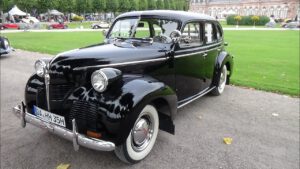
1912 Ford Model T Depot Hack – Retro Classics Stuttgart 2025
The 1912 Ford Model T Depot Hack emerged from a period when railways still dominated long-distance travel and the automobile was beginning to reshape local mobility. Built to transport passengers and luggage between train stations and hotels, the Depot Hack combined the rugged simplicity of the Ford Model T with a practical wooden-bodied passenger compartment. In many ways, it foreshadowed the modern station wagon decades before that term became common.
Technical Details
The 1912 Ford Model T Depot Hack shared its mechanical foundation with the broader Ford Model T range. It used a front-mounted inline four-cylinder gasoline engine with a displacement of 2.9 liters (177 cubic inches), producing approximately 20 horsepower. Power was transmitted to the rear wheels through Ford’s distinctive two-speed planetary transmission, controlled via pedals rather than a conventional gear lever. This unusual transmission layout became one of the defining technical characteristics of the Model T and contributed to its reputation for mechanical simplicity.
The chassis relied on a front-engine, rear-wheel-drive configuration and used transverse semi-elliptical leaf springs at both axles, allowing generous wheel travel on rough early-20th-century roads. The Model T’s lightweight vanadium steel construction contributed to durability while keeping manufacturing costs manageable. Braking remained rudimentary by modern standards, with transmission-mounted braking supplemented by rear-wheel parking brakes. Like other 1912 Model Ts, the Depot Hack typically rode on wooden artillery wheels.
Unlike factory-produced passenger variants, Depot Hacks were generally created by independent coachbuilders who purchased rolling Ford chassis and added specialized wooden bodies. These conversions emphasized seating capacity and luggage space rather than luxury. The practical nature of the design made the Depot Hack especially suitable for hotels, railway depots, and tourist transport operations.
- Manufacturer: Ford Motor Company
- Model name: Ford Model T Depot Hack
- Year of manufacturing: 1912
Design
The design of the 1912 Ford Model T Depot Hack differed substantially from the more familiar touring or runabout versions of the Model T. Its most distinctive feature was the wood-bodied passenger compartment mounted behind the driver’s area. These wooden structures often used varnished timber panels combined with exposed framing, giving the vehicle a handcrafted appearance that contrasted with Ford’s increasingly industrialized production methods.
Large side openings and simple bench seating prioritized accessibility and passenger capacity. The elevated roofline allowed travelers wearing hats and heavy coats to enter comfortably, while the rear section was designed to accommodate luggage trunks and bags arriving from railway stations. Many Depot Hacks featured open sides with removable canvas curtains for weather protection, reinforcing their utilitarian character.
At the front, the vehicle retained the familiar 1912 Ford Model T styling cues: upright brass radiator shell, exposed round headlamps, narrow hood, and delicately curved fenders finished in black. In 1912, Ford still offered dark blue body finishes alongside black fenders before black paint became fully standardized in later years. The visual result was practical rather than decorative, yet the combination of brass fittings and varnished wood gave the Depot Hack a warm and approachable appearance typical of early commercial passenger vehicles.
Historical Significance
The 1912 Ford Model T Depot Hack illustrates how rapidly the automobile adapted to new transportation needs in the early twentieth century. Rail travel remained dominant for long-distance journeys, but travelers still required transportation between train stations, hotels, and city centers. The Depot Hack filled this role efficiently, functioning as an early form of shared taxi or shuttle vehicle. The term itself derived from “hackney carriage,” later shortened to “hack.”
Its existence also demonstrates the flexibility of the Ford Model T platform. Henry Ford’s emphasis on standardized mechanical components allowed independent coachbuilders to create a wide range of specialized bodies on the same chassis. The Depot Hack became one of the earliest practical ancestors of the station wagon, or “estate wagon” in British terminology.
The broader significance of the Model T cannot be separated from Ford’s revolutionary manufacturing methods. By simplifying production and introducing assembly-line manufacturing, Ford dramatically lowered vehicle costs and expanded automobile ownership to middle-class buyers. The Model T changed patterns of mobility not only for private owners but also for commercial operators using variants such as the Depot Hack.
Quirks and Pop Culture
Among early automotive body styles, the Depot Hack developed a distinctive cultural identity because of its connection to hotels, tourism, and railway travel. Its wood-bodied construction later inspired the “woody wagon” aesthetic that became especially popular in American station wagons of the 1930s and 1940s. The Depot Hack therefore occupies an important transitional place between horse-drawn transport and the family estate car.
Another curiosity lies in the fact that Ford itself generally did not manufacture Depot Hack bodies directly. Independent firms created them using Ford chassis, resulting in considerable variation between individual vehicles. Some carried additional luggage racks, while others prioritized passenger seating. This coachbuilt individuality means surviving examples rarely look completely identical.
Because the Model T platform was so widespread and mechanically simple, Depot Hacks also earned a reputation for durability in rural tourism and resort operations. Their association with railway depots, grand hotels, and early American tourism gives them a nostalgic place in automotive history that extends beyond purely technical significance.
Display and preservation
This car was filmed at the Retro Classics Stuttgart 2025. Across seven halls, thousands of historic vehicles illustrated more than a century of mobility, complemented by an expanded open-air classic parking area showcasing over 500 privately owned cars. Between 19th and 22nd February 2025, special exhibitions such as “Colors of Racing” and “JDM Tuning & Motorsport” highlighted both tradition and modern enthusiast culture. Live restoration workshops and a bustling parts market emphasized the craftsmanship and dedication required to maintain these machines, while auctions and active club participation ensured that preservation remains a living, evolving practice.
Conclusion
The 1912 Ford Model T Depot Hack represents a practical but historically important branch of the Model T family. Mechanically simple and durable, it combined Ford’s standardized engineering with highly specialized coachbuilt bodies designed for passenger and luggage transport. Its wooden construction and utilitarian layout anticipated the station wagon concept decades before it became mainstream. Historically, the Depot Hack reflects the transitional era when railways and automobiles operated side by side, reshaping how people moved between cities, hotels, and growing tourist destinations. As part of the wider Model T story, it remains a revealing example of how one adaptable platform could influence both commercial transportation and automotive design history.