1958 Peugeot 203 – Oldtimer-Meeting Baden-Baden 2019
By the late 1950s, the Peugeot 203 had already established itself as a cornerstone of the brand’s postwar recovery. Introduced shortly after World War II, it remained in production for over a decade, a sign of both its durability and its continued relevance. The 1958 version represents one of the final stages of this long-running model, reflecting incremental improvements rather than major redesigns.
Technical Details
The Peugeot 203 was powered by a front-mounted inline four-cylinder engine with a displacement of 1,290 cc. The engine featured overhead valves, a relatively modern configuration for its introduction in the late 1940s, and produced approximately 42 horsepower. Power was transmitted to the rear wheels via a four-speed manual gearbox, with the fourth gear acting as an overdrive in many versions.
The car followed a conventional front-engine, rear-wheel-drive layout. Its monocoque body construction was notable for the period, contributing to improved rigidity and weight distribution compared to earlier body-on-frame designs. The suspension system consisted of independent front suspension and a rear axle supported by coil springs, offering a balance between comfort and stability.
Braking was handled by drum brakes on all four wheels, consistent with the technology of the time. The technical philosophy behind the Peugeot 203 emphasized reliability, efficiency, and ease of maintenance, qualities that contributed significantly to its long production run.
- Manufacturer: Peugeot
- Model name: Peugeot 203
- Year of manufacturing: 1958
Design
The design of the Peugeot 203 reflects the transition from pre-war automotive styling to more modern postwar forms. Its body was characterized by smooth, rounded lines and integrated fenders, moving away from the separate wing structures of earlier cars.
The front featured a prominent grille with vertical elements, flanked by rounded headlamps that blended into the front wings. The overall shape was cohesive and streamlined, though still relatively upright compared to later designs. Chrome detailing was used sparingly, emphasizing key features without overwhelming the overall appearance.
The Peugeot 203 was offered in several body styles, including saloon, estate (Commerciale), coupé, and cabriolet, demonstrating the flexibility of its platform. Inside, the cabin design was straightforward and functional, with clear instrumentation and a focus on durability. Materials and finishes reflected the car’s role as a practical family vehicle rather than a luxury product.
Historical Significance
The Peugeot 203, introduced in 1948, was the brand’s first completely new model after World War II and played a crucial role in re-establishing Peugeot’s presence in the automotive market. At a time when resources were limited and demand for reliable transportation was high, the Peugeot 203 provided a dependable and modern solution.
It was also Peugeot’s first monocoque car, marking a significant step forward in construction methods. Over its production run, more than 680,000 units were built, making it one of the company’s most successful models up to that point.
By 1958, the Peugeot 203 was nearing the end of its lifecycle, gradually being replaced by the more modern Peugeot 403. Nevertheless, it remained in production due to continued demand, particularly from customers who valued its proven reliability. The model’s long lifespan illustrates how incremental development could sustain a car’s competitiveness over many years.
Quirks and Pop Culture
The Peugeot 203 became closely associated with everyday life in postwar France. It was widely used by families, small businesses, and public services, contributing to its strong presence on the road during the 1950s.
One notable aspect of the Peugeot 203 is its reputation for durability. The car was often used for long-distance travel and in demanding conditions, reinforcing Peugeot’s image as a manufacturer of robust and dependable vehicles. Its relatively modest engine and straightforward engineering made it accessible to a broad audience.
Although not a prominent feature in international pop culture, the Peugeot 203 remains a recognizable symbol of France’s postwar reconstruction period. In classic car circles, it is appreciated for its historical importance and its role in shaping Peugeot’s identity.
Display and preservation
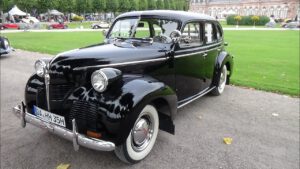
The vehicle was exhibited at the Oldtimer-Meeting Baden-Baden in 2019, one of Germany’s most elegant open-air gatherings for historic automobiles. Held from 12 to 14 July in the Kurpark, the event presented more than 350 exclusive classic cars spanning nine decades of motoring history and attracted over 20,000 visitors. The 2019 edition paid tribute to Bentley’s centenary with a special guest display dedicated to the British marque. As a traditional Concours d’élégance, the meeting concluded with awards for 120 outstanding vehicles, while jazz, fashion elements, and evening garden festivities added to its distinctive atmosphere.
Conclusion
The 1958 Peugeot 203 represents the culmination of a model that played a central role in Peugeot’s postwar success. Technically straightforward yet thoughtfully engineered, it combined a reliable four-cylinder engine with modern construction methods such as a monocoque body. Its design bridged pre-war and postwar aesthetics, while its long production run underscored its practicality and durability. As one of Peugeot’s most important early postwar models, the Peugeot 203 remains a key reference point in the brand’s history.