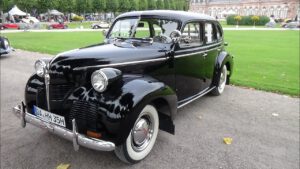
1967 Ford Mustang Convertible – NR Classic Cars Rudersberg 2020
By 1967, the Ford Mustang was no longer an experiment. What had started only a few years earlier as a compact sporty coupe had become one of the defining American cars of the decade. The convertible version stood apart within the range. It combined the Mustang’s increasingly muscular proportions with a softer, more relaxed personality, aimed less at competition and more at visibility, long-distance driving, and leisure-oriented motoring.
Technical Details
The engineering revisions introduced for the 1967 Mustang were substantial compared to earlier models. Ford redesigned the body structure to create additional interior room and, more importantly, to allow installation of larger engines. The revised engine bay could now accommodate big-block V8 powerplants, reflecting the rapidly escalating horsepower competition among American manufacturers during the second half of the 1960s.
The 1967 Ford Mustang Convertible was offered with a broad engine lineup. The entry-level version used Ford’s 200 cubic-inch inline-six, while several V8 configurations targeted buyers seeking stronger performance. Smaller V8s included the 289 cubic-inch engine in different output levels, but the most significant addition was the 390 cubic-inch FE-series V8. This engine produced approximately 320 horsepower and transformed the Mustang into a far more serious high-speed touring machine.
Power was transmitted through either a manual or automatic gearbox, depending on specification. Four-speed manual transmissions were particularly associated with performance-focused models. The suspension layout remained traditional American practice: independent front suspension with coil springs and a rear live axle mounted on leaf springs. While not engineered for delicate handling characteristics, the setup offered durability, simplicity, and predictable road manners suitable for American driving conditions.
The convertible body required additional reinforcements beneath the floor structure because removing the roof reduced torsional rigidity. Ford strengthened the chassis accordingly, helping preserve structural stability while maintaining the open-top configuration. The folding soft top itself was designed to disappear neatly behind the rear seats, preserving the car’s proportions when lowered.
- Manufacturer: Ford Motor Company
- Model name: Ford Mustang Convertible
- Year of manufacturing: 1967
Design
Where the first Mustangs had appeared relatively compact and restrained, the 1967 generation projected much more visual weight. The front end became sharper and more deeply sculpted, with a larger grille opening and more pronounced fender contours. Side body surfaces gained stronger creases, while the rear section appeared wider and lower than before.
The convertible configuration altered the character of these design changes considerably. With the roof folded down, the car’s visual emphasis shifted toward openness and proportion rather than aggression. The uninterrupted upper body line running from the windshield to the rear deck created a clean silhouette that suited the broader dimensions introduced for 1967.
Interior styling also evolved noticeably. The dashboard became more complex and architectural, featuring recessed gauges and a stronger horizontal orientation. Ford expanded the available equipment list significantly, allowing buyers to choose upgraded upholstery, woodgrain trim, center consoles, air conditioning, and decorative packages. These options reflected the Mustang’s growing move away from minimalist affordability toward a more individualized and comfort-oriented market position.
The convertible’s seating position and broad windshield gave occupants a commanding outward view, particularly with the roof lowered. Unlike European sports convertibles of the period, the Mustang emphasized relaxed cruising comfort rather than compact driver-focused minimalism.
Historical Significance
The 1967 Mustang emerged during a turning point for the American automotive industry. When the Mustang had debuted in 1964, it effectively created the pony car segment. By 1967, however, competitors had fully entered the market. Chevrolet introduced the Camaro, Pontiac launched the Firebird, and other manufacturers pursued similar formulas combining sporty styling with relatively affordable pricing.
Ford responded by repositioning the Mustang upward. The 1967 redesign reflected growing customer demand for more power, more comfort, and more visual presence. The enlarged dimensions and introduction of big-block engines signaled the Mustang’s gradual movement toward muscle car territory.
The convertible occupied a distinctive role within this broader transition. While fastback Mustangs increasingly became associated with motorsport, Shelby performance variants, and racing imagery, the convertible represented the Mustang’s social and lifestyle appeal. It broadened the car’s audience beyond younger performance buyers and appealed strongly to drivers interested in touring, recreation, and image.
Production volumes remained extremely high, confirming the Mustang’s continuing commercial importance. The car had become one of Ford’s most valuable products, influencing not only sales figures but also the company’s public identity during the late 1960s.
Quirks and Pop Culture
The 1967 Ford Mustang Convertible became deeply associated with American visual culture during the late 1960s. Convertibles appeared regularly in magazine advertisements, television productions, travel campaigns, and beach-oriented marketing imagery. The open-top Mustang became a recognizable symbol of mobility and personal freedom during a period when the automobile occupied a central place in American daily life.
One interesting aspect of Mustang culture was the extraordinary variety of factory configurations available. Two outwardly similar convertibles could differ dramatically in engine output, interior equipment, transmissions, wheels, and trim packages. This wide degree of customization contributed to the Mustang’s popularity and helped establish one of the strongest enthusiast communities in the automotive world.
The 1967 generation also gained visibility through its relationship with Carroll Shelby’s high-performance Mustangs. Although the standard convertible itself was rarely used in competitive racing, the broader performance reputation of the Mustang family enhanced the appeal of all body styles.
Another enduring cultural feature of the Mustang Convertible lies in its association with Route 66-style American road travel. The combination of V8 power, open-air driving, and relatively comfortable seating made the car well suited to long-distance cruising, reinforcing its role as a lifestyle vehicle rather than simply urban transportation.
Display and preservation
This car was displayed at the NR Classic Car Collection in Rudersberg which reflects a deep passion for American automotive culture. Specialising in muscle and pony cars from the 1960s, 1970s and 1980s, the collection regularly features around 30 to 40 carefully selected classics. Many of the cars are equipped with powerful V8 engines exceeding six litres in displacement and producing well over 400 horsepower. Unlike static museum exhibits, these automobiles are actively maintained, driven and continuously renewed through new acquisitions, ensuring that the exhibition remains dynamic and authentic for enthusiasts and visitors alike.
Conclusion
The 1967 Ford Mustang Convertible represented a significant evolution of Ford’s original pony car formula. Technically, it introduced a revised structure capable of housing larger and more powerful engines while maintaining everyday usability. Its design moved toward broader proportions and more assertive styling, yet the convertible body retained a relaxed and elegant character distinct from the harder-edged fastback variants. Historically, the model reflected the Mustang’s transition from innovative newcomer to established market leader in an increasingly competitive segment. Through its appearances in advertising, entertainment media, and enthusiast culture, the 1967 Mustang Convertible became one of the most recognizable expressions of late-1960s American automotive design and leisure-oriented motoring.