By the mid-1980s, the Renault 5 had already become a familiar presence across European roads, valued less for performance than for practicality and efficiency. The 1986 Renault 5 TL represents this phase clearly, positioned as an accessible, everyday car within a model line that had already achieved long-term commercial success. It reflects how Renault adapted a well-established design to evolving expectations of comfort and usability.
Technical Details
The 1986 Renault 5 TL was part of the second generation of the Renault 5, internally known as the Supercinq. It featured a front-engine, front-wheel-drive layout, marking a clear departure from the rear-engine configurations of earlier Renault small cars. Power came from an inline four-cylinder engine, typically with a displacement of around 1,108 cc. This engine produced approximately 45 horsepower, prioritizing fuel efficiency and reliability over outright performance.
The engine was mounted transversely, contributing to compact packaging and maximizing interior space. Power was delivered through a four-speed manual transmission, with a five-speed gearbox available in some markets and later versions. The TL was designed for everyday driving conditions, offering moderate acceleration and a top speed generally around 135 km/h.
The chassis used a front suspension with MacPherson struts and a rear torsion bar setup, a configuration widely adopted in small cars for its balance between comfort and space efficiency. Braking was handled by disc brakes at the front and drum brakes at the rear. Overall, the technical concept emphasized low running costs, ease of maintenance, and predictable handling.
- Manufacturer: Renault
- Model name: Renault 5 TL
- Year of manufacturing: 1984–1990 (1986 model year)
Design
The design of the Renault 5 TL reflects the evolution from the original 1970s model to a more modern and aerodynamic form. While retaining the recognizable silhouette of the earlier Renault 5, the Supercinq introduced smoother surfaces and more integrated bumpers, aligning with design trends of the 1980s.
The body is compact and practical, with short overhangs and a tall roofline that maximizes interior space. Plastic bumpers, integrated into the body shape, replaced the chrome elements of earlier generations, contributing to both improved safety and a more contemporary appearance. The front end features simple rectangular headlights and a clean grille, emphasizing functionality over stylistic excess.
Inside, the cabin was designed with everyday usability in mind. The layout is straightforward, with clearly arranged controls and improved ergonomics compared to the first-generation model. Materials were modest but durable, reflecting the car’s role as an affordable, mass-market vehicle. The TL trim level offered a balance between basic equipment and additional comfort features, making it suitable for a wide range of users.
Historical Significance
The Renault 5 TL belongs to the second generation of one of Renault’s most successful models. Introduced in the early 1970s, the Renault 5 had already established itself as a benchmark in the European small car segment. By the time the Supercinq was launched in 1984, Renault aimed to modernize the concept while retaining its core strengths.
The transition to a front-wheel-drive, front-engine layout aligned the Renault 5 with contemporary engineering standards and improved packaging efficiency. The TL version represented the core of the range, offering a practical and affordable option that appealed to a broad customer base.
Production of the Supercinq continued until 1990, after which it was succeeded by the Renault Clio. The Renault 5 TL thus represents the final phase of a model line that played a central role in Renault’s postwar success and in the development of the European supermini segment.
Quirks and Pop Culture
Unlike the high-performance Renault 5 Turbo, the TL version is notable דווקא for its ordinariness. It was designed as a practical tool rather than a statement vehicle, which in itself became part of its identity. Across Europe, it served as a first car for many drivers, contributing to its widespread familiarity.
One of its defining characteristics is the way it bridges generations. While visually linked to the original Renault 5, it incorporates more modern engineering and design features, creating a hybrid identity between two automotive eras. This continuity helped maintain brand recognition while allowing Renault to update the model incrementally.
The Renault 5 as a whole has appeared frequently in European media and everyday imagery, symbolizing urban mobility and accessibility during the late 20th century. The TL variant, as one of the most common versions, played a central role in establishing this image.
Display and preservation
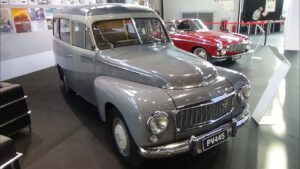
At the Bremen Classic Motor Show 2019, held from 1 to 3 February, the presentation of historic vehicles emphasized both thematic focus and diversity. A central special exhibition explored the evolution of station wagons, a theme echoed by numerous dealers and clubs throughout the halls. Across 46,800 square meters—including a lively vehicle market in the parking structure—677 exhibitors showcased more than a century of mobility, spanning automobiles, motorcycles, and bicycles. With over 41,000 visitors, the event combined curated displays, parts trading, and private sales into a well-balanced platform for preservation and exchange.
Conclusion
The 1986 Renault 5 TL stands as a representative example of a mature and widely adopted small car concept. Its straightforward engineering, practical design, and broad accessibility made it a cornerstone of everyday mobility in the 1980s. While lacking the performance credentials of more specialized variants, it fulfilled its intended role effectively and contributed to the enduring legacy of the Renault 5 as one of Europe’s defining superminis.