1911 De Dion-Bouton CS 1 – Classic-Gala Schwetzingen 2016
At a time when the automobile industry was still highly fragmented, manufacturers like De Dion-Bouton played a defining role in shaping early engineering standards. The 1911 De Dion-Bouton CS 1 reflects this transitional phase, combining established mechanical solutions with the brand’s long-standing reputation for precision and innovation.
Technical Details
The 1911 De Dion-Bouton CS 1 was equipped with a front-mounted internal combustion engine, typically a single- or twin-cylinder unit in earlier years, though by this period the company had largely transitioned to more refined multi-cylinder engines. For the De Dion-Bouton CS 1, contemporary sources indicate a compact, water-cooled engine designed for reliability rather than outright performance, with output aligned to the voiturette class common in France at the time.
Power was transmitted to the rear wheels through a shaft-driven system, a notable advancement over earlier chain-driven layouts. This reflected De Dion-Bouton’s role in popularizing the so-called “De Dion axle,” a rear axle design that separated drive forces from suspension movement, improving ride stability and durability. The chassis followed a steel frame construction with semi-elliptic leaf springs, providing a balance between comfort and structural rigidity.
Braking systems remained mechanically operated and relatively simple, typically acting on the rear wheels. The overall engineering emphasized robustness and ease of operation, aligning with the expectations of early 1910s motorists who required dependable vehicles for increasingly longer journeys.
- Manufacturer: De Dion-Bouton
- Model name: De Dion-Bouton CS 1
- Year of manufacturing: 1911
Design
The design of the De Dion-Bouton CS 1 reflects the gradual shift from carriage-inspired forms to more automotive-specific proportions. The car featured a front-engine layout with a defined bonnet, distinguishing it clearly from earlier rear-engine configurations. This gave the vehicle a more balanced and forward-oriented stance.
Body styles varied, but the De Dion-Bouton CS 1 was commonly presented in open touring or phaeton configurations. The bodywork was lightweight, with exposed fenders, a simple radiator grille, and large spoked wheels. The seating arrangement was practical, often accommodating two to four passengers, with a focus on accessibility rather than enclosure.
Visually, the car retained a certain elegance typical of French voiturettes of the era. Lines were clean and functional, with limited ornamentation. The interior was equally restrained, offering basic seating and controls, reflecting a period when comfort features were secondary to mechanical reliability and usability.
Historical Significance
By 1911, De Dion-Bouton had already established itself as one of the most influential early automobile manufacturers. Founded in the late 19th century, the company became one of the largest car producers in the world around 1900, particularly known for its engines and engineering innovations.
The De Dion-Bouton CS 1 belongs to a later phase in the company’s history, when it was adapting to increasing competition from other European manufacturers. During this period, the industry was moving toward standardized layouts, including front-mounted engines and shaft drive, both of which are reflected in the De Dion-Bouton CS 1. These developments marked a broader shift away from experimental configurations toward more universally accepted automotive designs.
The De Dion axle concept, associated with the company’s earlier innovations, remained influential well beyond this period, appearing in various forms in later automotive engineering. Vehicles like the De Dion-Bouton CS 1 therefore represent both continuity and adaptation, bridging the gap between pioneering experimentation and more mature automotive design.
Quirks and Pop Culture
One of the enduring curiosities surrounding De Dion-Bouton vehicles is the company’s strong association with early automotive engineering breakthroughs. The name itself became synonymous with innovation in the late 19th and early 20th centuries, particularly through its engine designs, which were widely licensed and used by other manufacturers.
The De Dion-Bouton CS 1, while less widely known than earlier De Dion-Bouton models, reflects this legacy. Its relatively compact size and practical layout made it representative of the voiturette category, a segment that played an important role in making automobiles more accessible to a broader audience.
Unlike later mass-produced vehicles, cars like the De Dion-Bouton CS 1 were often built in relatively small numbers and could vary in body style depending on coachbuilders. This individuality has made surviving examples particularly interesting for collectors and historians, as each car can exhibit subtle differences.
Display and preservation
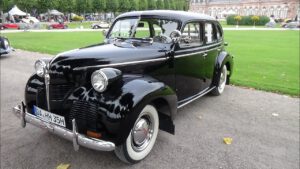
This car was filmed at the Classic-Gala Schwetzingen of 2016. Set against the elegant backdrop of the Schwetzingen Palace Gardens, the show offered an ideal environment for the careful display and preservation of 150 historic automobiles. The baroque setting enhanced both visual presentation and conservation awareness, while period accessories and literature added context. Accompanied by live jazz, the event combined refined atmosphere with a respectful celebration of automotive heritage.
Conclusion
The 1911 De Dion-Bouton CS 1 illustrates a key phase in early automotive development, where experimentation began to give way to standardized engineering solutions. With its front-mounted engine, shaft drive, and refined chassis design, it reflects the broader الاتجاه of the industry toward practical and reliable automobiles. At the same time, it carries forward the innovative spirit of De Dion-Bouton, a company that helped define the technical foundations of early motoring. As such, the De Dion-Bouton CS 1 remains a representative example of the transition from pioneering invention to established automotive design.