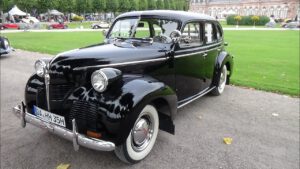
1978 Chevrolet Corvette C3 Targa – NR Classic Cars Rudersberg 2020
The 1978 Chevrolet Corvette C3 Targa arrived during a year of major visibility for the Corvette brand. Chevrolet celebrated twenty-five years of Corvette production, introduced a redesigned fastback rear window, and recorded the highest Corvette sales figures seen up to that point. While the era of extreme muscle-car horsepower had faded, the Corvette still offered something few American cars could match in the late 1970s: a dedicated two-seat sports car platform with fiberglass bodywork, removable roof panels, V8 power, and unmistakable styling.
Technical Details
The 1978 Chevrolet Corvette C3 Targa was based on the long-running third-generation Corvette platform first introduced in 1968. Although the underlying chassis architecture had already been in production for a decade, Chevrolet continuously refined the car mechanically and structurally throughout the 1970s in response to evolving emissions rules, fuel concerns, and changing customer expectations.
The standard engine in 1978 was Chevrolet’s 350 cubic-inch (5.7-liter) small-block V8 in L48 configuration. Equipped with a four-barrel carburetor, the engine produced approximately 185 net horsepower and emphasized smooth torque delivery and reliable cruising performance rather than outright acceleration. Buyers wanting stronger performance could select the optional L82 package, which raised output to around 220 net horsepower through revised camshaft timing, improved breathing, and higher-performance engine tuning.
Transmission choices included either a four-speed manual gearbox or the increasingly popular Turbo Hydra-Matic automatic transmission. By the late 1970s, many Corvette buyers preferred the automatic option, reflecting the car’s growing role as a comfortable high-speed touring coupe rather than a raw sports machine.
One area where the Corvette still stood apart from many American competitors was chassis engineering. Independent suspension remained fitted at both front and rear, contributing to more composed handling and improved ride quality compared with the live rear axles still common in many domestic performance cars. Four-wheel disc brakes, another long-standing Corvette feature, remained standard equipment in 1978 and reinforced the model’s reputation as one of the more technically sophisticated American cars of the period.
The defining “Targa” roof system used removable roof panels positioned above the driver and passenger seats. These panels could be lifted out and stored inside the vehicle, giving the Corvette a semi-open driving experience without sacrificing the coupe roofline or chassis rigidity entirely. This roof configuration became one of the most recognizable features of late C3 Corvettes.
The 1978 model year also introduced a major structural and visual update: a large curved fastback rear window replacing the earlier flying-buttress arrangement. This redesign improved rearward visibility and significantly increased luggage accessibility, making the Corvette more practical for long-distance touring.
- Manufacturer: Chevrolet Division, General Motors
- Model name: Chevrolet Corvette C3 Targa
- Year of manufacturing: 1978
Design
The 1978 Corvette C3 Targa retained one of the most dramatic silhouettes in American automotive design. Inspired originally by the Mako Shark II concept, the body combined exaggerated curves, sweeping fender arches, and a sharply pointed nose into a shape that remained visually striking even ten years after its introduction.
The front end sat extremely low and stretched forward in a long wedge profile, visually emphasizing the Corvette’s performance intentions. Hidden windshield wipers and integrated urethane bumpers helped smooth the body surfaces, while the wide front fenders gave the car a planted stance. The flowing lines running from the hood through the roof and rear fenders created an uninterrupted visual movement rarely seen on late-1970s American cars.
The most important styling evolution for 1978 was the new fastback rear glass. Earlier C3 Corvettes had used recessed rear windows framed by buttresses, but the 1978 redesign introduced a single large curved rear hatch that modernized the car immediately. This new rear treatment visually lengthened the roofline and gave the Corvette a cleaner, more integrated profile.
The removable T-top roof panels became central to the Corvette’s identity. With the panels removed, the cabin opened dramatically to the outside while preserving the shape and structure of the central roof bar. Optional mirrored glass roof panels became especially associated with late-1970s Corvettes and reflected the decade’s fascination with theatrical automotive styling.
Inside, the Corvette emphasized comfort and driver focus simultaneously. Deeply recessed gauges, a broad center console, and wraparound dashboard architecture surrounded the driver closely. Thick carpeting, heavily padded trim, and optional leather seats reflected the Corvette’s gradual evolution toward a more luxurious grand touring character. Features such as air conditioning, power accessories, and upgraded sound systems became increasingly common among buyers during this period.
Historical Significance
The 1978 Chevrolet Corvette C3 Targa represents an important moment in Corvette history because it demonstrated the model’s ability to remain commercially successful during a difficult period for performance-oriented American cars. By the late 1970s, emissions regulations and fuel concerns had forced manufacturers to reduce compression ratios and horsepower outputs dramatically compared with the late 1960s.
Chevrolet adapted by shifting the Corvette’s identity away from pure muscle-car performance and toward style, exclusivity, and long-distance touring comfort. Rather than abandoning the sports-car concept entirely, Chevrolet preserved the Corvette’s unique architecture while repositioning it for a changing market.
The strategy worked remarkably well. Corvette production for 1978 reached record levels, making it one of the strongest sales years in the model’s history up to that point. Buyers still responded strongly to the Corvette’s distinctive shape, fiberglass construction, removable roof panels, and V8 character even in a market increasingly dominated by downsized and efficiency-oriented vehicles.
The redesigned rear hatch introduced for 1978 also represented a significant modernization of the aging C3 platform. By improving practicality and visibility, Chevrolet extended the relevance of the third-generation Corvette during its later production years before the eventual arrival of the C4 generation in the 1980s.
Quirks and Pop Culture
The late C3 Corvette became deeply tied to American visual culture during the late 1970s and early 1980s. Few cars projected the same combination of futuristic styling, personal luxury, and sports-car identity. The Corvette appeared frequently in television series, advertising campaigns, music imagery, and Hollywood productions of the era.
The term “Targa” became widely used informally by enthusiasts to describe the Corvette’s removable roof-panel system, even though the term itself originated with Porsche. For many American drivers, however, the removable roof concept became strongly associated with the Corvette experience.
Mirrored glass roof panels became one of the most recognizable late-1970s Corvette options. While practical in sunny climates, they also perfectly reflected the era’s preference for visually dramatic automotive accessories and customization.
The 1978 Corvette was also sold alongside the famous 25th Anniversary Edition and Indy 500 Pace Car Edition, both of which helped draw additional public attention to the C3 platform that year. As a result, the 1978 Corvette lineup became particularly visible in American automotive culture.
Among collectors today, the 1978 model is often appreciated less for raw performance figures and more for its distinctive design evolution, removable roof experience, and close connection to the broader style and optimism of late-1970s America.
Display and preservation
This car was displayed at the NR Classic Car Collection in Rudersberg which reflects a deep passion for American automotive culture. Specialising in muscle and pony cars from the 1960s, 1970s and 1980s, the collection regularly features around 30 to 40 carefully selected classics. Many of the cars are equipped with powerful V8 engines exceeding six litres in displacement and producing well over 400 horsepower. Unlike static museum exhibits, these automobiles are actively maintained, driven and continuously renewed through new acquisitions, ensuring that the exhibition remains dynamic and authentic for enthusiasts and visitors alike.
Conclusion
The 1978 Chevrolet Corvette C3 Targa represents a mature and highly recognizable phase of the third-generation Corvette story. Technically, it combined proven small-block V8 power, four-wheel independent suspension, disc brakes, and removable roof panels into a comfortable grand touring sports car. Its redesigned fastback rear window modernized the platform visually while improving practicality, and its flowing fiberglass bodywork ensured the Corvette remained unmistakable on American roads. Historically, the 1978 model demonstrated Chevrolet’s ability to preserve the Corvette’s identity during a challenging period for performance cars. Today, the 1978 C3 Targa remains closely associated with the design language, touring culture, and automotive personality of late-1970s America.