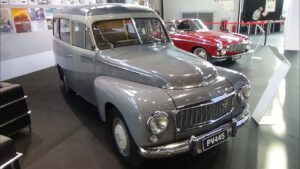
1963 Triumph Spitfire MK I – Exterior and Interior – Oldtimer-Meeting Baden-Baden 2022
In 1963, the Triumph Spitfire Mk I offered open-top British sports car motoring at an unusually accessible price. Compact, light, and mechanically simple, it became one of the defining entry-level roadsters of the 1960s. Its proportions and name both hinted at performance heritage, even if its power output remained modest.
Technical Details:
The 1963 Triumph Spitfire Mk I was powered by a front-mounted inline four-cylinder engine with a displacement of 1,147 cc. This overhead-valve unit was derived from the Triumph Herald and produced approximately 63 horsepower at around 5,750 rpm. Twin SU carburetors were fitted to improve breathing and performance compared to the Herald’s single-carburetor configuration.
Power was transmitted to the rear wheels via a four-speed manual gearbox. An electrically operated Laycock de Normanville overdrive unit was available as an option, typically engaging on third and fourth gears, enhancing cruising flexibility. The Spitfire Mk I used a separate chassis derived from the Herald, featuring independent front suspension with coil springs and unequal-length wishbones. At the rear, the swing-axle independent suspension layout was retained, a cost-effective solution that contributed to compact packaging but required careful driving at the limit.
Braking was handled by front disc brakes and rear drum brakes, a relatively advanced specification for a small sports car of the period. With a top speed of approximately 145 km/h (around 90 mph), the Spitfire Mk I prioritized agility and affordability over outright performance.
- Manufacturer: Triumph Motor Company
- Model Name: Triumph Spitfire MK I
- Year of Manufacturing: 1962–1964
Design:
The Triumph Spitfire Mk I was styled by Italian designer Giovanni Michelotti, who also worked on other Triumph models of the era. The design featured clean, balanced lines with modest proportions, giving the car a purposeful yet approachable character.
One of the most distinctive design features was the forward-hinged one-piece front end, which allowed the entire nose section to tilt forward for easy engine access. This practical solution simplified maintenance and became a defining visual element of the model.
The low bonnet, gently rounded rear, and simple chrome bumpers reflected early 1960s styling trends. Inside, the cockpit was minimal and functional. Early Mk I models featured a painted metal dashboard with centrally mounted instruments, later complemented by additional gauges in front of the driver. The seating position was low, and the open-top configuration reinforced the car’s lightweight sporting identity.
Historical Significance:
The Spitfire Mk I was introduced in 1962 as Triumph’s answer to growing demand for small, affordable sports cars, particularly in export markets such as the United States. It positioned itself below the larger TR series and competed directly with models like the MG Midget and Austin-Healey Sprite.
The use of existing Herald components helped keep production costs manageable while allowing Triumph to expand its sports car range. Between 1962 and 1964, more than 45,000 examples of the Spitfire Mk I were produced, demonstrating strong market acceptance.
The model established a platform that would evolve through several generations—Mk II, Mk III, Mk IV, and 1500—remaining in production until 1980. In this context, the 1963 version represents the early phase of a sports car lineage that would become one of Triumph’s most recognizable.
Quirks and Pop Culture:
The Spitfire’s name referenced the famous Supermarine Spitfire fighter aircraft, reinforcing its British identity during a period when automotive branding often drew from aviation themes. Despite modest power, the car’s lightweight construction and open-air driving experience contributed to its enthusiastic following.
The swing-axle rear suspension became a well-known characteristic. While compact and cost-effective, it could produce noticeable camber changes under hard cornering. Enthusiasts learned to adapt their driving style accordingly, and later Spitfire versions would receive suspension refinements.
In classic car culture, the early Spitfire Mk I is often valued for its purity of design and simplicity. Its straightforward mechanical layout makes it accessible for restoration and maintenance, contributing to its continued popularity among entry-level classic sports car buyers.
Display and preservation:
The vehicle was exhibited at the Oldtimer-Meeting Baden-Baden in 2022. Set in the elegant spa gardens of Baden-Baden, this open-air event is one of Germany’s most atmospheric classic car gatherings. The 2022 edition marked the 46th year of the meeting and featured over 350 carefully selected vintage vehicles from across Europe. With its picturesque backdrop and festive ambiance, the event draws thousands of visitors who stroll among historic automobiles, enjoy live music, and take in themed displays. In 2022, American classics and convertibles were especially well represented, reflecting the event’s continued celebration of both international and domestic automotive heritage.
Conclusion:
The 1963 Triumph Spitfire Mk I stands as a clear expression of early 1960s British sports car philosophy: lightweight construction, modest but lively performance, and accessible pricing. Powered by a 1.1-liter four-cylinder engine and supported by a separate chassis with independent suspension, it delivered engaging driving in a compact package. Designed by Giovanni Michelotti and produced in significant numbers, the Spitfire Mk I laid the foundation for nearly two decades of Triumph sports car development.