1906 Mercedes Simplex – Auto Show Veterama 2014
At a time when many automobiles still resembled motorized carriages, the Mercedes Simplex introduced a more coherent and modern concept of what a car should be. Lower, longer, and more stable than its predecessors, it reflected a decisive step toward the architecture that would define automobiles for decades. By 1906, the Mercedes Simplex had already established itself as one of the most advanced touring cars of its era.
Technical Details
The 1906 Mercedes Simplex followed a front-engine, rear-wheel-drive layout that was becoming the dominant configuration in early automotive engineering. It was equipped with a large inline four-cylinder gasoline engine, with displacement and output varying depending on the specific version—common configurations included engines in the range of approximately 4.0 to over 9.0 liters, delivering between roughly 20 and 60 horsepower.
A key technical feature of the Mercedes Simplex was its use of mechanically operated overhead inlet valves with side exhaust valves, an advanced solution at the time that improved engine breathing compared to simpler designs. Power was transmitted to the rear wheels via a manual gearbox and chain or shaft drive, depending on specification. The chassis was based on a pressed steel ladder frame, contributing to improved rigidity and lower center of gravity compared to earlier tubular designs.
Suspension relied on semi-elliptic leaf springs, while braking systems were mechanically operated and typically acted on the rear wheels. Compared to earlier Mercedes models, the Mercedes Simplex offered more predictable handling and stability, particularly at higher speeds, thanks to its longer wheelbase and more refined weight distribution.
- Manufacturer: Daimler-Motoren-Gesellschaft
- Model name: Mercedes Simplex
- Year of manufacturing: 1906
Design
The Mercedes Simplex marked a clear departure from carriage-inspired forms. Its proportions were lower and more elongated, with the engine mounted prominently at the front under a defined hood. The radiator was integrated into the front of the car rather than positioned behind the engine, a layout that would soon become standard across the industry.
Large spoked wheels and a relatively wide track gave the car a more planted stance than many contemporaries. The seating arrangement remained open, typically configured as a touring car with minimal protection from the elements. However, the overall silhouette was more cohesive and purposeful, reflecting a growing understanding of automotive design as a distinct discipline.
Details such as the gently curved fenders, exposed headlamps, and simple body panels contributed to a restrained but confident appearance. Inside, the layout was functional, with controls arranged for the driver’s direct access, signaling a shift toward usability rather than purely experimental construction.
Historical Significance
The Mercedes Simplex occupies an important place in early automotive history as one of the first cars to embody a modern layout. Developed under the technical leadership of Wilhelm Maybach, it built upon earlier Mercedes designs but refined them into a more stable, user-friendly, and performance-oriented vehicle.
By the mid-1900s, Daimler-Motoren-Gesellschaft had already established the Mercedes name as a leading force in the automotive world. The Mercedes Simplex played a key role in reinforcing that reputation, particularly through its success in competition and its appeal to wealthy private buyers seeking reliable high-performance touring cars.
The model also reflects the broader transition from experimental engineering to more standardized production. While still built in relatively small numbers, the Mercedes Simplex demonstrated that automobiles could be designed as complete systems, with integrated chassis, engine, and body, rather than assembled as loosely connected components.
Quirks and Pop Culture
The name “Simplex” itself is a notable feature, chosen to emphasize ease of operation compared to earlier, more complex vehicles. At a time when driving often required significant mechanical knowledge, this was a meaningful selling point and part of the car’s identity.
Although not widely featured in modern pop culture, the Mercedes Simplex was highly visible in its own time. It appeared in early motorsport events and public demonstrations, contributing to the growing fascination with automobiles as symbols of progress and technological achievement.
Another interesting aspect is its association with the early Mercedes brand name, which originated from Emil Jellinek’s daughter, Mercédès. By 1906, this name had already become synonymous with advanced engineering and performance, and the Mercedes Simplex helped solidify that connection.
Display and preservation
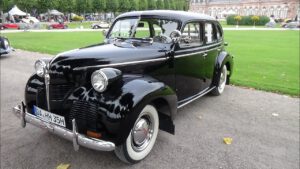
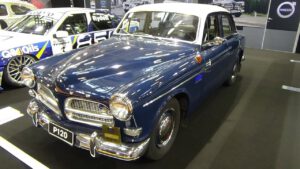
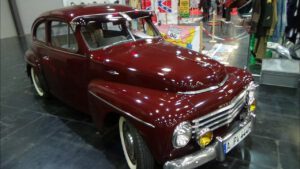
This car was displayed at the Veterama 2014 Mannheim, held from October 10 to 12. The event attracted around 45,000 visitors to its 260,000 square meter grounds. Nearly 4,000 exhibitors from around the world presented their 1,000 vehicles—many from the emerging youngtimer scene. A new highlight was the Show Arena, where pre-1975 vehicles could be presented to the public. From early automotive relics to complete classics, the diversity was remarkable.
Conclusion
The 1906 Mercedes Simplex represents a formative step in the evolution of the automobile. Technically, it combined advanced engine design with a more rigid and stable chassis. Its design moved decisively away from carriage traditions toward a recognizably modern form. Historically, it reinforced the position of Daimler-Motoren-Gesellschaft as a leader in early automotive development. As a result, the Mercedes Simplex stands not merely as an early car, but as a clear indicator of how the automobile was beginning to take its definitive shape.