1978 Peugeot 304 GLD Break – Kaiserslautern Classics 2015
In the late 1970s, diesel passenger cars were still a niche in Europe. The 1978 Peugeot 304 GLD Break quietly challenged that reality by combining practicality, efficiency, and everyday usability in a compact estate format.
Technical Details
The Peugeot 304 GLD Break was powered by a front-mounted inline four-cylinder diesel engine with a displacement of 1,357 cc. This engine, part of Peugeot’s early diesel development for passenger cars, produced approximately 45 horsepower. While modest in output, it delivered strong fuel efficiency and durability—key advantages at a time when diesel technology was still evolving for private vehicles.
Power was transmitted to the front wheels through a manual gearbox, following a front-engine, front-wheel-drive layout. This configuration allowed for efficient packaging and maximized interior and cargo space, particularly important for the estate (“Break”) variant. The car’s top speed was typically around 125 km/h, reflecting its focus on economy rather than performance.
The chassis and suspension setup were conventional for the segment, with independent front suspension and a rear axle designed to handle increased loads. The diesel engine’s robustness and low fuel consumption made the GLD Break especially suitable for long-distance driving and commercial or family use.
- Manufacturer: Peugeot
- Model name: Peugeot 304 GLD Break
- Year of manufacturing: 1978
Design
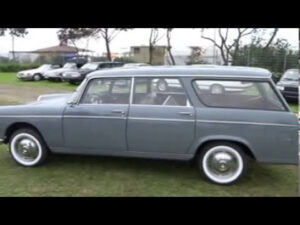
The design of the Peugeot 304 GLD Break reflects the understated, functional approach typical of French compact cars in the 1970s. Its body is defined by clean lines, a rectangular silhouette, and a practical estate layout that prioritizes usability over stylistic expression.
At the front, the car features a simple grille and rectangular headlights integrated into a restrained fascia. The proportions are balanced, with a relatively long roofline extending toward a near-vertical rear tailgate. This configuration maximizes cargo capacity while maintaining compact external dimensions.
The interior follows a similar philosophy. Controls are straightforward and clearly arranged, with an emphasis on visibility and ease of use. Materials and finishes are modest but durable, reflecting the car’s intended role as a reliable everyday vehicle rather than a luxury product. Large windows contribute to a bright cabin and good outward visibility.
Historical Significance
The Peugeot 304 range was introduced in 1969 as a development of the earlier 204, sharing much of its mechanical architecture but offering updated styling and improved refinement. By the late 1970s, the model had evolved to include diesel variants such as the GLD, reflecting Peugeot’s growing expertise in diesel technology.
During this period, Peugeot was among the manufacturers leading the introduction of diesel engines into passenger cars. While diesel was already established in commercial vehicles, its adoption in smaller family cars was still relatively limited. The Peugeot 304 GLD Break played a role in normalizing diesel as a viable option for everyday motorists, particularly in Europe, where fuel economy and longevity were becoming increasingly important.
The estate version further expanded the model’s appeal by offering increased practicality. It was particularly well suited to families, small businesses, and rural users who required both efficiency and load-carrying capability. This combination helped lay the groundwork for Peugeot’s later success with diesel-powered estate cars.
Quirks and Pop Culture
One of the defining characteristics of the Peugeot 304 GLD Break is its early use of a small-displacement diesel engine in a compact passenger car. At the time, diesel engines were often associated with noise, vibration, and slow performance. The Peugeot 304 GLD did little to challenge that perception in terms of speed, but it demonstrated that diesel could be practical and economical for everyday use.
Drivers often remarked on the engine’s distinctive sound and deliberate acceleration, traits that became part of the car’s identity. However, these characteristics were offset by its reliability and low running costs, which earned it a loyal following.
While the model did not achieve significant visibility in films or popular media, it became a familiar presence on European roads. Its reputation was built not on glamour but on dependability—qualities that resonated with owners and contributed to Peugeot’s broader image as a manufacturer of durable, efficient vehicles.
Display and preservation
This car was shown at the 9th edition of the Kaiserslautern Classics 2015. Held on June 20, the event brought historic mobility directly into the heart of Kaiserslautern. Spread across pedestrian zones, squares, and landmarks, the event showcased a rich variety of classic cars, motorcycles, and utility vehicles. Special attention was given to historic fire engines celebrating 60 years of the local fire brigade, while a tractor exhibition added further diversity. The ADAC Rallye Trifels Historic retraced legendary routes, complemented by period music that enhanced the atmosphere of careful preservation and living history.
Conclusion
The 1978 Peugeot 304 GLD Break represents a pragmatic approach to motoring in a period of changing priorities. Technically simple yet effective, it combined a small diesel engine with a front-wheel-drive layout and a practical estate body. Its design emphasized function and clarity, while its historical role highlights Peugeot’s early commitment to diesel passenger cars.
Although not a standout in terms of performance or style, the Peugeot 304 GLD Break helped establish a formula that would become increasingly important in the decades that followed: efficient, reliable, and versatile transportation for everyday use.