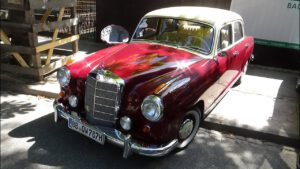
1978 Mercedes-Benz 220 D – Oldtimer-Meeting Baden-Baden 2021
The Mercedes-Benz 220 D belonged to the W123 family – the most successful Mercedes-Benz series, with about 2.7 million built. Introduced amid late-1970s fuel crises, it offered Mercedes luxury with impressive fuel economy. The model became a favorite of taxi fleets worldwide for its bulletproof reliability.
Technical Details:
The 1978 Mercedes-Benz 220 D runs a 2.2-liter OM615 inline-four diesel (about 60 hp) paired with a 4-speed manual – a powertrain famed for reliability. Though not quick, it’s very efficient and built to last. The W123 platform has a rugged unibody and 4-wheel independent suspension for stability, with front disc brakes ensuring confident stopping. Mercedes tuned the Mercedes-Benz 220 D for longevity over performance: many have run hundreds of thousands of kilometers without major overhaul, a testament to the marque’s engineering.
- Manufacturer: Mercedes-Benz
- Model Name: Mercedes-Benz 220 D (W115)
- Year of Manufacturing: 1978
Design:
Shaped by Bruno Sacco’s design team, the W123 sedan has an understated, functional style. The Mercedes-Benz 220 D carries the classic Mercedes upright chrome grille and hood star, flanked by round headlights. The body features straight lines and minimal ornamentation – a timeless, function-first look. Inside, the cabin focuses on durability and simplicity: tough MB-Tex seats and simple controls create a sense of quality. Every switch feels solid, and the doors close with a vault-like “thunk”, reinforcing its tank-like build.
Historical Significance:
The Mercedes-Benz 220 D belonged to the W123 family – the most successful Mercedes-Benz series, with about 2.7 million built. Introduced amid late-1970s fuel crises, it offered Mercedes luxury with impressive fuel economy. The model became a favorite of taxi fleets worldwide for its bulletproof reliability. W123 diesels like the Mercedes-Benz 220 D could “take decades of abuse and minimal maintenance, but still keep rolling”. By delivering great durability, the 220 D cemented Mercedes-Benz’s reputation for longevity.
Quirks and Pop Culture:
A defining quirk of the Mercedes-Benz 220 D is its glacial acceleration – owners joked you might need a calendar for 0–60 – yet these cars “go slowly into forever,” routinely exceeding 500,000 miles. That longevity made the Mercedes-Benz 220 D an icon of indestructibility. The diesel clatter at idle was just part of its character. While never glamorous, the 220 D’s unbreakable nature has earned it a cult following and a reputation as an automotive legend of dependability.
Display and preservation:
The vehicle was exhibited at the Oldtimer-Meeting Baden-Baden in 2021. This event, held annually in the spa town’s Kurpark and along the Kaiserallee, is one of Germany’s most picturesque classic car gatherings. In 2021, the 44th edition featured 300 vintage vehicles from 80 different brands, including rare models. The event embraced a 1970s theme, showcasing over 40 vehicles from that era. An innovative highlight was the “automobile fashion show,” where models presented current fashion trends while riding in open-top classic cars through the park. The event concluded with the traditional Concours d’élégance, awarding 120 prizes across 15 categories.
Conclusion:
The 1978 Mercedes-Benz Mercedes-Benz 220 D embodies durability over speed. It traded performance for unshakable reliability and efficiency – a bargain that paid off for its owners. Its legacy lives on in the many survivors still on the road and in how it solidified Mercedes-Benz’s reputation for cars that simply don’t quit.
Sources:
Hemmings.com – “Mercedes-Benz W123: Why It’s One of the Most Reliable Cars Ever”
mercedes-benz-publicarchive.com – 220 D (W123)
Classic & Sports Car – “The Taxi That Refused To Die: Mercedes W123 In Focus”