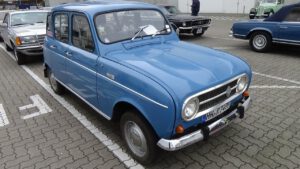
1973 Volvo 144 S de Luxe – Exterior and Interior – Classic Expo Salzburg 2021
In 1973, Volvo’s reputation for safety and durability was no longer emerging—it was firmly established. The Volvo 144 S de Luxe represented the mature stage of a model line that had redefined the brand’s position in the international mid-size segment. Combining robust engineering with restrained Scandinavian design, the 1973 Volvo 144 S de Luxe stood as a technically solid and globally successful sedan.
Technical Details
The 1973 Volvo 144 S de Luxe was powered by a front-mounted inline four-cylinder engine from the Volvo B20 series. In most European markets, the 144 S was equipped with the 1,986 cc B20A engine featuring twin carburetors, producing approximately 100 hp (DIN), though output could vary slightly depending on emission regulations. Certain export markets also offered fuel-injected versions derived from the B20E specification, but the S de Luxe designation was typically associated with the carbureted unit.
Power was transmitted to the rear wheels through either a four-speed manual gearbox or, optionally, a four-speed manual combined with an electrically operated Laycock de Normanville overdrive. A three-speed automatic transmission was also available in some markets. The drivetrain followed Volvo’s traditional front-engine, rear-wheel-drive configuration, known for durability and ease of maintenance.
The chassis employed independent front suspension with double wishbones and coil springs, while the rear used a rigid live axle located by trailing arms and a Panhard rod. This layout prioritized stability and predictable handling rather than sporting agility. Disc brakes were fitted on all four wheels, supported by a dual-circuit braking system. By 1973, Volvo had further reinforced side-impact protection within the body structure, reflecting the company’s ongoing commitment to passive safety engineering. Top speed for the 144 S was approximately 165–170 km/h, depending on specification and gearbox choice.
- Manufacturer: Volvo
- Model name: Volvo 144 S de Luxe
- Year of manufacturing: 1973
Design
The design of the 1973 Volvo 144 S de Luxe reflected Volvo’s move toward clean, geometric forms that would define the brand throughout the 1970s. The upright grille, rectangular headlamps (in many markets), and flat body panels gave the car a rational and structured appearance. Chrome detailing was present but restrained, particularly around the grille, window surrounds, and bumpers.
The “de Luxe” specification included upgraded interior trim and additional comfort features compared to the base 144. Inside, the dashboard followed a horizontal layout with clearly legible instrumentation positioned directly in front of the driver. Materials emphasized durability over ornamentation. Volvo’s seats, already widely regarded for their ergonomic quality, offered firm support suited to long-distance driving.
Large glass surfaces and slim pillars provided good outward visibility, a characteristic feature of Volvo sedans of the period. The overall impression was one of solidity and clarity rather than stylistic experimentation. The 144 S de Luxe did not seek to impress through dramatic design elements; instead, it projected reliability and functional elegance.
Historical Significance
The Volvo 144 belonged to the broader Volvo 140 series, introduced in 1966 as a successor to the Amazon (120 series). With the 140 series, Volvo adopted a more modern, rectilinear design language and significantly advanced its approach to safety. The model line included the 142 (two-door), 144 (four-door), and 145 (estate), establishing a consistent naming system based on door count.
By 1973, the 140 series had undergone several technical refinements. Improvements in emissions control were implemented to meet increasingly strict regulations, particularly in the United States, which had become one of Volvo’s most important markets. The 140 series also incorporated structural reinforcements and interior safety measures such as energy-absorbing steering columns and improved dashboard padding.
Production of the 140 series continued until 1974, when it was replaced by the Volvo 240. In total, more than one million units of the 140 series were built, marking a significant commercial success for Volvo. The 1973 Volvo 144 S de Luxe thus represents one of the final and most developed iterations of a model that helped secure Volvo’s global reputation for safety-focused family cars.
Quirks and Pop Culture
While the Volvo 144 S de Luxe did not achieve the pop culture visibility of the Volvo P1800 from The Saint, it became a familiar presence in numerous countries, particularly in Northern Europe and North America. Its boxy silhouette became synonymous with pragmatic Scandinavian engineering.
The 140 series also played an important role in reinforcing Volvo’s safety image. During the early 1970s, crash test research and real-world accident data were increasingly used by Volvo in marketing materials, and the 144 benefited from this association. The model became a preferred choice for professionals, families, and fleet operators seeking durability and understated prestige.
In enthusiast circles, the 144 is often appreciated for its mechanical simplicity and longevity. Many surviving examples demonstrate high mileage, reinforcing the model’s reputation for resilience. The S de Luxe trim, with its added comfort features, is particularly valued today among collectors seeking a well-equipped yet authentic version of the classic Volvo sedan.
Display and preservation
The vehicle was exhibited at the Classic Expo Salzburg in 2021. As one of Austria’s premier classic car events, the show has established itself as a central meeting point for collectors, restorers, and enthusiasts from across Central Europe. The 2021 edition took place at Messezentrum Salzburg and featured more than 250 exhibitors, along with a strong turnout of over 20,000 visitors. Attendees could explore a broad range of offerings—from historical vehicles and motorcycles to automobilia, spare parts, and literature.
Conclusion
The 1973 Volvo 144 S de Luxe represents the culmination of Volvo’s first modern mid-size sedan generation. Technically defined by its robust B20 four-cylinder engine, rear-wheel-drive layout, and four-wheel disc brakes, it embodied the brand’s commitment to safety and durability. Its design favored clarity and practicality, while its historical importance lies in the success of the broader 140 series, which laid the groundwork for the iconic 240. As a refined and well-equipped variant, the 144 S de Luxe stands as a representative example of Volvo’s engineering philosophy in the early 1970s.