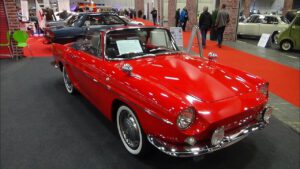
1973 Triumph TR6 – Oldtimer-Meeting Baden-Baden 2022
In 1973, the Triumph TR6 was at the height of its production run and still largely true to its late-1960s engineering roots. It combined a torque-rich straight-six engine with classic British roadster proportions. At the same time, it was already adapting to the regulatory and market pressures of the early 1970s.
Technical Details
The 1973 Triumph TR6 was powered by a 2.5-liter (2,498 cc) inline six-cylinder engine mounted at the front and driving the rear wheels. In European specification, the engine retained the Lucas mechanical fuel injection system, delivering approximately 150 PS (around 148 bhp SAE gross) in earlier form, although power had begun to decrease slightly compared to initial 1969 figures. The injection system gave the European TR6 strong mid-range torque and competitive performance for its class.
In the United States and certain export markets, the TR6 was equipped with twin Zenith-Stromberg carburetors rather than fuel injection. Due to emissions regulations and lower compression ratios, U.S.-specification models for 1973 typically produced around 104–106 bhp (SAE net). The difference in output between European and U.S. versions remains a defining technical distinction of the model.
A four-speed manual gearbox was standard, with optional Laycock overdrive available on third and fourth gears, effectively providing additional cruising ratios. An automatic transmission was offered in some markets but was less common. The TR6 retained its separate ladder-frame chassis, a design inherited from earlier TR models. Front suspension used independent wishbones and coil springs, while the rear featured independent semi-trailing arms, introduced with the TR4A.
Front disc brakes and rear drum brakes provided stopping power. With a wheelbase of approximately 2,235 mm and a kerb weight around 1,100 kg depending on specification, the 1973 TR6 delivered strong acceleration and stable high-speed cruising, particularly in fuel-injected form.
- Manufacturer: Triumph (British Leyland)
- Model name: Triumph TR6
- Year of manufacturing: 1973 (production run 1969–1976)
Design
The Triumph TR6’s body design originated as a facelift of the earlier TR5/TR250, executed by the German coachbuilder Karmann. By 1973, its squared-off styling had become instantly recognizable. The front featured a simple black grille flanked by round headlamps, while the rear adopted a clean, horizontal treatment with integrated tail lamps.
Chrome bumpers remained standard in 1973, and the overall proportions adhered to the classic British roadster formula: long bonnet, short rear deck, and a low seating position. The upright windshield and relatively flat body surfaces contrasted with the more sculpted designs emerging in the 1970s, reinforcing the TR6’s connection to earlier sports car traditions.
Inside, the cabin was driver-oriented and relatively simple. A wood-veneer dashboard housed a full set of round analog instruments, including tachometer and speedometer directly ahead of the driver. Switchgear was minimal and functional. Seating was low, and the car was available with a manually operated soft top and optional removable hardtop. Comfort features remained secondary to the open-air driving experience.
Historical Significance
The Triumph TR6 represents the final phase of the traditional, separate-chassis TR sports cars before the introduction of the TR7 in 1975. By 1973, the model was firmly established in the international market, particularly in the United States, which accounted for the majority of production. Of the approximately 94,619 TR6 units built between 1969 and 1976, around four out of five were exported to North America.
The year 1973 sits at an important transitional moment. The global oil crisis would unfold later that year, and emissions standards were tightening, especially in the United States. The TR6 in 1973 therefore stands at the edge of a shift in sports car development, maintaining traditional mechanical architecture while facing new economic and regulatory pressures.
Within Triumph’s portfolio, the TR6 was considered a mature and refined model. Its robust straight-six engine, proven chassis, and well-developed suspension gave it a reputation for durability and strong performance. It also marked the end of an era for classic British roadsters built on separate frames rather than modern unitary bodies.
Quirks and Pop Culture
The Triumph TR6 became emblematic of 1970s British sports motoring. Its straight-six engine produced a distinctive exhaust note that remains one of its most recognizable traits. The contrast between fuel-injected European cars and carbureted U.S. versions has become a recurring topic among enthusiasts, influencing restoration and modification choices.
The TR6 has appeared regularly in historic motoring events and classic car gatherings, valued for its mechanical accessibility and strong aftermarket support. Many surviving examples have been restored, and the model enjoys a dedicated international enthusiast community.
Its relatively simple construction has also made it a popular candidate for upgrades, including suspension improvements and engine tuning, particularly in markets where original emission controls reduced output.
Display and preservation
The vehicle was exhibited at the Oldtimer-Meeting Baden-Baden in 2022. Set in the elegant spa gardens of Baden-Baden, this open-air event is one of Germany’s most atmospheric classic car gatherings. The 2022 edition marked the 46th year of the meeting and featured over 350 carefully selected vintage vehicles from across Europe. With its picturesque backdrop and festive ambiance, the event draws thousands of visitors who stroll among historic automobiles, enjoy live music, and take in themed displays. In 2022, American classics and convertibles were especially well represented, reflecting the event’s continued celebration of both international and domestic automotive heritage.
Conclusion
The 1973 Triumph TR6 captures the essence of the traditional British sports roadster at a turning point in automotive history. With its 2.5-liter inline-six engine, rear-wheel-drive layout, and separate chassis construction, it combined proven engineering with a distinctive Karmann-styled body. Positioned between the optimism of the late 1960s and the regulatory realities of the mid-1970s, the 1973 TR6 remains a key reference in the evolution of Triumph’s sports car lineage.