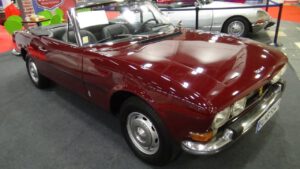
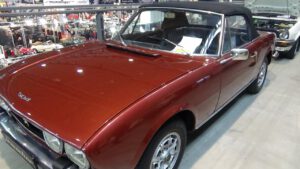
1972 Peugeot 504 Cabrio – Retro Classics Stuttgart 2020
Few cars of the early 1970s combined everyday usability with open-top elegance as convincingly as the Peugeot 504 Cabriolet. Developed alongside the saloon but positioned distinctly higher in the range, it brought Italian styling and French engineering together in a way that set it apart from many contemporaries. Its restrained appearance and durable mechanical base allowed it to appeal both as a leisure car and as a refined grand tourer.
Technical Details
The Peugeot 504 Cabriolet shared its technical foundation with the Peugeot 504 saloon but was equipped with more powerful engines to suit its more exclusive positioning. By 1972, it was typically powered by a front-mounted inline four-cylinder engine with a displacement of 1,971 cc, equipped with fuel injection in the more advanced versions. Output is commonly cited at around 104 horsepower (77 kW), a noticeable increase over earlier carbureted variants.
Power was transmitted to the rear wheels via a four-speed manual gearbox, with an optional automatic transmission available depending on market and specification. The car followed a classic front-engine, rear-wheel-drive layout, contributing to balanced handling characteristics.
The chassis retained Peugeot’s well-regarded suspension setup, with independent front suspension and a rear axle designed to offer a combination of comfort and stability. Disc brakes at the front and drum brakes at the rear were standard, reflecting a gradual transition toward more modern braking systems. Overall, the Peugeot 504 Cabriolet emphasized durability and long-distance usability, aligning with Peugeot’s engineering philosophy of the time.
- Manufacturer: Peugeot
- Model name: Peugeot 504 Cabriolet
- Year of manufacturing: 1972
Design
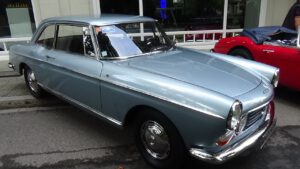
The design of the Peugeot 504 Cabriolet was developed by the Italian coachbuilder Pininfarina, which also handled production of the body. Unlike the saloon, which was styled in-house, the Cabriolet featured a distinct visual identity defined by clean lines and balanced proportions.
The front end retained Peugeot’s recognizable grille and headlamp arrangement but appeared more refined and lower in stance. The body sides were smooth and uninterrupted, avoiding excessive ornamentation and emphasizing proportion over decoration. The long hood and gently sloping rear gave the car a composed, almost understated elegance.
With the roof lowered, the Cabriolet revealed a clean beltline and a well-integrated rear deck, avoiding the bulky appearance sometimes associated with open cars of the period. The interior followed a similar philosophy, combining clarity with comfort. Materials and finishes were more refined than in the standard saloon, reflecting the model’s higher positioning within the range.
Historical Significance
The Peugeot 504 was introduced in 1968 and quickly established itself as one of Peugeot’s most important models, known for its durability and adaptability across global markets. Within this context, the Cabriolet occupied a more specialized role, aimed at customers seeking a combination of reliability and style.
Unlike many open-top cars of the era, the Peugeot 504 Cabriolet was not simply a modified saloon but a carefully reworked version with distinct bodywork produced by Pininfarina in Italy. This collaboration reflects a broader trend in the European automotive industry, where manufacturers partnered with Italian design houses to enhance the appeal of higher-end variants.
Production numbers for the Cabriolet were relatively limited compared to the saloon, reinforcing its exclusivity. At the same time, it retained the robust mechanical base that made the Peugeot 504 successful worldwide, allowing it to function as a practical car rather than a purely recreational one. This dual character contributed to its lasting reputation.
Quirks and Pop Culture
The Peugeot 504 Cabriolet is often remembered for its connection to Pininfarina, a name more commonly associated with Italian sports and luxury cars. This association gave the car a subtle prestige that distinguished it from more conventional Peugeot models.
Another notable aspect is its global presence. While the saloon version became famous for its use in challenging environments, particularly in Africa, the Cabriolet represented a more lifestyle-oriented interpretation of the same platform. This contrast between rugged engineering and elegant presentation is a recurring theme in how the model is perceived today.
The Peugeot 504 range also gained visibility in film and television, particularly the saloon, which frequently appeared as a dependable everyday vehicle. The Cabriolet, by contrast, remained less common on screen but is often associated with a more refined, leisure-focused image.
Display and preservation
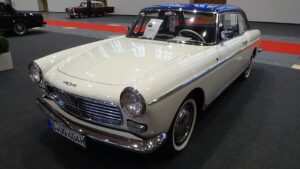
This car was filmed at the Retro Classics Stuttgart 2020. Held from February 27 to March 1, the show attracted around 65,000 visitors, including a notably high share of industry professionals from across Southern Germany, Switzerland, France, and Austria. Alongside shows and varied programs, the event featured an expanded parts market and a significantly enlarged vehicle sales area, complemented by the new “entry-level market.” Special highlights included an impressive Voisin exhibition and a Gulf-themed display showcasing the renowned ROFGO Collection.
Conclusion
The 1972 Peugeot 504 Cabriolet stands as a carefully balanced combination of engineering durability and stylistic restraint. Its technically conventional but reliable drivetrain, paired with a Pininfarina-designed body, created a car that could serve both practical and aesthetic purposes. Historically, it reflects Peugeot’s ability to extend a successful platform into more exclusive segments without abandoning its core values. Today, the Peugeot 504 Cabriolet is appreciated as a distinctive and understated classic, shaped as much by its engineering as by its design heritage.