1972 Peugeot 204 – Oldtimer-Meeting Baden-Baden 2021
Front-wheel drive, a transverse engine, and independent suspension—by 1972, the Peugeot 204 had quietly become one of the most technically advanced small family cars in Europe. It did not rely on radical styling or dramatic performance figures. Instead, it reshaped Peugeot’s engineering philosophy and laid the groundwork for decades of compact front-wheel-drive models.
Technical Details:
The 1972 Peugeot 204 featured a front-mounted, transversely installed inline four-cylinder engine with a displacement of 1,130 cc. This light-alloy overhead-camshaft unit produced approximately 53–55 horsepower, depending on specification. The engine and transmission were integrated into a compact powertrain unit driving the front wheels—a layout that maximized interior space within relatively compact external dimensions.
A four-speed manual gearbox was standard. The front-wheel-drive configuration marked a significant departure from Peugeot’s earlier rear-wheel-drive models such as the Peugeot 203 and Peugeot 403. Independent suspension was fitted at all four corners, contributing to stable handling and a comfortable ride for a vehicle in the lower-middle segment.
Braking was handled by disc brakes at the front and drum brakes at the rear, a competitive specification for the early 1970s. The compact drivetrain arrangement allowed for efficient weight distribution and improved traction, particularly in adverse weather conditions. Top speed for the petrol version was typically around 140 km/h (87 mph), positioning the 204 as a capable everyday vehicle rather than a sporting one.
- Manufacturer: Peugeot
- Model Name: Peugeot 204
- Year of Manufacturing: 1972
Design:
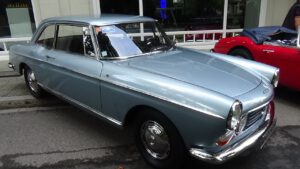
The Peugeot 204 was introduced in 1965 and designed by the Italian coachbuilder Pininfarina. Its clean, compact proportions reflected mid-1960s European design principles: straight beltlines, restrained chrome detailing, and well-balanced glazing areas.
By 1972, the styling remained largely unchanged, emphasizing clarity and practicality rather than fashion. The sedan version featured a simple front grille flanked by rectangular headlamps and a gently sloping bonnet. The body’s smooth surfaces and minimal ornamentation contributed to a modern yet understated appearance.
Inside, the cabin was functional and rationally arranged. A simple instrument cluster, durable materials, and supportive seating underscored the 204’s role as a family car. The efficient front-wheel-drive layout allowed for generous interior space relative to the car’s footprint. In addition to the four-door sedan, the 204 range included estate (Break), coupé, and cabriolet variants, demonstrating the flexibility of the platform.
Historical Significance:
The Peugeot 204 represented a turning point for Peugeot. It was the brand’s first mass-produced front-wheel-drive model and the first Peugeot to adopt a transverse engine layout. This engineering shift positioned the company competitively within a European market increasingly favoring compact, space-efficient cars.
During the late 1960s and early 1970s, the 204 became one of France’s best-selling cars. By 1972, it had firmly established itself as a commercial success and as the backbone of Peugeot’s compact segment. The model’s layout would directly influence its successor, the Peugeot 304, and later Peugeot front-wheel-drive vehicles.
Production of the 204 continued until 1976, with over 1.6 million units built. Its success confirmed that Peugeot’s strategic move toward front-wheel drive and compact engineering had been well judged.
Quirks and Pop Culture:
The Peugeot 204 became a familiar sight on French and European roads throughout the late 1960s and early 1970s. It was widely used as a family car, company vehicle, and even as a taxi in some markets. Its understated styling and mechanical reliability contributed to an image of practical modernity rather than flamboyance.
Enthusiasts often note the technical sophistication hidden beneath its conservative exterior. The combination of an aluminum overhead-cam engine, transverse mounting, and four-wheel independent suspension was advanced for its class. In period French cinema and photography, the 204 frequently appears as part of everyday urban and rural life, symbolizing mobility during a period of steady economic growth.
Display and preservation:
The vehicle was exhibited at the Oldtimer-Meeting Baden-Baden in 2021. This event, held annually in the spa town’s Kurpark and along the Kaiserallee, is one of Germany’s most picturesque classic car gatherings. In 2021, the 44th edition featured 300 vintage vehicles from 80 different brands, including rare models. The event embraced a 1970s theme, showcasing over 40 vehicles from that era. An innovative highlight was the “automobile fashion show,” where models presented current fashion trends while riding in open-top classic cars through the park. The event concluded with the traditional Concours d’élégance, awarding 120 prizes across 15 categories.
Conclusion:
The 1972 Peugeot 204 stands as a milestone in Peugeot’s engineering evolution. With its transverse 1.1-litre engine, front-wheel-drive layout, independent suspension, and practical design, it redefined the company’s approach to compact cars. Rather than relying on dramatic styling or high performance, the 204 delivered efficiency, space utilization, and technical modernity. Its commercial success and lasting influence confirm its importance in the broader history of European small family cars.