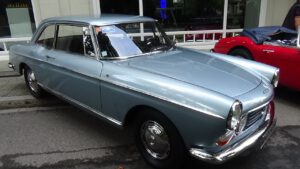
1970 Fiat 500 Lusso – Exterior and Interior – Retro Classics Stuttgart 2022
“Lusso” means luxury—but in the case of the 1970 Fiat 500 Lusso, it meant refinement within strict limits. The car did not grow in size or displacement. Instead, Fiat enhanced comfort and finish while preserving the compact dimensions that defined the model.
Technical Details:
The 1970 Fiat 500 Lusso (500 L) retained the familiar 499 cc air-cooled inline two-cylinder engine, producing approximately 18 horsepower. Mounted at the rear, the engine featured an overhead valve configuration and was cooled by a fan-driven air system.
Fuel delivery was handled by a single carburetor, and power was transmitted to the rear wheels through a four-speed manual transmission, with synchromesh on the upper gears. The rear-engine, rear-wheel-drive layout remained unchanged, ensuring compact packaging and efficient use of interior space.
The 500 L employed a unitary (monocoque) body structure, continuing the architectural approach introduced with the Nuova 500. Independent front suspension with a transverse leaf spring and rear independent suspension with coil springs provided modest ride compliance suitable for urban driving.
Braking was by hydraulic drum brakes on all four wheels. The car achieved a top speed of approximately 95 km/h, consistent with other 500 variants of the period.
Mechanically, the Lusso did not represent a performance upgrade. Its refinements were concentrated in trim, comfort, and presentation rather than engineering changes.
- Manufacturer: Fiat
- Model Name: Fiat 500 Lusso (500 L)
- Year of Manufacturing: 1970
Design:
The Fiat 500 Lusso distinguished itself primarily through visual and interior enhancements. Externally, chrome bumpers with overriders and additional trim elements differentiated it from the more basic 500 F.
The front retained its compact proportions, with small circular headlamps and simple grille treatment. The body’s rounded contours and short overhangs remained unchanged, preserving the iconic silhouette of the classic 500.
Inside, however, the Lusso introduced noticeable upgrades. The dashboard featured a full-width black plastic fascia rather than painted metal, creating a more contemporary and finished appearance. A rectangular instrument cluster replaced earlier circular designs, improving clarity.
Additional brightwork, improved upholstery materials, and revised door panels contributed to a more refined cabin environment. While still compact, the interior felt less utilitarian than earlier versions.
The folding fabric roof remained a defining feature, allowing open-air driving while maintaining structural integrity through fixed pillars.
Historical Significance:
By 1970, the Fiat 500 had been in production for over a decade. Competition in the small-car segment had intensified, and consumer expectations had shifted toward greater comfort and perceived quality.
The 500 Lusso addressed these expectations without altering the mechanical foundation. It demonstrated Fiat’s understanding that even entry-level cars required incremental refinement to remain competitive.
The Lusso variant became one of the more popular late-production versions of the classic 500, bridging the gap between the earlier F model and the later 500 R, which would introduce further mechanical updates.
Quirks and Pop Culture:
The Fiat 500 Lusso became associated with a slightly more aspirational image than the basic 500 models. Its improved trim and chrome details gave it a more polished appearance, particularly in urban environments.
One notable distinction among enthusiasts is the interior dashboard redesign, which marks a clear visual difference from earlier variants. This feature often helps identify Lusso models at classic car gatherings.
Today, the 500 L is appreciated for combining the early charm of the Nuova 500 with a higher level of finish. It remains a popular choice among collectors seeking a more comfortable classic 500 experience.
Display and preservation:
The vehicle was exhibited at the Retro Classics Stuttgart in 2022. This car show is one of the major events on the classic car calendar in Germany. In 2022, it took place across five exhibition halls. Visitors can enjoy special showcases, hunt for rare parts and books, and buy cars—both private sellers and dealers offer a wide range of classic and youngtimer vehicles. In 2022, there was a noticeable increase in low-mileage youngtimers and classic cars.
Conclusion:
The 1970 Fiat 500 Lusso illustrates how thoughtful refinement can extend the life of a successful design. Retaining the 499 cc rear-mounted engine and compact architecture, it focused on comfort and presentation rather than mechanical change. As a late-evolution variant of the classic 500, the Lusso demonstrates Fiat’s ability to modernize subtly while preserving the character that made the model enduringly recognizable.