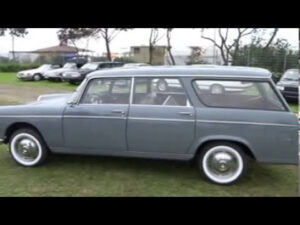
1969 – 1977 Audi 100 LS – Motorworld Bodensee 2022
When the Audi 100 LS appeared at the end of the 1960s, it marked a decisive return of Audi to the upper middle class. Developed largely in secret, the model became a commercial breakthrough for the brand. The 100 LS combined restrained design with modern front-wheel-drive engineering at a time when Audi was redefining its identity.
Technical Details
The Audi 100 LS of the first generation (internal designation C1) was introduced in 1968, with the LS variant positioned as a higher-specification model within the range. It featured a front-mounted inline four-cylinder engine derived from the Volkswagen/Audi EA827 engine family. Early versions typically displaced 1.8 liters (1,760 cc), producing approximately 100 PS (DIN), depending on market and carburetor configuration.
The drivetrain followed a longitudinal front-engine, front-wheel-drive layout. Unlike many front-wheel-drive cars with transverse engines, the Audi 100 used a longitudinal installation, with the gearbox mounted ahead of the engine and power delivered to the front wheels. This configuration was characteristic of Audi models of the period.
Transmission options included a four-speed manual gearbox as standard, with a three-speed automatic available in some markets. Suspension consisted of independent front suspension with MacPherson struts and coil springs, while the rear used a rigid axle located by trailing arms and coil springs. Front disc brakes and rear drum brakes were standard on most versions. The engineering emphasis was on stability, comfort, and efficient use of interior space rather than outright sportiness.
- Manufacturer: Audi
- Model Name: Audi 100 LS (C1)
- Year of Manufacturing: 1969–1977
Design
The Audi 100 LS featured clean, modern lines that contrasted with the more angular and chrome-heavy designs common in the late 1960s. Its three-box sedan profile was balanced and understated, with a low beltline and large glass areas contributing to a bright cabin atmosphere.
The front end was characterized by a wide grille and rectangular headlamps (on later updates), while early versions retained round lamps depending on market and year. The body surfaces were smooth and largely free of excessive ornamentation, reflecting a shift toward functional, aerodynamic thinking that would become more pronounced in later Audi generations.
Inside, the Audi 100 LS offered a spacious cabin for its class. The dashboard design was horizontal and clearly structured, with legible instrumentation and straightforward controls. Trim quality and equipment levels in the LS version were positioned above entry-level models, reinforcing its role as a more refined specification within the 100 lineup.
Historical Significance
The Audi 100 C1 holds a central place in Audi’s modern history. Developed under the direction of Ludwig Kraus at Auto Union (then part of Volkswagen), the project was initiated despite internal hesitation within the Volkswagen Group about positioning Audi in a higher segment. When introduced, the Audi 100 was an immediate commercial success.
The model reestablished Audi as a manufacturer of technically sophisticated, front-wheel-drive sedans in the upper middle class. It also laid the groundwork for the long-running Audi 100/A6 lineage that would become a core pillar of the brand. Production of the first-generation Audi 100 exceeded 800,000 units, confirming its importance for Audi’s financial stability and brand development during the 1970s.
The LS designation identified one of the better-equipped versions and played a key role in expanding Audi’s presence in export markets, including Western Europe and North America.
Quirks and Pop Culture
The Audi 100 LS is often associated with Audi’s strategic transformation during the late 1960s and 1970s. Unlike later high-performance or quattro-branded models, the C1 generation emphasized engineering refinement rather than performance image. Its longitudinal front-wheel-drive layout became a technical hallmark of Audi vehicles for decades.
While not a prominent film or motorsport icon, the Audi 100 C1 gained recognition among enthusiasts for its understated styling and durability. Today, surviving examples are relatively rare compared with later Audi models, contributing to growing classic-car interest in early front-wheel-drive executive sedans.
Display and preservation:
The vehicle was exhibited at Motorworld Classics Bodensee in 2022. This event, held in Friedrichshafen, is a popular gathering for classic car enthusiasts in southern Germany, Austria, and Switzerland. The 2022 edition featured over 800 exhibitors spread across multiple halls and open-air spaces, offering a vibrant mix of vintage automobiles, motorcycles, boats, and aircraft. Visitors could explore restoration workshops, parts markets, and club presentations. A key highlight was the live vehicle auctions and dynamic driving demonstrations on the event grounds. The show reaffirmed its reputation as a hands-on celebration of classic mobility culture.
Conclusion
The 1969–1977 Audi 100 LS represents a turning point in Audi’s post-war evolution. Equipped with a longitudinal front-mounted four-cylinder engine, front-wheel drive, and independent front suspension, it combined technical modernity with restrained design. As part of the first-generation C1 series, the 100 LS helped reposition Audi in the upper middle class and established a foundation for future generations of executive sedans. Its significance lies not in flamboyance, but in its role as a carefully engineered and commercially decisive model in Audi’s history.