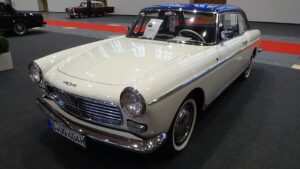
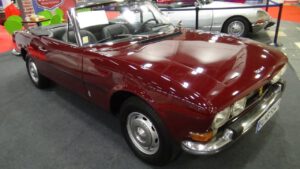
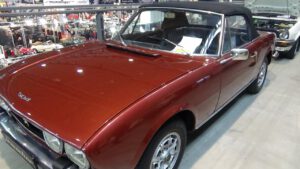
1968 Volkswagen Karmann Ghia Coupe – Exterior and Interior – Oldtimer-Meeting Baden-Baden 2022
The Volkswagen Karmann Ghia Coupé debuted at the IAA in 1955 and went on to remain in production for an extraordinary 19 years. Built by Karmann in Osnabrück and serviced easily at any Volkswagen workshop, the Karmann Ghia achieved a rare balance: Italian styling paired with simple, robust Beetle-based engineering. While its performance never matched its sporty looks, steady increases in engine output—from 30 to 50 PS—kept it competitive enough for everyday driving.
Technical Details:
Mechanically, the Volkswagen Karmann Ghia Coupé of 1968 continued to rely on Volkswagen’s proven rear-engine, rear-wheel-drive layout, powered by an air-cooled four-cylinder boxer engine. Across its production life, engine displacements ranged from 1,192 to 1,584 cc, with outputs rising from an initial 30 PS to as much as 50 PS. By 1968, the 1,584 cc engine was firmly established, delivering improved drivability and higher cruising capability, with top speeds ranging up to approximately 140 km/h.
A key safety upgrade for 1968 was the introduction of a standard hazard warning light system, reflecting growing regulatory and consumer awareness of active safety. Heating performance was improved, addressing a long-standing criticism of earlier air-cooled Volkswagens. The fuel filler flap became lockable, adding a practical layer of security. Seating geometry was revised so that driver and front passenger sat slightly closer together, improving forward visibility and overall ergonomics.
Chassis-wise, the Karmann Ghia Typ 14 with manual transmission retained its traditional swing-axle rear suspension until mid-1970. However, the broader Volkswagen range was already transitioning to more advanced suspension concepts, underlining how close the Karmann Ghia was to the end of its development arc. Despite this, the car remained known for predictable handling and a balanced driving experience, particularly valued by enthusiasts who appreciated its simplicity and mechanical transparency.
- Manufacturer: Volkswagen
- Model Name: Volkswagen Karmann Ghia Coupé (Typ 14)
- Year of Manufacturing: 1968
Design:
Penned by Italian design house Ghia, the body combined a flowing roofline, sculpted fenders, and delicate proportions that gave the 1968 Volkswagen Karmann Ghia Coupé a distinctly upscale appearance despite its modest technical foundations. The all-steel coupé body retained its low, elegant stance, with restrained chrome accents emphasizing the curves rather than overpowering them.
Externally, the Volkswagen Karmann Ghia Coupé’s smooth nose, gently crowned hood, and integrated headlights conveyed refinement rather than aggression. The silhouette was slim and cohesive, contributing not only to visual elegance but also to reduced sensitivity to crosswinds compared with boxier Volkswagen models. Steel wheels, chrome hubcaps, and understated trim completed the look of a car that appeared far more expensive than it actually was.
Inside, the 1968 interior reflected incremental refinement rather than radical change. Improved seating position enhanced visibility, while better heating made the cabin more comfortable in everyday use. Materials remained simple but carefully assembled, consistent with Volkswagen’s reputation for solid build quality. The result was an interior that felt honest and functional, yet wrapped in an undeniably stylish package. Even in its later years, the Karmann Ghia Coupé retained an aura of restrained elegance that appealed to buyers seeking beauty without extravagance.
Historical Significance:
The Volkswagen Karmann Ghia Coupé debuted at the IAA in 1955 and went on to remain in production for an extraordinary 19 years. Built by Karmann in Osnabrück and serviced easily at any Volkswagen workshop, the Karmann Ghia achieved a rare balance: Italian styling paired with simple, robust Beetle-based engineering. While its performance never matched its sporty looks, steady increases in engine output—from 30 to 50 PS—kept it competitive enough for everyday driving. By the late 1960s, including the 1968 model year, the Volkswagen Karmann Ghia Coupé was firmly established as a lifestyle car rather than a performance machine.
Sales figures underline its success. Between 1964 and 1970, annual production regularly exceeded 30,000 units, and total production reached 443,482 vehicles. Around 61 percent were sold in the United States, where the Volkswagen Karmann Ghia Coupé became a symbol of affordable European style. Its longevity and popularity demonstrate how effectively Volkswagen adapted a simple technical concept to changing tastes and markets.
Quirks and Pop Culture:
Part of the Volkswagen Karmann Ghia Coupé’s enduring appeal lies in its cultural resonance. It offered unmistakable Italian design flair on reliable and affordable Volkswagen underpinnings, giving owners a car that looked luxurious without carrying a luxury price tag. This unique positioning made it popular with artists, actors, and style-conscious buyers.
Romy Schneider owned a Volkswagen Karmann Ghia, which she received as an 18th birthday gift from director Ernst Marischka. She affectionately nicknamed the car “Jockel,” and it appeared in photographs that helped cement its association with youthful elegance during the height of her fame in the Sissi era. Actress Julie Newmar, later famous as Catwoman in the Batman television series, also owned a Karmann Ghia, further reinforcing its Hollywood credentials. In more recent decades, actor Joshua Jackson, known for Dawson’s Creek, has also been associated with the model, underscoring its lasting appeal across generations.
Display and preservation:
The vehicle was exhibited at the Oldtimer-Meeting Baden-Baden in 2022. Set in the elegant spa gardens of Baden-Baden, this open-air event is one of Germany’s most atmospheric classic car gatherings. The 2022 edition marked the 46th year of the meeting and featured over 350 carefully selected vintage vehicles from across Europe. With its picturesque backdrop and festive ambiance, the event draws thousands of visitors who stroll among historic automobiles, enjoy live music, and take in themed displays. In 2022, American classics and convertibles were especially well represented, reflecting the event’s continued celebration of both international and domestic automotive heritage.
Conclusion:
The 1968 Volkswagen Karmann Ghia Coupé represents the culmination of a design and engineering philosophy that prized elegance, accessibility, and longevity over outright performance. With improved safety features, better comfort, and the largest engine options of its production run, it was one of the most complete versions of the Typ 14. More than six decades after its debut, the Karmann Ghia remains a benchmark for timeless automotive design—proof that beauty, simplicity, and reliability can coexist in a car that continues to captivate enthusiasts and collectors worldwide.