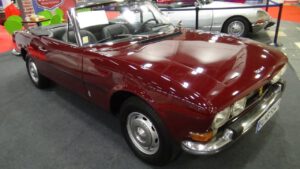
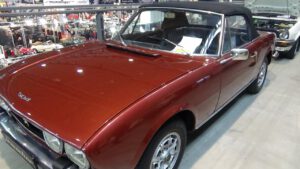
1968 – 1983 Peugeot 504 Cabriolet – Exterior and Interior – Motorworld Classics Berlin 2019
The Peugeot 504 Cabriolet reflects a deliberate attempt to elevate a successful mid-size platform into a more exclusive and design-focused segment. Introduced at the end of the 1960s and produced well into the early 1980s, it combined long-term mechanical reliability with a distinctly refined appearance. Its longevity in production already suggests that Peugeot found a durable formula that resonated with a specific audience.
Technical Details
The Peugeot 504 Cabriolet was based on the mechanical platform of the Peugeot 504saloon but consistently equipped with more powerful engine options. Early versions featured a front-mounted inline four-cylinder engine with a displacement of 1,796 cc, while later models adopted a larger 1,971 cc unit. In carbureted form, output ranged from approximately 87 to 97 horsepower, while the introduction of fuel injection increased power to around 104 horsepower.
The drivetrain followed a conventional front-engine, rear-wheel-drive layout. A four-speed manual gearbox was standard, with a five-speed manual and automatic transmission available depending on production year and market. This mechanical simplicity contributed to the car’s reputation for reliability and ease of maintenance.
The suspension system was designed to prioritize comfort and stability. Independent front suspension combined with a well-controlled rear axle setup allowed the car to perform predictably on long-distance journeys. Braking systems evolved during the production period, with front disc brakes and rear drum brakes forming the typical configuration, later complemented by improvements in braking assistance. Overall, the technical concept emphasized durability and usability rather than sporting performance.
- Manufacturer: Peugeot
- Model name: Peugeot 504 Cabriolet
- Year of manufacturing: 1968–1983
Design
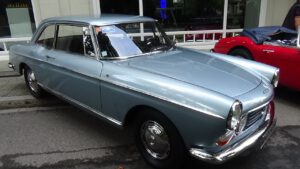
The Peugeot 504 Cabriolet was designed and built by the Italian coachbuilder Pininfarina, which gave it a distinct identity separate from the standard saloon. Although it shared the underlying structure, the bodywork was entirely reworked, resulting in a lower, more elegant silhouette.
The front retained Peugeot’s recognizable grille and headlamp arrangement but appeared more refined and harmonized within the broader design. The side profile is defined by clean, uninterrupted lines, with a long hood and a gently tapering rear section that emphasizes balance rather than ornamentation. Chrome detailing was used sparingly, reinforcing the car’s restrained character.
With the roof lowered, the car presented a particularly clean outline, free from excessive visual complexity. The proportions remained consistent throughout the production run, even as minor updates were introduced over the years. Inside, the cabin offered improved materials and finishes compared to the standard Peugeot 504, aligning with the Cabriolet’s more exclusive positioning. The layout remained clear and functional, reflecting Peugeot’s broader design philosophy.
Historical Significance
The Peugeot 504 was introduced in 1968 and quickly became one of the brand’s most important models, known for its adaptability and global success. Within this context, the Cabriolet represented a more specialized extension of the platform, aimed at customers seeking a combination of reliability and style.
Unlike many open-top derivatives of the period, the Peugeot 504Cabriolet was not simply a modified version of the saloon. It was developed in collaboration with Pininfarina and produced in Italy, highlighting Peugeot’s willingness to rely on external expertise for higher-end variants. This approach allowed the company to position the Cabriolet above the standard range without developing an entirely new model.
Production continued until 1983, significantly longer than the saloon in many markets. This extended lifecycle reflects steady demand, particularly among buyers who valued understated design and mechanical robustness over rapid stylistic change. The model also illustrates how Peugeot maintained continuity in engineering while gradually updating features such as fuel injection and transmission options.
Quirks and Pop Culture
The Peugeot 504 Cabriolet occupies a particular niche in automotive culture, often associated with understated elegance rather than overt prestige. Its connection to Pininfarina is frequently highlighted, placing it in a lineage that includes more overtly sporting Italian designs, even though the Peugeot itself remained more restrained in character.
A notable contrast exists within the Peugeot 504 range: while the saloon became widely known for its durability in demanding conditions—especially in Africa—the Cabriolet represented a more leisure-oriented interpretation of the same engineering base. This dual identity has contributed to the model’s lasting appeal among enthusiasts.
Although not heavily featured in mainstream film or media, the Peugeot 504as a whole became a familiar presence in everyday life across multiple continents. The Cabriolet, produced in smaller numbers, retained a more exclusive profile and is today often appreciated in classic car circles for its design clarity and long production span.
Display and preservation
This vehicle was displayed at the Motorworld Classics Berlin 2019. Held from 20 to 24 November, the presentation of historic vehicles was embedded in a broader cultural and lifestyle setting. Combined with the “Boot & Fun” exhibition, the event attracted over 50,000 visitors across numerous halls at the Funkturm complex. Within the atmospheric historic spaces, classic cars were displayed alongside themed exhibitions, including a dedicated showcase of Berlin-built automobiles from the Roaring Twenties. The mix of exhibition, sales opportunities, and entertainment created a vibrant environment where preservation and public engagement were closely intertwined.
Conclusion
The Peugeot 504 Cabriolet demonstrates how a manufacturer can successfully extend a mass-produced platform into a more refined and exclusive segment. Its technically conventional but durable engineering, combined with Pininfarina-designed bodywork, created a car that balanced usability with elegance. Historically, it reflects Peugeot’s strategy of combining in-house engineering with external design expertise. Its long production run and consistent design underline its lasting relevance, making it a distinctive example of late 20th-century European automotive development.