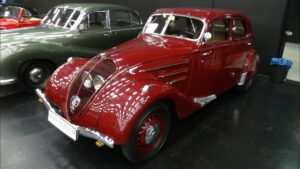
1967 Fiat 1500 C Berlina – Oldtimer-Meeting Baden-Baden 2021
In 1967, the Fiat 1500 C Berlina was not a new model, but an upgraded one—subtly revised to remain competitive in a segment that was becoming increasingly refined. Its evolution was measured in detail rather than redesign.
Technical Details:
The 1967 Fiat 1500 C Berlina was powered by a 1,481 cc inline four-cylinder engine, featuring an overhead valve (OHV) layout. Output remained in the range of approximately 75 horsepower, depending on market tuning and carburetion adjustments.
Fuel delivery was handled by a single carburetor, and power was transmitted to the rear wheels through a four-speed manual transmission, typically with full synchromesh. The front-engine, rear-wheel-drive configuration adhered to established European mid-size sedan engineering principles.
The Fiat 1500 C retained its unitary (monocoque) body construction, ensuring structural rigidity and weight efficiency. Independent front suspension with wishbones and coil springs contributed to stable handling, while the rear utilized a live axle supported by leaf springs.
Hydraulic drum brakes were fitted on all four wheels. Steering was mechanical, without power assistance in most configurations, emphasizing simplicity and serviceability. The 1500 C achieved a top speed of approximately 150 km/h, making it suitable for expanding European motorway networks.
The “C” designation reflected incremental refinements, including minor mechanical and trim updates that improved comfort and reliability without altering the fundamental architecture.
- Manufacturer: Fiat
- Model Name: Fiat 1500 C Berlina
- Year of Manufacturing: 1967
Design:
The 1967 Fiat 1500 C Berlina maintained the restrained, balanced styling of earlier 1500 models. Straight body lines and clean proportions aligned with mid-1960s European design trends.
The front fascia featured a simple rectangular grille flanked by twin headlamps. Chrome accents were present but understated, reinforcing the car’s professional and mature character rather than flamboyance.
The four-door berlina (sedan) body emphasized practicality, with generous glass surfaces providing visibility and interior light. The roofline was formal and slightly squared, projecting a sense of solidity appropriate for family and business use.
Inside, the dashboard layout was horizontally oriented and clearly structured. Gauges were legible and arranged with practicality in mind. Seating offered improved comfort compared to smaller Fiat models, with durable upholstery materials suited to regular use.
The design avoided dramatic gestures, instead presenting a cohesive and dependable visual identity.
Historical Significance:
The Fiat 1500 C Berlina occupied a strategic position in Fiat’s lineup during the late 1960s. Positioned between compact models such as the 124 and larger executive vehicles, it catered to buyers seeking additional space and performance without entering the luxury category.
By 1967, European markets were demanding higher refinement standards. The 1500 C represented Fiat’s response: maintaining proven engineering while refining details to extend the model’s competitiveness.
The model also contributed to Fiat’s export presence. Variants of the 1500 platform were assembled or adapted in multiple markets, reinforcing Fiat’s international footprint.
Quirks and Pop Culture:
The Fiat 1500 C Berlina does not carry the cultural symbolism of the 500, yet it represents a familiar presence in period European photography.
One notable aspect is its understated durability. Many examples served as taxis, government vehicles, or long-distance family cars, reinforcing the model’s reputation for reliability.
Today, surviving 1500 C Berlinas are appreciated for their balanced proportions and mechanical straightforwardness. They reflect a stage of European automotive development defined by stability rather than spectacle.
Display and preservation:
The vehicle was exhibited at the Oldtimer-Meeting Baden-Baden in 2021. This event, held annually in the spa town’s Kurpark and along the Kaiserallee, is one of Germany’s most picturesque classic car gatherings. In 2021, the 44th edition featured 300 vintage vehicles from 80 different brands, including rare models. The event embraced a 1970s theme, showcasing over 40 vehicles from that era. An innovative highlight was the “automobile fashion show,” where models presented current fashion trends while riding in open-top classic cars through the park. The event concluded with the traditional Concours d’élégance, awarding 120 prizes across 15 categories.
Conclusion:
The 1967 Fiat 1500 C Berlina demonstrates how incremental refinement can sustain a mid-size sedan in a competitive market. With its 1.5-liter engine, monocoque construction, and restrained styling, it offered dependable mobility suited to evolving European expectations. Its significance lies not in radical innovation, but in steady adaptation—maintaining relevance through measured engineering updates.