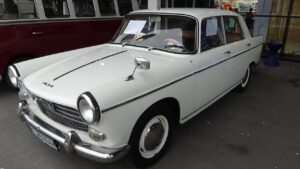
1967 – 1972 NSU TT – Motorworld Classics Bodensee 2022
Between 1967 and 1972, NSU transformed its compact Prinz platform into a serious small-displacement performance car. The NSU TT combined a rear-mounted high-revving engine with lightweight construction, becoming a fixture in European touring car racing. It proved that performance did not depend on size alone.
Technical Details:
The NSU TT was based on the NSU Prinz 1000 platform but fitted with a larger and more powerful engine. Early versions used a 1,085 cc air-cooled inline four-cylinder engine producing approximately 55 PS, while later and more common variants featured a 1,177 cc engine delivering around 65 PS in road specification. Performance-oriented versions such as the TTS produced up to 70 PS or more.
The engine was mounted at the rear, driving the rear wheels through a four-speed manual gearbox. The overhead camshaft design reflected NSU’s motorcycle engineering heritage. The rear-engine, rear-wheel-drive layout gave the TT distinctive handling characteristics, particularly under spirited driving.
The suspension system consisted of independent front suspension with wishbones and coil springs, while the rear axle supported the engine assembly and drivetrain. Four-wheel drum brakes were standard in early models, with front disc brakes introduced in later variants. With a curb weight of roughly 700–750 kg, the NSU TT achieved a top speed of approximately 150–160 km/h, depending on specification.
- Manufacturer: NSU Motorenwerke AG
- Model Name: NSU TT
- Year of Manufacturing: 1967–1972
Design:
The NSU TT retained the compact two-door sedan body of the Prinz 1000 but introduced visual and mechanical upgrades to reflect its sporting intent. The exterior featured a slightly lowered stance, wider wheels, and subtle badging. Ventilation slots at the rear emphasized the rear-engine configuration.
The front end was simple and upright, with round headlamps and minimal chrome. The body proportions were compact and practical, making the TT a small but purposeful performance sedan.
Inside, the TT offered additional instrumentation compared with standard Prinz models. A tachometer was prominently placed, underscoring the car’s performance focus. The cabin remained compact but functional, consistent with its lightweight philosophy.
Historical Significance:
The NSU TT was introduced during a period when small, affordable performance cars were gaining popularity in Europe. By upgrading the Prinz platform with larger engines and improved braking systems, NSU created a competitive entry in the under-1.2-liter class.
The TT achieved notable success in touring car racing and hill climb events, particularly in German motorsport. Its lightweight construction and strong power-to-weight ratio made it competitive against other small performance cars of the era.
The model also represented the final stage of NSU’s rear-engine development philosophy before the company shifted focus toward more advanced engineering projects, including the rotary-powered NSU Ro 80. Production ended in 1972, the same year NSU became part of Audi NSU Auto Union AG.
Quirks and Pop Culture:
The NSU TT became known for its lively handling, influenced by its rear-engine layout. Enthusiasts often note the car’s tendency toward oversteer when pushed to the limit, a characteristic shared with other rear-engined compact cars of the era.
Its motorsport presence gave the TT a reputation beyond its modest size. In period racing, the TT and especially the TTS were frequently seen in bright colors and with racing numbers, reinforcing their sporting identity.
Today, the NSU TT is remembered as one of Germany’s notable small performance sedans of the late 1960s. It occupies a distinct place between the practical Prinz models and the technologically ambitious rotary-era NSU vehicles.
Display and preservation:
The vehicle was exhibited at Motorworld Classics Bodensee in 2022. This event, held in Friedrichshafen, is a popular gathering for classic car enthusiasts in southern Germany, Austria, and Switzerland. The 2022 edition featured over 800 exhibitors spread across multiple halls and open-air spaces, offering a vibrant mix of vintage automobiles, motorcycles, boats, and aircraft. Visitors could explore restoration workshops, parts markets, and club presentations. A key highlight was the live vehicle auctions and dynamic driving demonstrations on the event grounds. The show reaffirmed its reputation as a hands-on celebration of classic mobility culture.
Conclusion:
The NSU TT became known for its lively handling, influenced by its rear-engine layout. Enthusiasts often note the car’s tendency toward oversteer when pushed to the limit, a characteristic shared with other rear-engined compact cars of the era.
Its motorsport presence gave the TT a reputation beyond its modest size. In period racing, the TT and especially the TTS were frequently seen in bright colors and with racing numbers, reinforcing their sporting identity.
Today, the NSU TT is remembered as one of Germany’s notable small performance sedans of the late 1960s. It occupies a distinct place between the practical Prinz models and the technologically ambitious rotary-era NSU vehicles.