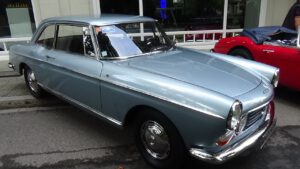
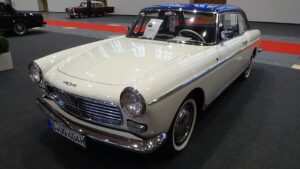
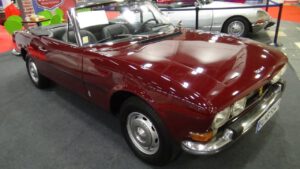
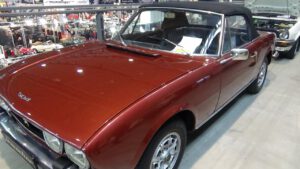
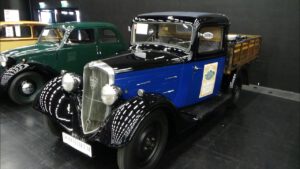
1965 Volkswagen Karmann Ghia Coupe – Exterior and Interior – Retro Classics Stuttgart 2022
Combining Volkswagen engineering with refined Italian styling, the Volkswagen Karmann Ghia Coupe delivered a compelling blend of elegance, practicality, and technical solidity. While never a high-volume seller, its bold design, thoughtful construction, and enduring cultural presence have secured it a respected place in automotive history.
Technical Details:
The Volkswagen Karmann Ghia Coupe was built on genuine Volkswagen Type 3 mechanicals, distinguishing it clearly from the earlier and smaller Karmann Ghia 1200, which relied on Beetle-derived underpinnings. Introduced to customers in March 1962, this Volkswagen Karmann Ghia Coupe initially launched with a 45 hp engine, later joined by the more powerful 1500 S variant producing 54 hp and capable of reaching up to 140 km/h. From August 1963 to August 1965, this configuration represented the sportiest factory offering before further mechanical revisions followed. In 1965, the model evolved into the 1600 L, still rated at 54 hp (40 kW) but now tuned to run on regular fuel, prioritizing durability and everyday usability over outright performance. Although acceleration suffered—0 to 100 km/h in around 19 seconds and a top speed of approximately 145 km/h—the car gained improved robustness. A significant technical upgrade was the introduction of front disc brakes, enhancing braking performance and safety. At roughly 893 kg (around 900 kg in later versions), the Volkswagen Karmann Ghia Coupe was about 80 kg heavier than the smaller Karmann Ghia, reflecting its larger dimensions and more substantial construction.
- Manufacturer: Volkswagen
- Model Name: Volkswagen Karmann Ghia Coupe
- Year of Manufacturing: 1962
Design:
Designed by Carrozzeria Ghia in Turin, with the concept dating back to 1958, the T Volkswagen Karmann Ghia Coupe presented a far more assertive and architectural appearance than its rounded predecessor. Broader, longer, and higher, it wore its sharp-edged elegance confidently, earning the nickname “Der große Karmann.” The all-steel, two-door coupe body followed a streamlined pontoon form, with integrated fenders and clean surfaces that emphasized horizontal width. Chrome detailing was lavish yet tasteful, from the bumper horns and headlamp rings to the polished wheel trim and signature Karmann Ghia script. Inside, the cabin balanced elegance and engineering logic. The steeply angled windshield and large rear window created an airy feel, while the instrument panel—with three central gauges and padded edges—combined clarity with safety-conscious design. Upholstered surfaces, carpeted sections, and thoughtful noise insulation underscored Volkswagen’s ambition to position the Volkswagen Karmann Ghia Coupe as a refined grand tourer rather than a mere stylish compact. Practicality also played a role, with multiple luggage compartments front, rear, and behind the rear seats, reinforcing the car’s dual nature as both stylish and usable.
Historical Significance:
The Volkswagen Karmann Ghia occupies a unique place in automotive history as Volkswagen’s attempt to elevate its design language and market positioning in the early 1960s. Revealed at the 1961 International Motor Show (IAA) alongside the rest of the Type 3 family, it demonstrated how far Volkswagen had progressed beyond the utilitarian Beetle. While technically aligned with the Type 3 sedan and Variant, the Volkswagen Karmann Ghia distinguished itself through its Italian design pedigree and more ambitious proportions. It reflected a period when Volkswagen sought to broaden its appeal without abandoning mechanical conservatism. Although sales volumes never matched those of mass-market VW models, the Volkswagen Karmann Ghia remains significant as a bridge between economy-focused engineering and aspirational design, as well as a testament to the long-standing collaboration between Volkswagen, Karmann, and Ghia.
Quirks and Pop Culture:
Quentin Tarantino has repeatedly paid homage to the Volkswagen Karmann Ghia: in Kill Bill – Volume 2 (2004), Uma Thurman’s character Beatrix Kiddo drives a Karmann Ghia Type 14. In Once Upon a Time in Hollywood (2019), Brad Pitt’s stuntman Cliff Booth cruises Los Angeles in a weathered blue Karmann Ghia convertible.The Volkswagen Karmann Ghia appeared in Pretty in Pink (1986), where Molly Ringwald’s character drove a memorable pink Karmann Ghia, cementing the car’s association with youthful individuality and romantic rebellion.
Display and preservation:
The vehicle was exhibited at the Retro Classics Stuttgart in 2022. This car show is one of the major events on the classic car calendar in Germany. In 2022, it took place across five exhibition halls. Visitors can enjoy special showcases, hunt for rare parts and books, and buy cars—both private sellers and dealers offer a wide range of classic and youngtimer vehicles. In 2022, there was a noticeable increase in low-mileage youngtimers and classic cars.
Conclusion:
Combining Volkswagen engineering with refined Italian styling, the Volkswagen Karmann Ghia Coupe delivered a compelling blend of elegance, practicality, and technical solidity. While never a high-volume seller, its bold design, thoughtful construction, and enduring cultural presence have secured it a respected place in automotive history. Today, the Volkswagen Karmann Ghia Coupe remains a sought-after classic—admired for its rarity, its design confidence, and its role in shaping Volkswagen’s journey from functional mobility to stylish sophistication.