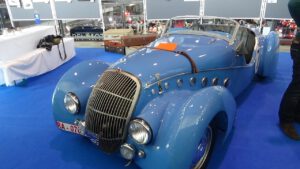
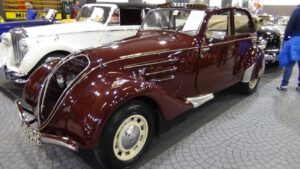
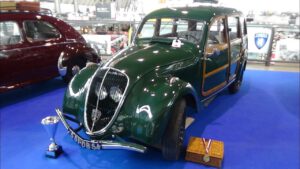
1965 Ferrari 330 Coupe – Exterior and Interior – Retro Classics Stuttgart 2022
In 1965, Ferrari offered a four-seat coupé that combined a 4.0-liter V12 with genuine touring comfort. The Ferrari 330 GT 2+2 refined the formula introduced by the 250 GTE and brought more power, a redesigned front end, and improved drivability. It marked Ferrari’s growing confidence in the grand touring segment.
Technical Details:
The 1965 Ferrari 330 GT 2+2 (Series II) was powered by a front-mounted 3,967 cc V12 engine from the Colombo family. The “330” designation referred to the approximate displacement per cylinder (around 330 cc each). The engine featured a 60-degree V configuration, single overhead camshaft per bank, and triple Weber carburetors. Output was rated at approximately 300 PS (about 220 kW) at around 6,600 rpm.
Power was transmitted to the rear wheels via a five-speed manual gearbox, replacing the earlier four-speed with overdrive used in the first series. The drivetrain followed Ferrari’s traditional front-engine, rear-wheel-drive layout. The chassis was a tubular steel frame derived from the 250 GTE platform but adapted to handle the increased torque of the larger 4.0-liter engine.
Suspension consisted of independent double wishbones with coil springs at the front and a live rear axle with semi-elliptic leaf springs. Four-wheel disc brakes were standard. The 330 GT 2+2 achieved a top speed of approximately 245 km/h, depending on gearing and specification, positioning it firmly within the high-performance GT class of the mid-1960s.
- Manufacturer: Ferrari
- Model Name: Ferrari 330 GT 2+2
- Year of Manufacturing: 1964–1967
Design:
The Ferrari 330 GT 2+2 was designed by Pininfarina and built at its Grugliasco facility. The 1965 model year corresponds to the Series II version, which introduced significant visual revisions compared to the earlier Series I.
The most noticeable change was the replacement of the quad-headlamp front end with a more conventional twin-headlamp layout. This simplified front fascia gave the car a cleaner and more cohesive appearance. The grille remained relatively understated, framed by subtle chrome accents.
The body proportions emphasized elegance and usability. With its extended wheelbase and 2+2 seating configuration, the 330 GT offered more interior space than Ferrari’s two-seat berlinettas. The side profile displayed a continuous shoulder line and balanced glass area, while the rear maintained a restrained, horizontal design.
Inside, the cabin was finished with leather upholstery and featured a traditional instrument cluster with round gauges directly in front of the driver. The 1965 Series II models also introduced a more conventional floor-mounted gear lever, replacing the earlier centrally mounted odd configuration of the first series. The interior was designed for long-distance comfort while maintaining Ferrari’s sporting character.
Historical Significance:
The Ferrari 330 GT 2+2 succeeded the 250 GTE and represented a natural evolution of Ferrari’s four-seat grand tourer concept. Introduced in 1964, it provided more power and improved refinement while maintaining the practicality that had made the 250 GTE commercially successful.
The 330 GT 2+2 was produced in significant numbers for Ferrari standards of the period, with over 1,000 examples built between 1964 and 1967. This made it one of Ferrari’s most important production models of the decade. The 1965 Series II version, with its updated front design and revised transmission layout, is often regarded as the more resolved variant.
The model also reflects Ferrari’s expanding production capabilities in the 1960s. As demand for road cars increased, grand tourers such as the 330 GT provided essential financial stability alongside racing programs.
Quirks and Pop Culture:
The early Series I 330 GT 2+2, with its unusual four-headlamp arrangement and centrally mounted gear lever, generated mixed reactions when introduced. The Series II redesign in 1965 addressed many of these criticisms, resulting in a more conventional and widely accepted appearance.
Unlike Ferrari’s mid-engined sports cars of the later 1960s, the 330 GT 2+2 emphasized comfort and discretion over flamboyance. As a result, it has often been described as one of the more understated Ferraris of the era. Its V12 engine, however, ensured performance that matched the brand’s reputation.
Over time, the 330 GT 2+2 has gained recognition as an important and usable classic Ferrari, valued for combining traditional V12 engineering with genuine four-seat practicality.
Display and preservation:
The vehicle was exhibited at the Retro Classics Stuttgart in 2022. This car show is one of the major events on the classic car calendar in Germany. In 2022, it took place across five exhibition halls. Visitors can enjoy special showcases, hunt for rare parts and books, and buy cars—both private sellers and dealers offer a wide range of classic and youngtimer vehicles. In 2022, there was a noticeable increase in low-mileage youngtimers and classic cars.
Conclusion:
The 1965 Ferrari 330 GT 2+2 represents a mature stage in Ferrari’s grand touring development. Technically defined by its 4.0-liter Colombo V12, five-speed manual gearbox, tubular chassis, and four-wheel disc brakes, it delivered both performance and comfort. Its Pininfarina-designed Series II body refined the earlier concept with cleaner front styling and improved ergonomics. Historically, the 330 GT 2+2 strengthened Ferrari’s position in the luxury GT market and demonstrated that high production volumes and V12 performance could coexist within a practical four-seat format.