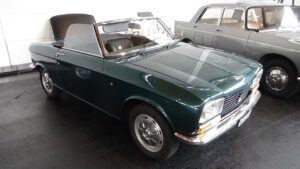
1964 Autobianchi Bianchina Cabriolet – Exterior and Interior – Oldtimer-Meeting Baden-Baden 2021
Compact dimensions did not prevent the 1964 Autobianchi Bianchina Cabriolet from projecting style. Based on the mechanical layout of the Fiat 500 but dressed in more refined bodywork, it offered open-air motoring in a distinctly Italian format. The Bianchina Cabriolet combined city-car practicality with coachbuilt flair.
Technical Details
The 1964 Autobianchi Bianchina Cabriolet was produced by Autobianchi, a company formed in 1955 by Bianchi, Pirelli, and Fiat. Mechanically, it was derived from the Fiat 500 platform and shared its rear-engine, rear-wheel-drive configuration.
Power came from an air-cooled inline two-cylinder engine mounted at the rear. In 1964, displacement was typically 499 cc, with output ranging from approximately 18 to 21 horsepower depending on specification. The engine was paired with a four-speed manual gearbox driving the rear wheels.
The car used a steel monocoque structure. Suspension consisted of independent front suspension with transverse leaf spring and wishbones, while the rear used semi-trailing arms with coil springs. Hydraulic drum brakes were fitted on all four wheels. With a kerb weight of around 500–520 kilograms, the Bianchina Cabriolet achieved a top speed in the range of 95–105 km/h, appropriate for urban and secondary-road use.
- Manufacturer: Autobianchi
- Model Name: Autobianchi Bianchina Cabriolet
- Year of Manufacturing: 1964
Design
The Autobianchi Bianchina Cabriolet distinguished itself visually from the more utilitarian Fiat 500 through additional chrome detailing, revised body panels, and a more refined presentation. The front featured a distinct grille treatment and chrome bumper elements that elevated its appearance beyond that of a basic city car.
The Cabriolet version incorporated a full folding soft top that extended down to the rear deck, allowing a nearly open-air driving experience. Slim pillars and generous glazing contributed to a light and elegant profile. Compared with the standard 500, the Bianchina appeared more tailored, with subtle design modifications around the side panels and rear.
Inside, the cabin featured upgraded trim materials relative to the Fiat 500. The dashboard layout remained simple, with centrally positioned instruments, but decorative accents and improved upholstery gave the car a more upmarket character. The overall design combined compact proportions with stylistic detail, aligning with Italy’s 1960s emphasis on fashion-conscious small cars.
Historical Significance
The Bianchina was introduced in 1957 as a more refined derivative of the Fiat 500, targeting buyers who wanted compact mobility with additional comfort and style. By 1964, the Cabriolet variant had become one of the most recognizable body styles within the Bianchina lineup.
Autobianchi served as a testing ground for Fiat Group concepts and niche models. The Bianchina demonstrated how the basic Fiat 500 mechanical package could be adapted into multiple body configurations, including coupé, cabriolet, and estate versions. This strategy allowed the Fiat Group to broaden its market appeal without developing entirely new platforms.
The 1964 Bianchina Cabriolet thus reflects both Italy’s economic growth during the early 1960s and the increasing demand for small yet stylish personal vehicles. It occupies a distinct niche between utilitarian microcars and larger compact sedans.
Quirks and Pop Culture
The Autobianchi Bianchina gained additional recognition through its appearance in Italian popular culture, including film and television. Its compact size and elegant details made it a frequent symbol of urban life during the economic boom years.
The Cabriolet’s full-length soft top, rather than a simple folding fabric panel, set it apart from many small convertibles of the period. Enthusiasts often appreciate the Bianchina for offering greater visual individuality than the standard Fiat 500 while retaining similar mechanical simplicity.
Today, surviving 1964 Autobianchi Bianchina Cabriolets are popular at classic car events, particularly in Italy. Their combination of small dimensions, rear-engine layout, and refined styling ensures continued interest among collectors of 1960s European compact cars.
Display and preservation:
The vehicle was exhibited at the Oldtimer-Meeting Baden-Baden in 2021. This event, held annually in the spa town’s Kurpark and along the Kaiserallee, is one of Germany’s most picturesque classic car gatherings. In 2021, the 44th edition featured 300 vintage vehicles from 80 different brands, including rare models. The event embraced a 1970s theme, showcasing over 40 vehicles from that era. An innovative highlight was the “automobile fashion show,” where models presented current fashion trends while riding in open-top classic cars through the park. The event concluded with the traditional Concours d’élégance, awarding 120 prizes across 15 categories.
Conclusion
The 1964 Autobianchi Bianchina Cabriolet combined the proven rear-engine mechanics of the Fiat 500 with enhanced styling and trim. Powered by a 499 cc air-cooled two-cylinder engine and built on a steel monocoque structure, it offered practical city performance in a fashionable open-top format. As a product of Autobianchi’s role within the Fiat Group, the Bianchina Cabriolet represents a refined interpretation of Italy’s small-car tradition during the early 1960s.