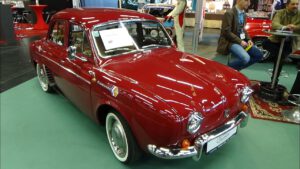
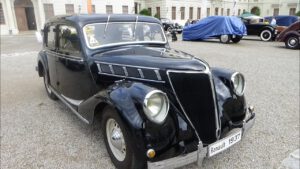
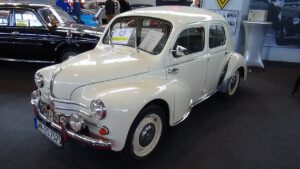
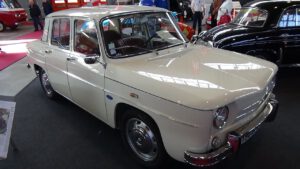
1963 Fiat 1500 – Exterior and Interior – Classic Expo Salzburg 2021
Between the microcar and the executive sedan, there was a growing middle ground in the early 1960s. The 1963 Fiat 1500 was designed precisely for that space—larger and more powerful than Fiat’s compact models, yet still measured in scale and cost. It represented mobility with ambition rather than excess.
Technical Details:
The 1963 Fiat 1500 was powered by a 1,481 cc inline four-cylinder engine, featuring an overhead valve (OHV) configuration. Output was approximately 72 horsepower, providing a balanced combination of responsiveness and efficiency for a mid-size European sedan of its era.
Fuel delivery was via a single carburetor, and power was transmitted to the rear wheels through a four-speed manual transmission, with synchromesh on the upper gears. The front-engine, rear-wheel-drive layout followed conventional engineering practice of the period.
The Fiat 1500 utilized a unitary (monocoque) body construction, contributing to structural rigidity and weight control. Independent front suspension with wishbones and coil springs improved ride quality and road holding, while the rear employed a live axle supported by leaf springs. Hydraulic drum brakes were fitted on all four wheels.
With a top speed of approximately 145 km/h, the Fiat 1500 offered competitive performance within its class, suitable for both urban driving and extended highway travel.
- Manufacturer: Fiat
- Model Name: Fiat 1500
- Year of Manufacturing: 1963
Design:
The 1963 Fiat 1500 presented a clean, balanced design aligned with early-1960s European styling trends. The body featured straight lines and modest chrome accents, avoiding flamboyance in favor of clarity.
The front fascia incorporated a simple rectangular grille flanked by dual headlamps, creating a composed and symmetrical appearance. The hood and fender lines were understated, contributing to a restrained profile.
Side proportions emphasized practicality, with a four-door layout and generous glass area that enhanced visibility and interior light. The rear design was simple and geometric, reflecting contemporary design language.
Inside, the Fiat 1500 offered a functional and well-organized cabin. The dashboard was horizontally oriented, housing clear instrumentation and straightforward controls. Seating materials ranged from durable fabrics to upgraded finishes depending on specification. Compared with smaller Fiat models, the 1500 provided increased legroom and comfort for long-distance travel.
The design as a whole communicated competence and maturity rather than experimentation.
Historical Significance:
The Fiat 1500 played a key role in expanding Fiat’s presence in the mid-size sedan segment. Positioned above the 1300 and below larger executive offerings, it addressed a growing market of professionals and families seeking greater performance and interior space.
During the early 1960s, European economies were experiencing steady growth, and demand for more substantial vehicles increased accordingly. The Fiat 1500 responded with improved engine displacement and refined construction without entering the luxury category.
The model also gained international relevance through licensed production and assembly in various markets, contributing to Fiat’s global reach.
Quirks and Pop Culture:
While not as iconic as the Fiat 500 or as distinctive as certain coachbuilt variants, the Fiat 1500 became a familiar presence across European roads.
One notable aspect was its versatility. It served equally well as private transport, taxi service, and small-business vehicle in various regions.
Today, surviving examples are appreciated for their understated design and mechanical simplicity. The Fiat 1500 represents a practical phase of European automotive development—one focused on incremental improvement rather than radical transformation.
Display and preservation:
The vehicle was exhibited at the Classic Expo Salzburg in 2021. As one of Austria’s premier classic car events, the show has established itself as a central meeting point for collectors, restorers, and enthusiasts from across Central Europe. The 2021 edition took place at Messezentrum Salzburg and featured more than 250 exhibitors, along with a strong turnout of over 20,000 visitors. Attendees could explore a broad range of offerings—from historical vehicles and motorcycles to automobilia, spare parts, and literature.
Conclusion:
The 1963 Fiat 1500 stands as a measured response to a changing automotive landscape. Combining a larger engine, refined construction, and balanced styling, it filled an expanding middle segment in Fiat’s lineup. Its legacy lies in demonstrating how steady engineering evolution can meet shifting market demands without abandoning accessibility or clarity of design.