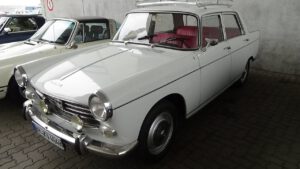
1963 – 1975 Peugeot 404 – Exterior and Interior – Hamburg Motor Classics 2017
Few cars combined durability, global reach, and understated elegance quite like the Peugeot 404. Produced across more than a decade and on multiple continents, it became one of Peugeot’s most recognizable models. Its longevity from 1960 to the mid-1970s reflects not only solid engineering but also an ability to adapt to very different markets and uses.
Technical Details
The Peugeot 404 was built around a conventional yet robust technical layout, designed to balance reliability with everyday usability. It featured a front-mounted inline four-cylinder engine, initially with a displacement of 1.6 liters (1,618 cc). Power outputs varied depending on version, typically ranging from around 65 horsepower in early carbureted models to approximately 85 horsepower in fuel-injected variants. The Kugelfischer mechanical fuel injection system, introduced in certain versions, was a notable technical step for a mid-range European car of the 1960s.
Power was transmitted to the rear wheels through either a four-speed manual gearbox, often operated via a column-mounted shifter, or an optional automatic transmission. The chassis followed a classic layout with independent front suspension and a rigid rear axle, tuned for durability rather than sporty handling. This setup proved particularly well suited to poor road conditions, contributing to the model’s reputation for toughness.
In addition to petrol engines, Peugeot introduced diesel variants of the Peugeot 404, which became especially important in export markets. These engines prioritized longevity and fuel efficiency over performance, reinforcing the car’s utilitarian appeal. Across all versions, the engineering emphasized ease of maintenance and long service life, key factors in the model’s widespread adoption.
- Manufacturer: Peugeot
- Model name: Peugeot 404
- Year of manufacturing: 1960–1975 (production extended in some markets beyond this period)
Design
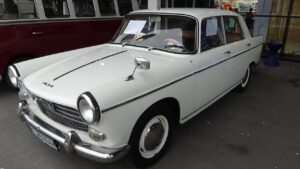
The design of the Peugeot 404 was the result of a collaboration with the Italian design house Pininfarina, giving the car a clean and balanced appearance that distinguished it from many contemporaries. The body featured straight lines, a restrained use of chrome, and well-proportioned surfaces, reflecting a shift toward modern, geometric styling in the early 1960s.
The front end was characterized by a simple rectangular grille and vertically oriented headlights, while the overall silhouette remained upright and practical. The design avoided unnecessary ornamentation, instead focusing on clarity and proportion. This approach contributed to the car’s timeless appearance and broad appeal.
Inside, the cabin followed a similar philosophy. The layout was functional and uncluttered, with clear instrumentation and durable materials. Depending on the version, interior finishes ranged from basic to relatively refined, particularly in the coupé and cabriolet variants. These two-door versions, also styled by Pininfarina, introduced a more elegant and flowing interpretation of the Peugeot 404’s design language, with a lower roofline and more pronounced stylistic detailing.
Historical Significance
The Peugeot 404 was introduced at a time when the European automotive market was expanding rapidly, driven by economic growth and increasing demand for reliable family cars. It replaced the Peugeot 403 and continued the brand’s strategy of producing durable, mid-sized vehicles with a strong export focus.
Production of the Peugeot 404 reached approximately 2.8 million units, making it one of Peugeot’s most successful models of the period. Its reputation for robustness made it particularly popular in Africa and other regions with challenging road conditions, where it was often used as a taxi or utility vehicle. In some countries, local production continued well beyond its official European production end in 1975.
The introduction of fuel injection in certain versions also marked a technological step forward, demonstrating Peugeot’s willingness to integrate more advanced systems into mainstream models. At the same time, the availability of diesel engines helped establish Peugeot’s long-standing reputation in diesel passenger cars.
Quirks and Pop Culture
The Peugeot 404 became closely associated with reliability to the point of legend, particularly in African and South American markets. Stories of Peugeot 404s operating for decades under heavy use are common, reinforcing its image as a car built to endure rather than impress.
The model also gained recognition in motorsport, particularly in long-distance rally events. Its durability and predictable handling made it a suitable choice for endurance competitions, further enhancing its reputation.
In cultural terms, the Peugeot 404 is often remembered as a quintessential “working car,” equally at home as a family vehicle, taxi, or light commercial platform. The coupé and cabriolet versions, however, added a different dimension, showing that the same basic platform could also support more refined and style-oriented interpretations.
Display and preservation
This car was displayed at the Hamburg Motor Classics 2017. From October 13 to 15, the regional show attracted around 18,000 enthusiasts, with strong visitor satisfaction reflecting its focused and accessible format. Spread across two main halls and an additional vehicle market area, the exhibition maintained an intimate atmosphere while still offering a diverse selection of classic vehicles. A special highlight was the tribute to Hamburg’s own automotive past, including rare Tempo vehicles from Vidal & Sohn, showcased both in a dedicated display and by the Prototyp Museum. Clubs contributed significantly to the exhibition’s character, presenting unique vehicles such as multiple DeLorean DMC-12 models, including a film car reminiscent of “Back to the Future”. Combined with an active sales area and expert talks on a dedicated stage, the event underlined how preservation thrives not only in large-scale shows but also through strong regional engagement.
Conclusion
The Peugeot 404 stands as a well-balanced product of its time, combining straightforward engineering, clean design, and global adaptability. Its technical simplicity contributed to exceptional durability, while its Pininfarina styling gave it a lasting visual identity. With millions produced and a presence that extended far beyond Europe, the Peugeot 404 became more than just a mid-size sedan—it became a dependable tool for everyday mobility across diverse environments.