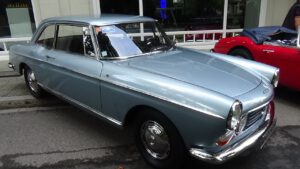
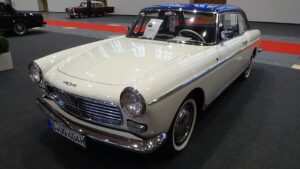
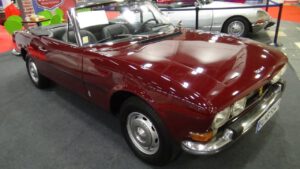
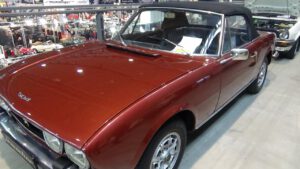
1962 BMW 700 Sport Coupé – Exterior and Interior – Motorworld Classics Bodensee 2022
Compact in size but decisive in impact, the 1962 BMW 700 Sport Coupé represents one of the most important turning points in BMW’s history. Developed during a period of financial uncertainty, it combined lightweight construction with genuine sporting intent. More than a small coupé, it helped redefine the company’s future direction.
Technical Details:
The 1962 BMW 700 Sport Coupé was powered by a rear-mounted, air-cooled flat-twin (boxer) engine derived from BMW motorcycle technology. With a displacement of 697 cc, the engine in Sport specification produced approximately 40 horsepower, an increase over the standard saloon version.
Power was transmitted to the rear wheels through a four-speed manual gearbox. The rear-engine, rear-wheel-drive layout contributed to compact packaging and efficient weight distribution for a small car of its class. The lightweight monocoque body construction further enhanced performance and rigidity.
Independent front suspension and a rear swing-axle setup provided predictable handling characteristics. Hydraulic drum brakes were fitted on all four wheels. With a top speed of approximately 135 km/h (around 84 mph), the 700 Sport Coupé offered competitive performance in the small sports car segment of the early 1960s.
- Manufacturer: BMW
- Model Name: BMW 700 Sport Coupé
- Year of Manufacturing: 1962
Design:
The BMW 700 was styled by Italian designer Giovanni Michelotti, whose clean, modern lines contrasted sharply with the earlier “Baroque” BMW sedans. The Sport Coupé featured a low roofline, slim pillars, and balanced proportions that gave it a distinctly contemporary appearance.
At the front, a modest interpretation of BMW’s kidney grille was integrated into a simple horizontal fascia flanked by round headlamps. The compact dimensions and short overhangs emphasized agility rather than luxury. Compared to the sedan version, the Sport Coupé offered a more streamlined and dynamic silhouette.
Inside, the cabin was straightforward and driver-focused. Instrumentation was clearly arranged, and the seating position was relatively low for a small car of the period. Materials were practical rather than luxurious, reflecting the car’s positioning as an affordable sporting model.
Historical Significance:
The BMW 700 was introduced in 1959 at a time when BMW faced serious financial difficulties. Large luxury models such as the BMW 502 had proven costly to produce, while the BMW Isetta alone could not sustain long-term growth.
The 700 combined compact dimensions with a modern monocoque body and improved performance, attracting new customers. The Sport Coupé variant enhanced the model’s appeal by emphasizing driving enjoyment and motorsport potential. In competition, modified 700 models achieved success in touring car racing, further strengthening BMW’s sporting image.
Strong sales of the 700 were instrumental in stabilizing BMW’s finances and preventing a takeover in the late 1950s. The model laid the groundwork for the company’s subsequent “Neue Klasse” sedans introduced in the early 1960s, which would establish BMW’s modern identity.
Quirks and Pop Culture:
The BMW 700 Sport Coupé is often remembered for its role in grassroots motorsport. Lightweight and mechanically simple, it proved competitive in its class and became popular among privateer racers.
Its compact rear-engine layout and flat-twin sound gave it a character distinct from later BMW inline-four and inline-six models. Enthusiasts today appreciate the 700 Sport Coupé not only for its rarity but also for its symbolic importance in BMW’s survival story.
Display and preservation:
The vehicle was exhibited at Motorworld Classics Bodensee in 2022. This event, held in Friedrichshafen, is a popular gathering for classic car enthusiasts in southern Germany, Austria, and Switzerland. The 2022 edition featured over 800 exhibitors spread across multiple halls and open-air spaces, offering a vibrant mix of vintage automobiles, motorcycles, boats, and aircraft. Visitors could explore restoration workshops, parts markets, and club presentations. A key highlight was the live vehicle auctions and dynamic driving demonstrations on the event grounds. The show reaffirmed its reputation as a hands-on celebration of classic mobility culture.
Conclusion:
The 1962 BMW 700 Sport Coupé stands as a compact yet pivotal model in BMW’s history. Equipped with a 697 cc flat-twin engine, monocoque construction, and a lightweight sporting body, it combined affordability with driving engagement. More importantly, its commercial success helped secure BMW’s future, paving the way for the performance-oriented sedans that would define the brand in the decades to follow.