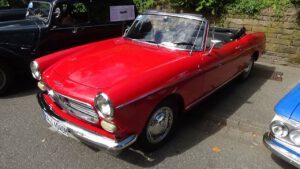
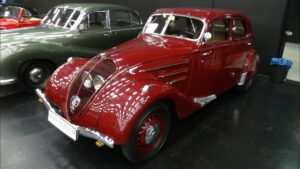
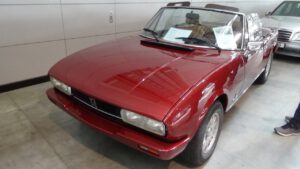
1962-1980 MGB Roadster – Exterior and Interior – Retro Classics Stuttgart 2022
Longevity is rarely accidental in the sports car world. When the MGB Roadster entered production in 1962, few would have predicted an 18-year lifespan with only evolutionary changes. Yet the MGB endured because it quietly matched everyday usability with traditional sports car appeal—an equation that proved remarkably resilient.
Technical Details:
The MGB Roadster was powered throughout its production life by versions of BMC’s B-Series inline four-cylinder engine, initially displacing 1,798 cc. Early models produced approximately 95 horsepower in European specification, though output varied over time due to emissions regulations, particularly in North American markets. Fuel delivery was via twin SU carburetors on early cars, later replaced by single carburetor and emissions-controlled setups in some export versions.
Power was sent to the rear wheels through a four-speed manual transmission, with an electrically actuated overdrive unit available on third and fourth gears, significantly improving long-distance cruising ability. From 1967 onward, a three-speed automatic transmission was offered, broadening the car’s appeal beyond traditional sports car buyers.
Chassis construction marked a major technical step forward for MG. Unlike its predecessors, the MGB used a unitary (monocoque) body structure, improving rigidity, safety, and manufacturing efficiency. Suspension consisted of independent front suspension with coil springs and wishbones, while the rear employed a live axle with semi-elliptic leaf springs. Braking was by front disc brakes and rear drums, a configuration that remained unchanged throughout production. In standard form, early MGB Roadsters were capable of top speeds around 105 mph (170 km/h), with performance gradually softening in later years due to regulatory constraints.
- Manufacturer: MG (Morris Garages)
- Model Name: MGB Roadster
- Year of Manufacturing: 1962–1980
Design:
The design of the MGB Roadster balanced modernity with restraint. Its proportions were clean and compact, with a long hood, short rear deck, and minimal overhangs. Unlike the MGA’s flowing curves, the MGB adopted flatter body surfaces and a more upright stance, reflecting early-1960s design sensibilities.
The front end was defined by a simple grille opening flanked by exposed headlamps, while chrome bumpers front and rear gave early cars a light, elegant appearance. From 1974 onward, the introduction of rubber impact bumpers—mandated by safety regulations—visually altered the car significantly, raising ride height and changing its character. These later cars remain mechanically similar but are instantly distinguishable in profile.
Inside, the cabin emphasized practicality. The dashboard evolved from metal with painted finishes to padded surfaces and, later, integrated safety features. Instrumentation was clear and driver-focused, with large centrally mounted gauges. Seating was upright but comfortable enough for extended drives, reinforcing the MGB’s dual role as both sports car and everyday vehicle. Overall, the design avoided flamboyance, instead favoring longevity and broad appeal.
Historical Significance:
The MGB arrived at a moment when the sports car market was expanding rapidly, particularly in North America. MG’s earlier models had established credibility, but they still relied heavily on pre-war engineering concepts. The MGB represented a decisive modernization of the brand.
Its monocoque construction placed MG in line with contemporary automotive practice, improving structural integrity while reducing weight and production costs. Just as importantly, the MGB was engineered with export markets firmly in mind. It offered greater interior space, improved weather protection, and more predictable handling than earlier MG roadsters, making it suitable for daily use rather than occasional motoring.
Production figures underscore its importance. Across all variants, over 500,000 MGBs were built, with the Roadster accounting for the majority. This made it one of the most successful British sports cars ever produced. Despite tightening safety and emissions regulations in the 1970s, the MGB remained in production until 1980, outlasting many competitors and becoming a familiar presence on roads worldwide.
Quirks and Pop Culture:
The MGB’s cultural footprint is unusually broad. It became a default sports car for a generation of enthusiasts, often serving as a first entry point into classic motoring. Its mechanical simplicity and robust parts availability encouraged owner maintenance and modification, helping establish a strong DIY culture around the model.
In popular media, the MGB appeared frequently as a symbol of accessible style rather than exclusivity. It featured in television series, films, and advertising as a shorthand for tasteful individuality and middle-class aspiration. Unlike more exotic sports cars, the MGB’s image was rooted in relatability.
One enduring quirk is the divided reputation between early chrome-bumper cars and later rubber-bumper versions. Enthusiasts often debate aesthetics and handling differences, yet this division itself reflects how long the MGB remained relevant—and how it adapted, sometimes awkwardly, to changing regulatory environments.
Display and preservation:
The vehicle was exhibited at the Retro Classics Stuttgart in 2022. This car show is one of the major events on the classic car calendar in Germany. In 2022, it took place across five exhibition halls. Visitors can enjoy special showcases, hunt for rare parts and books, and buy cars—both private sellers and dealers offer a wide range of classic and youngtimer vehicles. In 2022, there was a noticeable increase in low-mileage youngtimers and classic cars.
Conclusion:
The 1962–1980 MGB Roadster was not revolutionary in isolation, but its cumulative impact was substantial. By combining modern construction, dependable mechanicals, and restrained design, it delivered a sports car that could evolve without losing identity. Its long production run, global success, and lasting enthusiast support confirm its role as one of the defining roadsters of the 20th century. Rather than chasing trends, the MGB endured by remaining usable, familiar, and quietly adaptable—qualities that continue to define its appeal today.