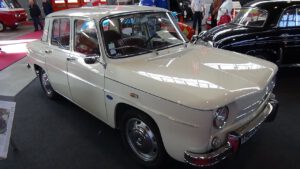
1961-1977 – Renault Alpine – MotoTechnica Augsburg 2015
The early 1960s saw Alpine transition from a niche sports car constructor into a more structured partner of Renault. The Renault Alpine A110 would later define the brand, but its foundation was laid by a lesser-known yet crucial series: the Renault Alpine models produced from 1961 to 1977. These cars combined lightweight construction with modest Renault mechanicals, creating a distinct approach to performance that relied more on balance than brute force.
Technical Details
The Renault Alpine models of this period—primarily the A108 and early A110 derivatives—were built around a lightweight backbone chassis, often paired with fiberglass (glass-reinforced plastic) bodywork. This construction method significantly reduced weight compared to conventional steel-bodied cars and contributed to agile handling characteristics.
Power came from rear-mounted inline four-cylinder engines sourced from Renault production models such as the Dauphine and later the Renault 8. Engine displacements ranged from approximately 845 cc to 1,300 cc depending on version and production year. Output varied accordingly, typically between 40 and 110 horsepower in early configurations, with later A110 variants exceeding these figures.
The drivetrain followed a rear-engine, rear-wheel-drive layout, consistent with Renault’s small-car engineering philosophy of the time. Gearboxes were manual, often with four or five speeds in later developments. Suspension systems were relatively simple but effective, with independent setups that emphasized low weight and responsiveness rather than comfort. Disc brakes were introduced in later versions, improving stopping performance in line with the cars’ growing sporting ambitions.
- Manufacturer: Renault Alpine
- Model name: Renault Alpine (A108 / early A110 series)
- Year of manufacturing: 1961–1977
Design
The design of the Renault Alpine models stood apart from mainstream Renault vehicles. Their low-slung proportions, curved surfaces, and compact dimensions reflected a clear focus on aerodynamics and visual lightness. The use of fiberglass allowed for fluid shapes that would have been more difficult to achieve with steel, resulting in a distinctive silhouette with rounded fenders and a tapered rear.
At the front, the cars typically featured multiple headlamp arrangements integrated into smooth bodywork, giving them a purposeful yet understated appearance. The absence of excessive chrome or ornamentation reinforced the functional nature of the design. Wheels were relatively small in diameter but positioned at the corners, enhancing the car’s stance and agility.
Inside, the design was minimal. The cockpit prioritized driving over comfort, with simple instrumentation, lightweight seats, and limited insulation. Visibility was good thanks to large glass areas, while the compact cabin emphasized the car’s sporting intent. The overall impression was one of efficiency rather than luxury.
Historical Significance
The Renault Alpine models produced between 1961 and 1977 represent a formative period for Renault Alpine as a brand. Founded by Jean Rédélé, Alpine initially relied on Renault mechanical components to create lightweight sports cars tailored for rallying and competition. This collaboration evolved into a formal relationship, with Renault eventually taking a controlling interest in Alpine.
During this period, Renault Alpine refined its engineering philosophy: low weight, efficient use of modest power, and strong handling characteristics. These principles allowed Alpine cars to compete successfully in motorsport, particularly in rallying. The transition from the A108 to the A110 marked a step forward in both performance and recognition.
By the early 1970s, Alpine’s approach culminated in major success, including victories in international rally competitions and the inaugural World Rally Championship in 1973. The cars from this 1961–1977 period therefore represent not just a product line, but the development of a coherent engineering and competitive identity.
Quirks and Pop Culture
One of the defining quirks of the Renault Alpine models was their reliance on relatively small engines. While competitors often pursued higher displacement and power, Alpine focused on minimizing weight. This led to cars that could outperform more powerful rivals on winding roads and rally stages.
The fiberglass body construction, while advantageous for weight, also introduced challenges. Early production methods could result in variations in panel fit and finish, giving individual cars subtle differences. This handmade character has become part of their appeal among collectors.
In motorsport culture, Alpine cars became closely associated with rally driving in mountainous regions, particularly in France. Their agility on narrow, twisting roads contributed to their reputation and helped establish Alpine as a specialist in this discipline. The later A110, developed from this lineage, would become an enduring icon of rally history.
Display and preservation
This car was shown at the MotoTechnica Augsburg 2015. Held on January 10 and 11, the event marked the 16th edition of this popular gathering for classic vehicle enthusiasts. Around 500 exhibitors and approximately 20,000 visitors filled 20,000 square meters of indoor space and 10,000 square meters outdoors. The event combined rare vehicles—from microcars to American cruisers—with club displays, a model car exchange, and a vast parts market. A major highlight was the open classic car meeting, welcoming pre-1985 vehicles.
Conclusion
The Renault Alpine models produced between 1961 and 1977 laid the groundwork for one of the most distinctive approaches to sports car design in Europe. By combining lightweight construction, modest Renault engines, and focused engineering, Alpine created vehicles that prioritized balance and agility over raw power. Their design reflected this philosophy, with compact, aerodynamic bodies and minimal interiors. Historically, these cars marked the emergence of Alpine as a serious motorsport contender and a valued partner of Renault. Today, they are recognized as key contributors to the development of lightweight performance cars and as precursors to Alpine’s later success on the international stage.