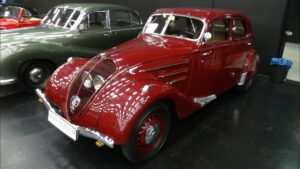
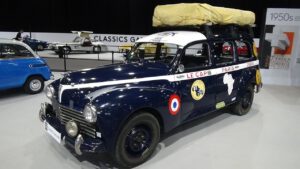
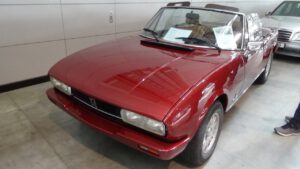
1960 BMW Isetta 250 Export – Exterior and Interior – Classic Expo Salzburg 2021
By 1960, the BMW Isetta 250 Export had evolved from an emergency solution into a refined microcar for international markets. It remained compact and mechanically simple, yet the Export version offered a higher level of finish and comfort. In the final years of its production run, it stood as a symbol of BMW’s recovery phase.
Technical Details:
The 1960 BMW Isetta 250 Export was powered by a rear-mounted, air-cooled single-cylinder four-stroke engine with a displacement of 247 cc. Derived from BMW motorcycle engineering, the engine produced approximately 12 horsepower at around 5,800 rpm. Although modest in output, the lightweight construction of the vehicle ensured adequate performance for urban mobility.
A four-speed manual gearbox with reverse transmitted power to the rear wheels. The drivetrain remained compact and efficient, optimized for fuel economy and ease of maintenance. Top speed was typically around 85 km/h (53 mph), consistent with the car’s intended use in city traffic and short regional journeys.
The Isetta featured a tubular frame with steel body panels mounted on top. Independent front suspension and a simple rear suspension layout provided stable handling at moderate speeds. Hydraulic drum brakes were fitted on all wheels. By 1960, most Isettas had adopted a wider rear track compared to the earliest narrow-track versions, improving stability and road behavior.
- Manufacturer: BMW
- Model Name: BMW Isetta 250 Export
- Year of Manufacturing: 1960
Design:
The most distinctive feature of the BMW Isetta 250 Export remained its single, front-hinged door. The entire front section of the car—including the steering column—swung outward to provide access to the two-seat cabin. This unusual configuration allowed easy entry in tight parking spaces and defined the car’s identity.
The Export version differed from the Standard model through improved trim and equipment. Additional chrome detailing, upgraded upholstery, and enhanced interior finishes made the car more appealing to export customers. Despite its compact footprint, the rounded “bubble” body offered relatively generous headroom and visibility thanks to large windows.
Inside, the cabin accommodated two occupants on a bench seat. Instrumentation was minimal but clearly arranged, typically consisting of a centrally positioned speedometer and essential warning lights. The focus remained on practicality and efficient use of space.
Historical Significance:
The BMW Isetta was introduced in 1955 under license from the Italian manufacturer Iso. At the time, BMW faced significant financial difficulties due to limited demand for its larger luxury models. The Isetta quickly became the company’s most important volume product.
By 1960, the Isetta 250 Export represented a mature phase of production. The model had proven successful in both domestic and international markets. Sales of the Isetta family between 1955 and 1962 exceeded 160,000 units, providing BMW with essential revenue during a critical period.
The stability achieved through Isetta production allowed BMW to continue developing more conventional automobiles, including the BMW 700. Without the Isetta’s contribution, BMW’s survival as an independent manufacturer would have been uncertain.
Quirks and Pop Culture:
The Isetta earned the nickname “bubble car” due to its rounded silhouette. Its front-entry design was both practical and occasionally challenging—parking too close to an obstacle could block access entirely. Nevertheless, in crowded urban environments, the layout allowed drivers to step directly onto the sidewalk.
The Export version’s improved finish broadened its appeal beyond purely budget-conscious buyers. Over time, the Isetta became an icon of 1950s and early-1960s European mobility. Its compact size and single-cylinder engine stand in striking contrast to BMW’s later high-performance reputation, adding to its historical fascination.
Display and preservation:
The vehicle was exhibited at the Classic Expo Salzburg in 2021. As one of Austria’s premier classic car events, the show has established itself as a central meeting point for collectors, restorers, and enthusiasts from across Central Europe. The 2021 edition took place at Messezentrum Salzburg and featured more than 250 exhibitors, along with a strong turnout of over 20,000 visitors. Attendees could explore a broad range of offerings—from historical vehicles and motorcycles to automobilia, spare parts, and literature.
Conclusion:
The 1960 BMW Isetta 250 Export represents the refined stage of BMW’s microcar era. With its 247 cc single-cylinder engine, distinctive front-hinged door, and upgraded trim, it combined economical transportation with modest comfort improvements. More than a small city car, the Isetta 250 Export played a decisive role in stabilizing BMW during a vulnerable period. Compact, efficient, and unconventional, it remains a defining chapter in the company’s history.