1960 – 1975 Peugeot 404 Break – Auto Show Veterama 2014
At a time when European families increasingly needed space without moving into larger, more expensive cars, the Peugeot 404 Break offered a practical solution. Introduced in the early 1960s and produced well into the 1970s, it combined durability with a level of versatility that made it a familiar sight across continents.
Technical Details
The Peugeot 404 Break was built on the same technical foundation as the Peugeot 404sedan, featuring a front-mounted inline four-cylinder engine. Petrol versions typically used a 1,618 cc engine producing around 65–75 horsepower depending on specification, while diesel variants—introduced later—featured a 1.9-liter unit with lower output but significantly improved fuel economy and longevity.
Power was delivered to the rear wheels via a manual gearbox, maintaining the classic front-engine, rear-wheel-drive layout. This configuration, combined with a robust chassis, contributed to the model’s reputation for reliability under demanding conditions.
A key technical distinction of the Break version was its reinforced rear suspension. Unlike the sedan, the estate used a rear axle supported by coil springs and additional strengthening to handle higher payloads. This allowed the vehicle to carry substantial loads without compromising stability. Top speeds varied by engine but generally ranged between 130 and 145 km/h for petrol versions.
The overall engineering emphasized simplicity and serviceability, making the Peugeot 404 Break particularly well suited to markets where maintenance infrastructure was limited.
- Manufacturer: Peugeot
- Model name: Peugeot 404 Break
- Year of manufacturing: 1960–1975
Design
The design of the Peugeot 404 was developed by Pininfarina, and the Break variant retained the clean, geometric styling of the sedan while extending it into a more utilitarian form.
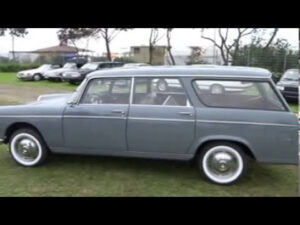
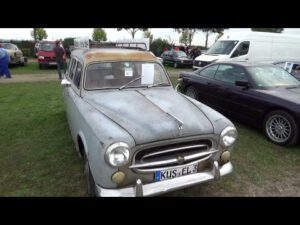
The front section is identical to the sedan, with a rectangular grille, simple chrome detailing, and vertically oriented headlights that give the car a distinctive, upright appearance. From the B-pillar rearward, the design changes significantly. The roofline extends horizontally to create a large cargo area, ending in a near-vertical tailgate.
Large side windows and a high roof contribute to an airy interior and excellent visibility. The extended wheelbase of the Break—longer than the sedan—enhances both passenger space and load capacity. The overall appearance is functional and balanced, avoiding unnecessary ornamentation while clearly communicating its purpose.
Inside, the cabin is straightforward and durable. Seating configurations could be adapted to increase cargo space, and in some versions, additional rear-facing seats were available, allowing the car to carry more passengers than a standard sedan.
Historical Significance
The Peugeot 404, introduced in 1960, marked a significant step in the company’s development as an international manufacturer. Building on the success of the 403, it offered improved performance, more modern styling, and a broader range of variants.
The Break version played a crucial role in this expansion. Its increased practicality made it especially attractive in export markets, including Africa and South America, where road conditions and usage patterns demanded robust, versatile vehicles. In many of these regions, the Peugeot 404 Break became a workhorse, used for everything from family transport to commercial applications.
Production of the Peugeot 404 continued in various forms well beyond its initial European lifecycle, with some markets assembling or producing the model into the 1980s. The estate variant’s durability and adaptability were central to this longevity, reinforcing Peugeot’s reputation for building cars capable of withstanding demanding environments.
Quirks and Pop Culture
One of the defining characteristics of the Peugeot 404 Break is its reputation for exceptional durability. In many parts of the world, particularly in Africa, the model became synonymous with reliability under harsh conditions. It was not uncommon for these vehicles to remain in service for decades, often carrying heavy loads over long distances.
The availability of diesel engines further strengthened this reputation, as these units were valued for their fuel efficiency and longevity. The combination of a robust chassis and simple mechanical layout made the Peugeot 404 Break easy to repair and maintain, even with limited resources.
While the sedan version of the Peugeot 404 gained some recognition in European popular culture, the Break’s cultural impact is more closely tied to its everyday use. It became part of daily life in many regions, serving as a taxi, delivery vehicle, and family car.
Display and preservation
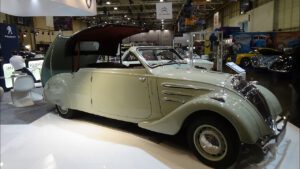
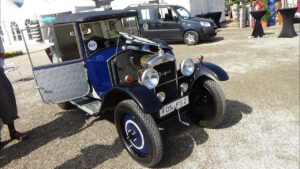
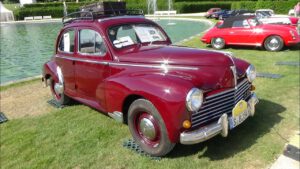
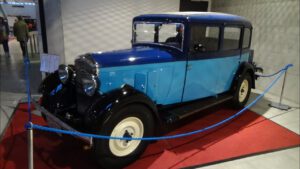
This car was displayed at the Veterama 2014 Mannheim, held from October 10 to 12. The event attracted around 45,000 visitors to its 260,000 square meter grounds. Nearly 4,000 exhibitors from around the world presented their 1,000 vehicles—many from the emerging youngtimer scene. A new highlight was the Show Arena, where pre-1975 vehicles could be presented to the public. From early automotive relics to complete classics, the diversity was remarkable.
Conclusion
The 1960–1975 Peugeot 404 Break represents a practical and durable approach to automotive design. Its technical configuration emphasizes reliability and adaptability, while its design extends the clean lines of the Peugeot 404 into a highly functional estate form.
Historically, the model played a key role in Peugeot’s international growth, particularly in markets where durability was essential. Though understated in appearance, the Peugeot 404 Break earned a lasting reputation through its performance in real-world conditions. It remains a clear example of how thoughtful engineering and practical design can create a vehicle with enduring global relevance.