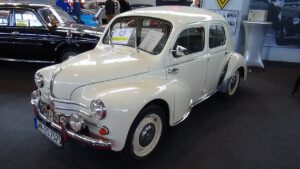
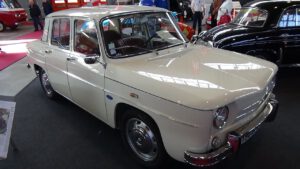
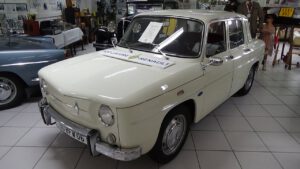
1959 Renault Dauphine – Exterior and Interior – Renault Museum Fritz Schweier Fellbach
The Renault Dauphine entered 1959 at the height of its popularity, positioned as a modern and accessible small car for a rapidly motorizing Europe. It built directly on the success of the 4CV but introduced a more refined concept—greater comfort, improved usability, and a design that aligned with late-1950s expectations. By this point, it had also become one of Renault’s most visible international models.
Technical Details
The 1959 Renault Dauphine followed a rear-engine, rear-wheel-drive layout, with a water-cooled inline four-cylinder engine mounted behind the rear axle. The engine displaced 845 cc and produced approximately 30 horsepower, a modest figure that prioritized efficiency and reliability over performance. Top speed was typically around 110 km/h, depending on conditions and specification.
The drivetrain included a three-speed manual transmission, with certain versions offering a four-speed gearbox. One of the Dauphine’s more unusual technical features was the optional electromagnetic automatic clutch system, known as “Ferlec,” which allowed drivers to change gears without using a clutch pedal. While innovative, it required careful adjustment and was not universally adopted.
The suspension system was independent on all four wheels, using coil springs. This setup provided a relatively comfortable ride compared to many contemporaries in the same class. Braking was handled by drum brakes on all four wheels. The overall engineering approach emphasized simplicity and ease of maintenance, consistent with Renault’s strategy for mass-market vehicles.
- Manufacturer: Renault
- Model name: Renault Dauphine
- Year of manufacturing: 1959
Design
The Renault Dauphine’s design reflected the transition from pre-war styling influences to a more modern, integrated body form. Its rounded ponton shape eliminated separate fenders, creating a smooth and cohesive exterior. The proportions were compact but carefully balanced, with a relatively tall roofline that improved interior space.
At the front, the Dauphine featured a clean and understated design, with small grille openings and integrated headlights. The absence of a front-mounted engine allowed for a lower hood and a front luggage compartment. At the rear, discreet air vents provided necessary cooling for the engine.
Inside, the cabin was designed for practicality. Seating for four passengers was arranged efficiently, and large windows contributed to good visibility. The dashboard layout was simple and functional, with controls positioned for ease of use. Materials were basic, reflecting the car’s affordability, but the overall design conveyed a sense of modernity appropriate for the late 1950s.
Historical Significance
The Renault Dauphine was introduced in 1956 as the successor to the Renault 4CV, a model that had played a central role in post-war French motorization. By 1959, the Dauphine had firmly established itself as one of Renault’s most important products, with strong sales in Europe and growing ambitions abroad.
Renault pursued an aggressive export strategy with the Dauphine, particularly targeting the United States. The car’s compact size and fuel efficiency were marketed as advantages in a market dominated by larger vehicles. Initial sales were strong, making it one of the best-selling imported cars in the U.S. at the time, although long-term success was affected by reliability issues in certain conditions.
Production numbers underline its importance: more than two million Dauphines would be built by the end of its production run in 1967. The model also served as a platform for further development, including performance-oriented versions such as the Dauphine Gordini, which highlighted the flexibility of its basic design.
The Dauphine represents a key phase in Renault’s transition from a primarily domestic manufacturer to an international player, reflecting broader changes in the global automotive industry during the post-war period.
Quirks and Pop Culture
The Renault Dauphine became a recognizable symbol of late-1950s everyday mobility. Its compact size and approachable design made it a common sight in cities and towns across Europe. In the United States, it briefly gained popularity as an economical alternative to larger domestic cars, contributing to its international profile.
One of its defining quirks was its handling behavior, shaped by the rear-engine layout. While it provided good traction, particularly in adverse weather, it could also lead to oversteer if driven aggressively. This characteristic became part of the car’s reputation among drivers.
The optional “Ferlec” automatic clutch system is another notable feature, reflecting Renault’s willingness to experiment with new technologies even in small, affordable cars. Although not widely adopted, it remains an interesting example of mid-century automotive innovation.
The Dauphine also appeared in period films and cultural depictions of everyday life, reinforcing its image as a practical and accessible vehicle during a time of economic growth and social change.
Display and preservation
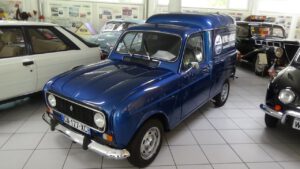
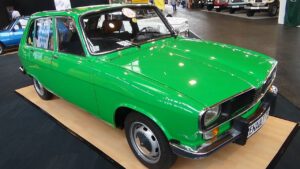
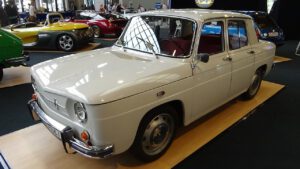
This car was filmed at the Renault Museum of Fritz Schweier in Fellbach. The museum is a testament to lifelong passion and meticulous preservation. A dedicated collector and long-standing Renault dealer, Schweier has assembled around 30 historic vehicles, each carefully restored and kept in running condition. Since 1999, these cars have been displayed in a distinctive glass exhibition hall, creating an authentic and elegant atmosphere. Beyond automobiles, the museum also features an extensive model car collection and various period curiosities. Every exhibit reflects Schweier’s commitment to preserving Renault’s heritage and sharing it with enthusiasts.
Conclusion
The 1959 Renault Dauphine illustrates how a compact, well-conceived car could achieve both domestic success and international reach. Technically, it combined a rear-engine layout with independent suspension and practical innovations aimed at everyday usability. Its design reflected the move toward modern, integrated body forms.
Historically, it played a significant role in Renault’s expansion beyond France, becoming one of the brand’s most widely produced and exported models. Despite certain limitations, particularly in demanding conditions, the Dauphine remains a representative example of post-war small-car development—efficient, accessible, and closely tied to the social and economic context of its time.