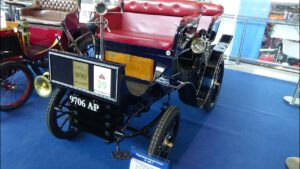
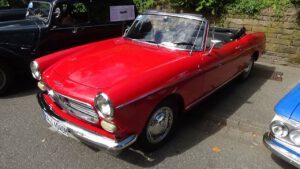
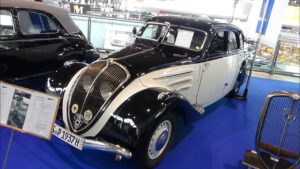
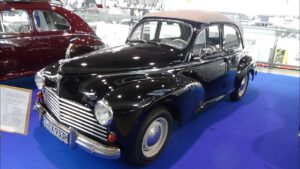
1959 MGA 1600 Roadster – Exterior and Interior – Classic Expo Salzburg 2021
Incremental change rarely reshapes perception—but in 1959, MG proved that small mechanical steps could quietly transform a sports car. The MGA 1600 Roadster looked familiar at first glance, yet beneath its bodywork it addressed the limitations of the original MGA with measured, purposeful improvements. It was less about reinvention and more about refinement, aimed at drivers who wanted progress without spectacle.
Technical Details:
The 1959 MGA 1600 Roadster introduced a revised version of BMC’s proven B-Series inline four-cylinder engine, enlarged to 1,588 cc. In standard form, the engine produced approximately 79 horsepower at 5,600 rpm, representing a meaningful increase over the earlier 1500 model. Fuel delivery was handled by twin SU carburetors, and power was transmitted through a four-speed manual gearbox to the rear wheels. The drivetrain retained the classic front-engine, rear-wheel-drive layout that defined MG sports cars of the period.
One of the most significant technical upgrades was the adoption of front disc brakes as standard equipment. This marked a decisive step forward in braking performance and heat resistance, especially during sustained high-speed driving or spirited use on winding roads. Rear braking continued to rely on drums, a common and well-understood solution at the time.
The chassis remained a separate frame with box-section rails, but suspension geometry and damping were revised to complement the higher engine output. Independent front suspension with coil springs and wishbones was retained, while the rear live axle used semi-elliptic leaf springs. These changes contributed to improved stability and control at speed. With the larger engine and enhanced braking, the MGA 1600 Roadster achieved top speeds of approximately 105 mph (170 km/h) under favorable conditions, placing it firmly among capable European sports cars of the late 1950s.
- Manufacturer: MG (Morris Garages)
- Model Name: MGA 1600 Roadster
- Year of Manufacturing: 1959
Design:
Visually, the 1959 MGA 1600 Roadster remained closely aligned with the original MGA design, but subtle details distinguished it from earlier examples. The most obvious exterior identifier was the revised rear lamp arrangement, which replaced the earlier single-unit lights with separate indicator and tail lamps. This change reflected evolving safety regulations and customer expectations, particularly in export markets.
The overall body shape continued to emphasize low height and smooth surfaces. The envelope body enclosed the wheels cleanly, eliminating the exposed wings of earlier MGs and reinforcing the car’s aerodynamic intent. The front end featured the characteristic oval grille opening integrated into the nose, while faired-in headlamps maintained the car’s streamlined profile. Chrome accents were used sparingly, highlighting bumpers, grille trim, and door handles without overwhelming the form.
Inside, the cabin favored clarity and restraint. The dashboard layout remained symmetrical, with centrally placed instruments providing clear information to the driver. Seating was low and upright, promoting a connected driving position. Compared with earlier MGs, the MGA 1600 offered a more enclosed and cohesive interior environment, yet it avoided luxury excess in favor of functional simplicity. The design reinforced the car’s role as a tool for driving rather than display.
Historical Significance:
By the end of the 1950s, the global sports car market was evolving rapidly. Customers expected not only style and character but also higher cruising speeds, improved braking, and greater reliability on modern roads. The MGA 1600 was MG’s response to these pressures. Rather than replacing the MGA outright, the company chose to evolve it, addressing specific weaknesses identified in real-world use.
The introduction of front disc brakes was particularly significant, placing the MGA 1600 ahead of many competitors in terms of braking technology. The larger engine improved flexibility and long-distance capability, especially on highways and autobahns that were becoming faster and more heavily trafficked.
Production figures reflect the model’s importance. Approximately 31,000 MGA 1600 Roadsters were built between 1959 and 1960, with the majority exported. The United States remained the largest single market, where buyers valued the combination of British sports car character and increasingly competent mechanical specification. The MGA 1600 effectively bridged the gap between the original MGA and the more powerful 1600 Mk II that followed, ensuring continuity during a critical period of transition for the brand.
Quirks and Pop Culture:
Among enthusiasts, the MGA 1600 is often regarded as the most balanced version of the MGA lineup. It lacks the raw simplicity of the 1500 and the visual changes of the later Mk II, but for many drivers it strikes an ideal middle ground. This reputation has made it a favorite for long-distance touring, historic rallies, and regular use in classic motoring events.
The model’s understated nature is part of its cultural footprint. Unlike flashier sports cars of the era, the MGA 1600 did not rely on bold styling statements or racing celebrity to define its identity. Instead, it became known through ownership experiences—road trips, club drives, and amateur motorsport. Period photographs and travel accounts frequently show MGA 1600s loaded with luggage, crossing borders, and covering serious distances, reinforcing their image as practical sports cars rather than fragile toys.
Display and preservation:
The vehicle was exhibited at the Classic Expo Salzburg in 2021. As one of Austria’s premier classic car events, the show has established itself as a central meeting point for collectors, restorers, and enthusiasts from across Central Europe. The 2021 edition took place at Messezentrum Salzburg and featured more than 250 exhibitors, along with a strong turnout of over 20,000 visitors. Attendees could explore a broad range of offerings—from historical vehicles and motorcycles to automobilia, spare parts, and literature.
Conclusion:
The 1959 MGA 1600 Roadster represents a moment of measured progress in MG’s post-war history. Through targeted mechanical improvements—most notably increased engine capacity and front disc brakes—it addressed the demands of a changing automotive landscape without abandoning the clean design that defined the MGA. Neither radical nor nostalgic, the MGA 1600 refined an already successful formula and helped MG remain competitive at the end of the 1950s. Today, it stands as a reminder that evolution, when carefully executed, can be just as influential as reinvention.