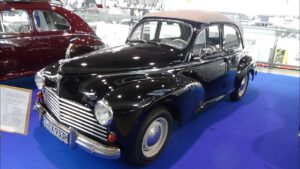
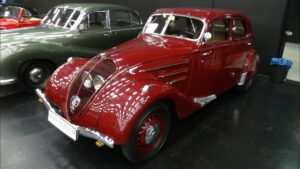
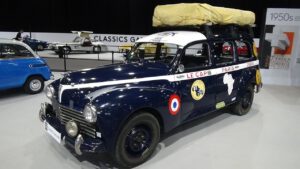
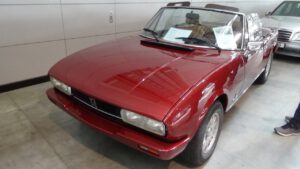
The front featured a traditional Jaguar grille flanked by integrated headlamps. The bonnet’s length subtly hinted at the performance potential beneath, while chrome detailing remained moderate.
One distinctive design element was the rear wheel spats (fender skirts), which partially covered the rear wheels and contributed to a smooth side profile. This feature gave the car a refined appearance while maintaining aerodynamic continuity.
Inside, the Mk I retained Jaguar’s hallmark craftsmanship. Polished wood veneer adorned the dashboard and door cappings, complemented by leather upholstery. The instrument layout was driver-focused, with clear, centrally mounted gauges. Despite its sporting credentials, the cabin emphasized comfort and refinement appropriate to a mid-size executive saloon.
The 3.4-liter version, in particular, gained a reputation for strong acceleration and competitive success in touring car racing. Drivers such as Mike Hawthorn demonstrated the model’s capability in motorsport, reinforcing Jaguar’s sporting image.
The Mk I laid the groundwork for the later Mk II, which would further refine the formula and achieve even greater recognition. As such, the Mk I represents the beginning of Jaguar’s lineage of high-performance four-door saloons.
In period motorsport, the Mk I demonstrated that a compact saloon could compete effectively against more established racing cars. This dual identity—executive transport and competitive machine—remains central to its appeal.
Today, well-preserved Mk I examples are appreciated for their balance of elegance and understated performance.