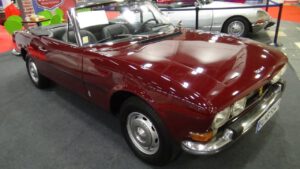
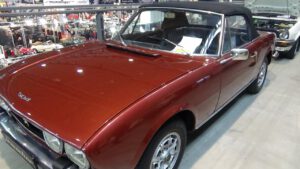
1956 Facel Vega FV2B – Oldtimer-Meeting Baden-Baden 2021
In 1956, France produced a grand tourer powered not by a domestic engine, but by an American V8. The Facel Vega FV2B combined Parisian coachbuilding craftsmanship with Chrysler performance, creating one of Europe’s most distinctive luxury coupés of the decade. It was fast, exclusive, and unmistakably international in character.
Technical Details:
The 1956 Facel Vega FV2B was part of the early FV series developed by Facel (Forges et Ateliers de Constructions d’Eure-et-Loir), a French industrial company that entered automobile production in the mid-1950s. Under the long hood sat a Chrysler-sourced V8 engine with a displacement of approximately 5.8 liters (354 cubic inches), depending on specification and market.
This overhead-valve V8 delivered around 250 to 285 SAE horsepower, depending on carburetion and tuning. The engine was typically paired with either a Chrysler PowerFlite two-speed automatic transmission or a manual gearbox, driving the rear wheels. The drivetrain layout followed the classic front-engine, rear-wheel-drive configuration suited to high-speed touring.
The chassis consisted of a steel platform frame with independent front suspension and a live rear axle. Coil springs were used at the front, while the rear employed leaf springs. Four-wheel drum brakes were fitted, consistent with mid-1950s high-performance standards, though later developments in the range would move toward disc braking solutions. With its powerful American V8 and relatively lightweight European body, the FV2B achieved top speeds in the region of 200 km/h, placing it among the faster luxury coupés of its time.
- Manufacturer: Facel (Facel Vega)
- Model Name: Facel Vega FV2B
- Year of Manufacturing: 1956
Design:
The design of the Facel Vega FV2B reflected a deliberate blend of French elegance and American influence. The coupé body featured clean, elongated proportions with a prominent hood, modest tailfins, and restrained chrome detailing. The grille was wide and horizontal, emphasizing the car’s road presence without excessive ornamentation.
The body was constructed in steel, as Facel had extensive experience in metalworking and coachbuilding for other manufacturers before producing its own cars. The side profile was defined by a gently rising beltline and a relatively low roof, giving the car a poised, formal stance. Large glass areas enhanced visibility and contributed to the grand touring character.
Inside, the FV2B distinguished itself with a distinctive dashboard design. The metal dashboard was painted to resemble engine-turned aluminum or polished metal, though it was in fact carefully finished steel. Round instruments were set into this decorative panel, and leather upholstery was standard. The interior atmosphere emphasized craftsmanship and exclusivity rather than overt sportiness, aligning the car with the luxury GT segment.
Historical Significance:
The Facel Vega FV2B belongs to the first generation of Facel Vega automobiles. The company introduced the FV in 1954 as France’s attempt to re-enter the high-performance luxury car market, competing with marques such as Bentley, Aston Martin, and Maserati. Rather than develop its own large engine, Facel chose to use proven American Chrysler V8 units, combining them with French bodywork and assembly.
The FV2B represented an evolution within the early FV series, offering improved performance and refinement over earlier variants. By 1956, Facel Vega had established itself as a niche manufacturer producing expensive, low-volume grand tourers aimed at international clientele.
Production numbers remained modest, reinforcing the car’s exclusivity. The FV series laid the groundwork for later and more powerful models such as the HK500. Although Facel Vega would later face financial challenges—most notably associated with the smaller Facellia—the FV2B stands as part of the brand’s most stable and respected period.
Quirks and Pop Culture:
Facel Vega cars quickly gained a reputation among celebrities, industrialists, and heads of state. While the FV2B itself is not tied to a single iconic film role, the brand became associated with figures such as Ringo Starr, Ava Gardner, and Pablo Picasso, who owned various Facel Vega models.
One of the most distinctive quirks of the FV2B is its interior finish. The painted metal dashboard, designed to evoke machined aluminum, is frequently noted by enthusiasts as both visually striking and characteristic of Facel’s approach to luxury—industrial craftsmanship elevated through design detail.
The combination of French styling and American mechanicals also gave the car a dual identity. It offered European sophistication with the reliability and torque of a large-displacement Chrysler V8, a formula that appealed particularly to export markets.
Display and preservation:
The vehicle was exhibited at the Oldtimer-Meeting Baden-Baden in 2021. This event, held annually in the spa town’s Kurpark and along the Kaiserallee, is one of Germany’s most picturesque classic car gatherings. In 2021, the 44th edition featured 300 vintage vehicles from 80 different brands, including rare models. The event embraced a 1970s theme, showcasing over 40 vehicles from that era. An innovative highlight was the “automobile fashion show,” where models presented current fashion trends while riding in open-top classic cars through the park. The event concluded with the traditional Concours d’élégance, awarding 120 prizes across 15 categories.
Conclusion:
The 1956 Facel Vega FV2B represents an ambitious French entry into the international grand touring arena. Technically defined by its Chrysler-sourced 5.8-liter V8, rear-wheel-drive layout, and robust chassis, it delivered strong performance for its class. Its design blended restrained European elegance with subtle American cues, while the interior showcased Facel’s metalworking expertise. Historically, the FV2B forms part of the foundational phase of Facel Vega, illustrating how French craftsmanship and American power were combined to create one of the 1950s’ most distinctive luxury coupés.