1954 Peugeot 203 C – Retro Classics meets Barock Ludwigsburg 2015
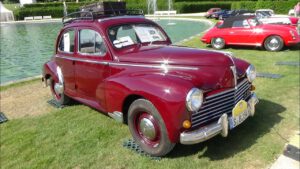
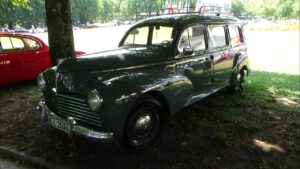
The 1954 Peugeot 203 C represents a mature phase of Peugeot’s first post-war model, refined through years of incremental improvement. By this stage, the Peugeot 203 had evolved into a highly dependable car, widely recognized for its durability and ability to cover long distances with minimal mechanical strain.
Technical Details
The Peugeot 203 C was powered by a front-mounted inline four-cylinder engine with a displacement of 1,290 cc. This unit produced around 42 horsepower and featured an overhead valve configuration, contributing to efficient combustion and reliability. Power was delivered to the rear wheels through a four-speed manual gearbox, with the fourth gear acting as an overdrive, a characteristic Peugeot solution for improved fuel efficiency and relaxed cruising. The car used a monocoque steel body, which enhanced rigidity compared to older body-on-frame designs. Independent front suspension and a rigid rear axle with coil springs provided a balance between comfort and durability. Hydraulic drum brakes on all four wheels ensured consistent braking performance.
- Manufacturer: Peugeot
- Model name: Peugeot 203 C
- Year of manufacturing: 1954
Design
The design of the Peugeot 203 C retained the rounded, flowing form introduced with the original Peugeot 203 in 1948. Influenced by pre-war aerodynamic thinking, the body featured smooth, integrated fenders and a cohesive silhouette that distinguished it from more angular competitors of the early 1950s.
The front end was defined by a modest grille and integrated headlights, creating a unified appearance. Chrome accents were used sparingly, emphasizing function over decoration. The proportions were compact yet balanced, while large windows contributed to good visibility and a light-filled cabin. Inside, the design was simple and practical, with clearly arranged instruments and durable materials. The emphasis remained on usability and longevity rather than stylistic experimentation.
Historical Significance
The Peugeot 203 was the first entirely new model developed by Peugeot after the Second World War, and it played a central role in re-establishing the company in the European automotive market. By 1954, the “C” designation reflected ongoing refinements rather than a complete redesign, illustrating Peugeot’s strategy of continuous improvement.
During the early 1950s, demand for reliable and economical vehicles was strong, and the Peugeot 203 met these expectations effectively. Its robust construction and efficient engine made it suitable for both private owners and commercial use. The model also contributed to Peugeot’s growing export presence, reaching markets beyond France and strengthening the brand’s international reputation.
With production exceeding 600,000 units across all variants, the Peugeot 203 became one of Peugeot’s key success stories of the post-war period.
Quirks and Pop Culture
The Peugeot 203 C developed a reputation for exceptional reliability, often cited in period accounts of long-distance travel and endurance. Owners frequently relied on the car for extended journeys across Europe and even into more demanding environments, where its mechanical simplicity proved advantageous.
A characteristic feature appreciated by drivers was the overdrive fourth gear, which allowed the car to cruise comfortably at higher speeds despite its modest power output. While the Peugeot 203 did not become a prominent figure in film or popular media, it gained a lasting presence through everyday use, becoming a familiar part of post-war European life.
Display and preservation
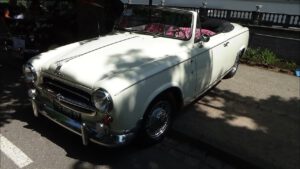
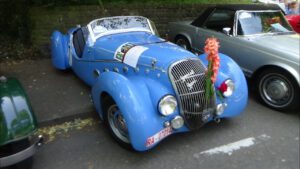
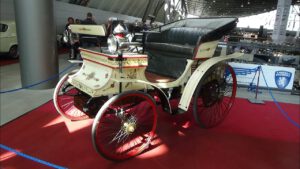
This car was filmed at the 12th edition of Retro Classics meets Barock. Set against the ornate gardens of Ludwigsburg, the 2015 show offered a refined celebration of automotive heritage. From June 5th to 7th, around 25,000 visitors gathered in the grounds of the Blühendes Barock, where historic vehicles were displayed against the striking backdrop of the royal palace. The event combined a prestigious Concours d’Elegance with a vibrant festival atmosphere, featuring 47 exceptional premium cars and around 140 classic vehicles. Awards for authenticity, design, and even period-correct fashion added a distinctive cultural dimension, culminating in a gala evening and fireworks.
Conclusion
The 1954 Peugeot 203 C embodies Peugeot’s methodical approach to engineering and design in the post-war era. Its reliable four-cylinder engine, monocoque construction, and practical design made it a dependable choice for a wide range of users. Rather than pursuing rapid innovation, Peugeot refined the model over time, resulting in a well-balanced and enduring vehicle. As part of the broader Peugeot 203 lineage, the Peugeot 203 C stands as a clear example of how consistency and reliability contributed to the brand’s long-term success.