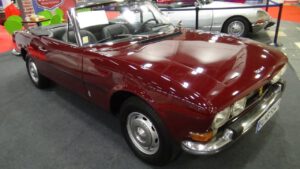
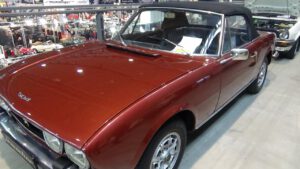
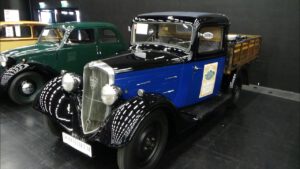
1952 Allgaier A12 – Exterior and Interior – Motorworld Classics Bodensee 2022
By 1952, progress was often measured in hours saved rather than kilometers gained. The Allgaier A12 was designed for work that repeated daily, season after season, under conditions that left little room for fragility. Its significance lies not in rarity or prestige, but in how directly it addressed the realities of post-war agriculture.
Technical Details:
The 1952 Allgaier A12 was a compact agricultural tractor engineered for small and medium-sized farms. It was powered by a single-cylinder diesel engine with a displacement of approximately 1.2 liters, producing around 12 horsepower, which gave the model its designation. The engine operated at low rotational speeds, emphasizing torque, fuel efficiency, and durability rather than output.
Fuel injection was mechanical, and the diesel combustion process allowed the A12 to operate reliably under varying loads and environmental conditions. Power was transmitted through a manual gearbox, typically offering three forward gears and one reverse, allowing operators to select appropriate speeds for plowing, cultivating, or transport tasks.
The tractor featured a rear-wheel-drive layout, with power take-off (PTO) capability for driving agricultural implements. A belt pulley was often fitted, enabling stationary operation of threshers, saws, or pumps. The chassis was a rigid, load-bearing structure designed to withstand continuous vibration and heavy use.
Braking was mechanical, acting on the rear wheels, and steering was manual, relying on direct mechanical linkage. The simplicity of the system ensured ease of repair and long service life, even in environments with limited access to spare parts or specialized tools.
- Manufacturer: Allgaier
- Model Name: Allgaier A12
- Year of Manufacturing: 1952
Design:
The design of the Allgaier A12 was governed entirely by function. The tractor’s proportions were compact, with a narrow track width that allowed it to operate efficiently in small fields and farmyards. Body panels were minimal, consisting primarily of a simple engine shroud and basic protective covers.
Externally, the A12 displayed no decorative intent. Painted sheet metal, exposed mechanical components, and utilitarian wheels defined its appearance. The driver’s position was open, with a basic seat mounted directly above the drivetrain and unobstructed access to controls.
Instrumentation was limited to essential indicators, such as engine speed or oil pressure, depending on specification. Control levers were large and robust, designed for use with work gloves. Every element of the design prioritized ease of use, accessibility, and resilience over comfort.
The absence of a cab, suspension seat, or noise insulation reflected contemporary expectations. The tractor was a tool rather than a vehicle in the passenger-car sense, and its design communicated that purpose clearly.
Historical Significance:
The Allgaier A12 emerged during a period of rapid mechanization in European agriculture. Farms that had previously relied on animal power or shared machinery were transitioning toward individual ownership of tractors. Compact, affordable models like the A12 were central to this shift.
Allgaier positioned the A12 as an entry-level diesel tractor, offering farmers a reliable alternative to larger, more expensive machines. Its low fuel consumption and mechanical simplicity made it particularly attractive in regions where operating costs mattered more than capacity.
The A12 also reflects the broader German industrial landscape of the early 1950s, where manufacturers emphasized practical engineering and export viability. Allgaier’s experience with diesel engines and agricultural machinery allowed it to produce tractors that were competitive both domestically and internationally.
The company’s later acquisition by Porsche-Diesel adds retrospective interest to models like the A12, which represent an earlier phase of development before branding and consolidation reshaped the tractor market.
Quirks and Pop Culture:
The Allgaier A12 rarely appears in popular media, but it occupies a familiar place in rural memory. Period photographs frequently show similar tractors working fields, towing trailers, or powering stationary equipment.
One notable quirk is the distinctive sound and vibration of its single-cylinder diesel engine, which became an audible marker of mechanized farming. This characteristic rhythm remains a point of recognition among enthusiasts and collectors today.
In the classic tractor community, restored A12s are valued for their authenticity rather than rarity. They are often demonstrated at agricultural shows, where their simplicity and robustness resonate with audiences interested in historical working machinery rather than display-only restorations.
Display and preservation:
The vehicle was exhibited at Motorworld Classics Bodensee in 2022. This event, held in Friedrichshafen, is a popular gathering for classic car enthusiasts in southern Germany, Austria, and Switzerland. The 2022 edition featured over 800 exhibitors spread across multiple halls and open-air spaces, offering a vibrant mix of vintage automobiles, motorcycles, boats, and aircraft. Visitors could explore restoration workshops, parts markets, and club presentations. A key highlight was the live vehicle auctions and dynamic driving demonstrations on the event grounds. The show reaffirmed its reputation as a hands-on celebration of classic mobility culture.
Conclusion:
The 1952 Allgaier A12 represents a practical milestone in agricultural mechanization. Technically simple and visually unassuming, it delivered reliability, efficiency, and independence to farms adapting to new economic realities. Its legacy is defined not by innovation or exclusivity, but by consistent service. Today, the A12 stands as a reminder that some of the most influential machines in history are those designed to work quietly and continuously, shaping daily life through function rather than form.