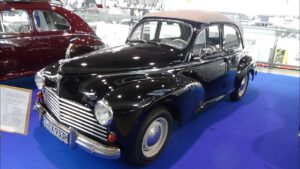
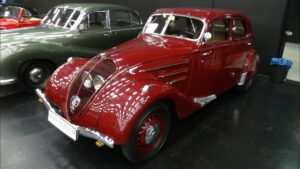
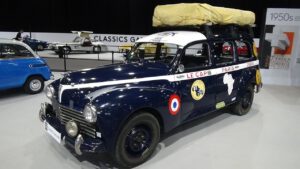
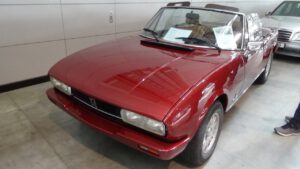
1947 Opel Blitz – Exterior and Interior – Retro Classics Stuttgart 2022
In 1947, usefulness mattered more than novelty. The Opel Blitz was designed to move goods, tools, and people efficiently, without unnecessary complexity or excess. Its importance lay not in innovation or style, but in how consistently it performed ordinary tasks under demanding conditions.
Technical Details:
The 1947 Opel Blitz was produced during a transitional phase, emerging shortly after the Second World War using pre-war engineering principles adapted to post-war realities. Depending on configuration and availability of components, the Blitz typically used a 3.6-liter inline six-cylinder gasoline engine, derived from Opel’s passenger car range and producing approximately 75 horsepower. This engine emphasized durability and torque rather than efficiency or refinement, well suited to hauling loads over damaged infrastructure.
Power was transmitted through a four-speed manual transmission to the rear wheels, following a traditional front-engine, rear-wheel-drive layout. Some Blitz variants were equipped with dual rear wheels to improve load-bearing capacity. The chassis was a robust ladder-frame construction, designed to support a wide variety of bodies, including flatbeds, box vans, tankers, buses, and specialized service vehicles.
Suspension relied on rigid axles with leaf springs at both front and rear, prioritizing strength and ease of repair. Braking was handled by mechanically actuated drum brakes, sufficient for low-speed transport but demanding careful driving under load. The Opel Blitz was not fast—top speeds rarely exceeded 80 km/h—but it was dependable, serviceable, and adaptable, which mattered far more in 1947.
- Manufacturer: Opel
- Model Name: Opel Blitz
- Year of Manufacturing: 1947
Design:
The design of the 1947 Opel Blitz was dictated almost entirely by function. Its cab featured upright proportions, flat body panels, and minimal curvature, allowing damaged sections to be repaired or replaced with basic tools. The forward-set cab provided good visibility, essential when navigating narrow streets, rubble-filled roads, and crowded urban environments during reconstruction.
Exterior styling was utilitarian to the point of austerity. A simple front grille, exposed headlights, and unadorned steel panels reflected material shortages and the absence of decorative priorities. Paint finishes were often basic and inconsistent, depending on available supplies. Interiors were sparse, typically featuring a metal dashboard, minimal instrumentation, and simple bench seating.
What defined the Blitz visually was not elegance, but adaptability. The same basic cab could be mounted to a wide range of rear bodies, making the truck instantly recognizable yet endlessly variable. This modular approach allowed the Opel Blitz to serve in agriculture, construction, municipal services, and small business transport—sometimes all within the same week.
Historical Significance:
Originally introduced in the 1930s, the model became Germany’s most widely used light truck during the Second World War. After 1945, production resumed under Allied supervision, and the Opel Blitz was repurposed for civilian reconstruction.
In 1947, Germany’s infrastructure was severely damaged, and transport capacity was critically limited. Railways were unreliable, fuel was scarce, and heavy machinery was in short supply. The Opel Blitz filled a crucial gap by providing a flexible, medium-duty vehicle capable of operating under harsh conditions. It transported food, building materials, medical supplies, and displaced populations, often operating continuously with minimal maintenance.
Production conditions were far from ideal. Factories had been bombed, tooling was incomplete, and component shortages were common. As a result, 1947 Blitz trucks often showed variations in equipment and finish. This lack of standardization, while inefficient, allowed production to continue under difficult circumstances and helped accelerate economic recovery.
The Opel Blitz thus transitioned from a wartime logistics vehicle to a cornerstone of civilian rebuilding, playing a quiet but essential role in Europe’s post-war recovery.
Quirks and Pop Culture:
Unlike passenger cars, the Opel Blitz rarely features in nostalgic automotive storytelling, yet it appears frequently in post-war photographs and documentary footage. It became a visual shorthand for reconstruction—seen hauling bricks, clearing debris, or delivering goods to newly reopened shops.
One notable quirk is how long Blitz trucks remained in service. Many examples built in the late 1940s continued working into the 1960s and beyond, particularly in rural areas. Their simple mechanics made them ideal for improvised repairs, and parts were often shared or adapted from other Opel vehicles.
In later decades, restored Opel Blitz trucks became popular among museums and historical reenactment groups, not as symbols of conflict, but as artifacts of recovery. Their presence in exhibitions often evokes a more sober reflection on history than sports cars or luxury vehicles, emphasizing endurance over aspiration.
Display and preservation:
The vehicle was exhibited at the Retro Classics Stuttgart in 2022. This car show is one of the major events on the classic car calendar in Germany. In 2022, it took place across five exhibition halls. Visitors can enjoy special showcases, hunt for rare parts and books, and buy cars—both private sellers and dealers offer a wide range of classic and youngtimer vehicles. In 2022, there was a noticeable increase in low-mileage youngtimers and classic cars.
Conclusion:
The 1947 Opel Blitz was not designed to inspire admiration, yet its impact was profound. Technically straightforward and visually austere, it delivered something far more valuable than style or speed: reliability in a time of scarcity. As Europe rebuilt itself from ruin, the Blitz became a tool of necessity, quietly enabling economic activity and social recovery. Today, it stands as a reminder that some of the most important vehicles in history are not defined by innovation or beauty, but by the work they were built to do.