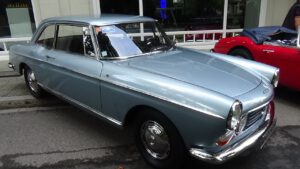
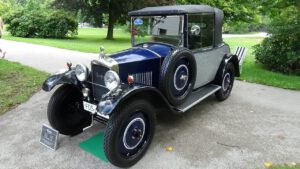
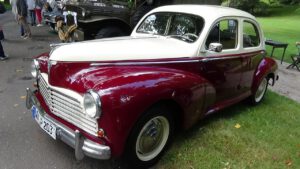
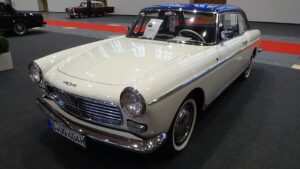
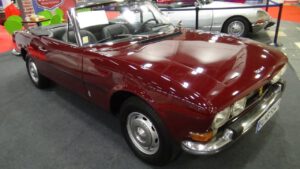
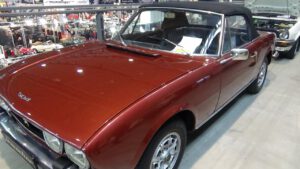
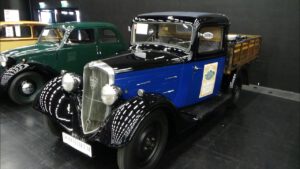
1934 Peugeot 301 CR – Exterior and Interior – Classic Expo Salzburg 2020
In the early 1930s, Peugeot was refining its position in the European mid-size car market with models that balanced durability, simplicity, and modern styling. The 1934 Peugeot 301 CR stands out as a representative of this approach, combining proven mechanical solutions with subtle updates that reflected changing expectations in interwar automotive design. While not a technological outlier, it illustrates how manufacturers adapted established concepts to remain competitive in a rapidly evolving market.
Technical Details:
The Peugeot 301 CR was part of the broader Peugeot 301 range, which was engineered as a reliable and accessible mid-range vehicle. It featured a front-mounted inline four-cylinder engine with a displacement of approximately 1,465 cc. Power output is generally cited at around 35 horsepower, delivered through a conventional rear-wheel-drive layout. This configuration followed the standard engineering practice of the time, prioritizing robustness and ease of maintenance over complexity.
The chassis was based on a ladder-frame construction, supporting steel bodywork and ensuring structural durability on the varied road conditions of the 1930s. Suspension relied on rigid axles with leaf springs, a common solution that offered predictable handling characteristics, though not exceptional ride comfort by later standards. Braking was typically handled by mechanical drum brakes on all four wheels, reflecting the transitional state of braking technology before hydraulic systems became widespread.
The “CR” designation within the Peugeot 301 lineup is associated with incremental technical refinements introduced during the model’s production cycle, rather than a complete redesign. These updates aimed to improve drivability and reliability while maintaining the fundamental architecture that defined the Peugeot 301 series.
- Manufacturer: Peugeot
- Model name: Peugeot 301 CR
- Year of manufacturing: 1934
Design:
The design of the Peugeot 301 CR reflects the gradual shift from upright, utilitarian forms toward more integrated and streamlined bodies. While still rooted in traditional proportions, the car shows a move toward smoother surfaces and a more cohesive silhouette compared to earlier designs.
The front end is characterized by a vertically oriented grille, flanked by separate headlamps mounted on either side, a typical arrangement for the period. The fenders are pronounced and clearly defined, yet more fluidly connected to the body than in earlier models. Running boards remain present, bridging the gap between front and rear fenders and reinforcing the car’s practical character.
Body styles within the Peugeot 301 range included saloons, coupés, and cabriolets, allowing customers to choose between enclosed practicality and open-air driving. The CR variant followed these established forms, with subtle refinements in detailing. The overall appearance is restrained, avoiding excessive ornamentation while maintaining a sense of balance and proportion.
Inside, the design focused on functionality. The cabin layout was straightforward, with clear instrumentation and durable materials. Comfort features were limited by modern standards, but the car offered sufficient space and usability for everyday transport, aligning with its role as a mid-range family vehicle.
Historical Significance:
The Peugeot 301 was introduced in 1932 as part of Peugeot’s effort to modernize its lineup during a challenging economic period. The early 1930s were marked by the effects of the global economic downturn, which influenced both consumer demand and manufacturing strategies. Peugeot responded by developing cars that emphasized reliability, affordability, and incremental innovation rather than radical experimentation.
The Peugeot 301 series replaced earlier models such as the Peugeot 201 in certain market segments, offering increased size and improved performance while remaining accessible to a broad customer base. The CR version represents a later stage in the model’s evolution, incorporating updates that extended its relevance in a competitive market.
Production of the Peugeot 301 continued until 1936, after which it was succeeded by more modern designs, including models that adopted aerodynamic influences more fully. In this context, the Peugeot 301 CR can be seen as part of a transitional phase, bridging the gap between traditional pre-war automotive design and the more streamlined forms that would define the later 1930s.
Quirks and Pop Culture:
Unlike some contemporaries, the Peugeot 301 CR did not acquire widely recognized nicknames or a strong presence in film or literature. Its cultural footprint is instead tied to its role as a dependable everyday vehicle. In France and other European markets, cars like the Peugeot 301 became part of daily life, serving families, small businesses, and rural communities.
One notable aspect of the Peugeot 301 range is its diversity of body styles, which allowed it to adapt to different uses. This versatility contributed to its visibility on the road, even if it did not achieve the iconic status of more specialized or luxurious vehicles. Today, surviving examples are primarily appreciated within classic car circles for their authenticity and representation of early 1930s motoring.
Display and preservation
The featured car was filmed at the Classic Expo Salzburg 2020. Held from 16 to 18 October, the display concept combined commercial activity with careful preservation of automotive heritage. Around 300 exhibitors presented vehicles across 44,000 square meters, attracting over 10,700 visitors. A highlight was the special exhibition celebrating 110 years of Austro-Daimler, offering historical depth and context. The Dorotheum auction, featuring 75 automobiles and four motorcycles, added a dynamic dimension. From high-end collector cars to unrestored originals and private entries, the event showcased a broad spectrum of classic motoring culture.
Conclusion:
The 1934 Peugeot 301 CR illustrates a moment in automotive history defined by continuity and careful evolution. Its technical layout relied on proven solutions, while its design showed early signs of modernization without abandoning established forms. As part of Peugeot’s broader strategy during the interwar years, the Peugeot 301 CR helped maintain the brand’s presence in the mid-range market. Though modest in specification, it remains a meaningful example of how manufacturers balanced practicality, reliability, and gradual innovation in a period of economic and technological transition.