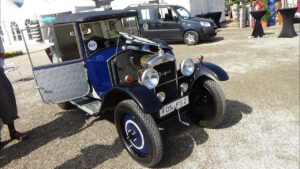
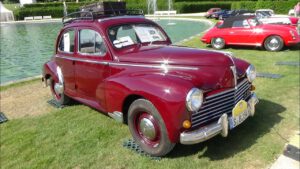
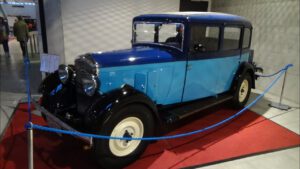
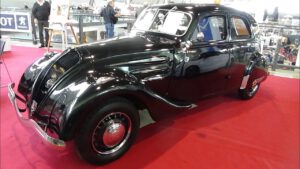
1932 Peugeot 301 – Retro Classics Stuttgart 2015
The 1932 Peugeot 301 reflects a moment when automotive design was moving from experimentation toward standardization. It was conceived as a reliable, mid-range car for everyday use, combining straightforward engineering with a level of refinement that made it suitable for both private owners and professional applications.
Technical Details
The Peugeot 301 was powered by a front-mounted inline four-cylinder engine with a displacement of 1,465 cc. This engine delivered approximately 35 horsepower, transmitted to the rear wheels through a three-speed manual gearbox. The mechanical layout followed a conventional front-engine, rear-wheel-drive configuration typical of the early 1930s. The chassis was based on a rigid frame with beam axles at both the front and rear, supported by leaf springs. Braking was provided by mechanically operated drum brakes on all four wheels. While technically conservative, the Peugeot 301 emphasized durability and ease of maintenance, making it well suited to varied road conditions and long-distance travel of the period.
- Manufacturer: Peugeot
- Model name: Peugeot 301
- Year of manufacturing: 1932
Design
The design of the Peugeot 301 reflected the transition from upright, carriage-influenced forms to more integrated automotive bodies. Its proportions remained relatively vertical, with a clearly defined hood, passenger compartment, and rear section, but the overall composition was more cohesive than earlier designs.
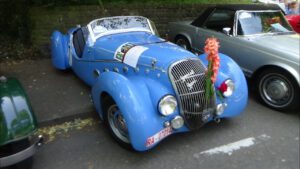
The front featured a simple, upright grille flanked by exposed headlights, while the fenders were rounded and visually separate from the main body. Running boards connected the front and rear wings, reinforcing the car’s horizontal structure. Depending on the body style—ranging from sedan to cabriolet and commercial variants—the Peugeot 301 could appear either formal or utilitarian. Inside, the cabin was functional, with minimal instrumentation and materials chosen for durability rather than decoration.
Historical Significance
The Peugeot 301 was introduced during a period of economic uncertainty following the global financial crisis of the early 1930s. In response, Peugeot focused on producing vehicles that balanced affordability with reliability, ensuring broader accessibility.
The model formed part of Peugeot’s strategy to structure its lineup into clearly defined segments, offering customers a logical progression in size and capability. It also contributed to the company’s growing experience in series production, helping to establish processes that would later support more advanced models in the decade.
Although it did not introduce major technical innovations, the Peugeot 301 played an important role in stabilizing Peugeot’s position in the market. Its adaptability across multiple body styles made it a versatile platform for both private and commercial use.
Quirks and Pop Culture
The Peugeot 301 is often remembered for its role as a dependable, no-nonsense vehicle rather than for standout features or cultural appearances. Its straightforward engineering and robust construction made it a common sight on European roads, particularly in rural areas where reliability was essential.
A notable aspect of the model is the wide variety of body configurations in which it was offered. From family sedans to light commercial vehicles, the Peugeot 301 demonstrated how a single mechanical platform could be adapted to multiple uses. This flexibility contributed to its lasting presence in period photographs and archival material, even if it did not achieve iconic status in popular culture.
Display and preservation
This car was filmed at the Retro Classics Stuttgart 2015, held from March 26 to 29. The show set new standards with an expanded 120,000 square meters of exhibition space. A total of 1,430 exhibitors and more than 87,000 visitors filled eight halls, creating a vibrant marketplace where nearly half of attendees made purchases. Strong presences from Mercedes-Benz and Porsche added prestige, with Porsche unveiling rare prototypes. Special displays ranged from BMW M5 anniversaries to American classics with roaring V8 engines.
Conclusion
The 1932 Peugeot 301 represents a pragmatic approach to automotive design and engineering during a challenging economic period. Its conventional but dependable mechanical layout, combined with a versatile range of body styles, made it a practical solution for a wide audience. While it did not redefine automotive technology, it helped reinforce Peugeot’s reputation for reliability and consistency. As such, the Peugeot 301 stands as a clear example of how steady, incremental development supported the brand’s long-term success in the pre-war era.