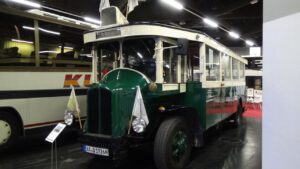
1929 Citroen C4 – Exterior and Interior – Classic Expo Salzburg 2021
The 1929 Citroën C4 stands as a clear reflection of André Citroën’s industrial vision: modern, accessible, and technically forward-thinking. Combining robust mechanical construction, evolving engine technology, American-influenced yet distinctly French design, and an unmatched variety of body styles, the Citroën C4 successfully bridged innovation and practicality.
Technical Details:
The Citroën C4 was conceived as a technically robust and modern automobile for its era, offering solid mechanical engineering without unnecessary complexity. Depending on version and evolution, the Citroën C4 was equipped with a four-cylinder engine. Early technical references mention a power unit developing 11 horsepower from an 800 cm³ displacement, capable of reaching a top speed of approximately 60 km/h. Other versions of the C4 featured a four-cylinder inline engine with a larger displacement of 1,628 cm³ and a reported top speed of up to 90 km/h, reflecting the model’s ongoing development. A key strength of the C4 lay in its construction. The engine block and crankcase were cast in one piece from iron, enhancing rigidity and durability. The crankshaft ran on three main bearings and benefited from pressure lubrication, a noteworthy feature for the period. The gearbox housing was also made of cast iron rather than aluminum, contributing to overall robustness. The chassis was reinforced and stiffened through cross-braced longitudinal members, improving structural integrity. Cooling was managed by a circulation pump and a fan positioned behind the radiator, while ignition evolved from a traditional magneto to a modernized Delco system using a battery and Delco-Remy coil from the United States. The Citroën C4 continued to evolve through variants such as the C4 III, C4F, and C4G, introduced at successive motor shows between 1929 and 1931, incorporating updates like longer pistons and improved universal joints.
- Manufacturer: Citroën
- Model Name: Citroën C4
- Year of Manufacturing: 1929
Design:
The Citroën C4 stood at the crossroads of American influence and French automotive identity. Drawing clear inspiration from contemporary American car design, it nonetheless retained a distinct European character. One of its most recognizable features was its newly designed flat radiator grille, a departure from earlier Citroën models and a visual statement that set it apart from domestic competitors. This grille gave the front end a wider, more modern appearance that resonated strongly with late-1920s tastes.
The model’s versatility was equally reflected in its bodywork options. Produced until 1934, the Citroën C4 was offered in an exceptionally broad range of body styles. These included practical family saloons, elegant two- and four-seat convertibles, faux cabriolets, torpedo bodies, taxis, and even chauffeur-driven luxury configurations, notably in the closely related C6 range. Throughout its production life, the Citroën C4 underwent several facelifts, keeping its appearance aligned with shifting design trends while preserving the solid, purposeful look that defined the model.
Historical Significance:
The Citroën C4 occupies an important place in the early history of the Citroën brand. André Citroën founded his company in 1919, entering the French automotive market later than several established rivals. Before this, he had worked at Mors, a firm known in the earliest days of motoring for sporting success and record-setting achievements. Citroën quickly distinguished himself by becoming the first European manufacturer to adopt assembly-line production methods.
Initially focused on smaller cars, Citroën gained fame with models such as the 5 CV. The Citroën C4 represented a major step forward. First presented at the Paris Motor Show in October 1928, it was built from 1928 to 1932 as the successor to the Citroën Type B14. It evolved directly from earlier B12, B14, and B15 models and was inspired in part by the American Ford Model A. Importantly, the Citroën C4 offered improved engineering and modern solutions while maintaining the same price point as its predecessors, making advanced technology more accessible. By 1932, production reached 121,000 units, underscoring its commercial success.
Quirks and Pop Culture:
Although constructed in a conventional manner and without claims of belonging to a luxury class, the Citroën C4 was warmly received by customers. Its appeal lay in its practicality, durability, and ease of driving—qualities frequently praised at the time. One of its most distinctive characteristics was the sheer range of available body variants, spanning from utilitarian to rare luxury adaptations. Design elements such as the very flat radiator grille and American-inspired proportions gave the car a recognizable presence.
Mechanically, features like full drum brakes on both axles and optional more luxurious interiors added to its reputation for reliability and comfort. The C4 did not rely on extravagance or exclusivity; instead, it earned popularity through honest engineering and everyday usability, making it a familiar sight on European roads of the late interwar period.
Display and preservation:
The vehicle was exhibited at the Classic Expo Salzburg in 2021. As one of Austria’s premier classic car events, the show has established itself as a central meeting point for collectors, restorers, and enthusiasts from across Central Europe. The 2021 edition took place at Messezentrum Salzburg and featured more than 250 exhibitors, along with a strong turnout of over 20,000 visitors. Attendees could explore a broad range of offerings—from historical vehicles and motorcycles to automobilia, spare parts, and literature.
Conclusion:
The 1929 Citroën C4 stands as a clear reflection of André Citroën’s industrial vision: modern, accessible, and technically forward-thinking. Combining robust mechanical construction, evolving engine technology, American-influenced yet distinctly French design, and an unmatched variety of body styles, the Citroën C4 successfully bridged innovation and practicality. Its strong production numbers and enduring reputation highlight its importance in early European automotive history and firmly secure its legacy as one of Citroën’s defining interwar models.