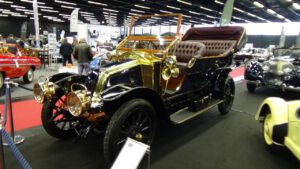
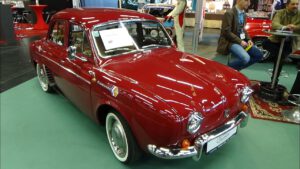
1920 Maybach Racing Car – Exterior and Interior – Retro Classics Stuttgart 2022
In the years immediately following the First World War, automotive manufacturers across Europe returned to motorsport as a proving ground for engineering ideas. For Maybach, a company primarily associated with high-end engineering and luxury vehicles, racing offered an opportunity to demonstrate technical capability and performance. The 1920 Maybach racing car belongs to this early postwar period, when German engineers sought to reestablish their presence in competitive automotive development.
Technical Details
The 1920 Maybach racing car was designed around the advanced engineering principles that had already distinguished the company before the war. Maybach engines were widely known for their precision construction and strong performance, qualities that made them suitable for both luxury vehicles and competition machines.
The racing car was powered by a large-displacement internal combustion engine mounted at the front of the chassis. Engines used in Maybach competition and high-performance cars of this era were typically inline six-cylinder units, chosen for their smooth operation and ability to produce consistent power. The engine was water-cooled and fed by carburetors, which regulated the fuel-air mixture required for combustion.
Power from the engine was transmitted to the rear wheels through a manual gearbox and mechanical drivetrain. Early racing cars relied on relatively simple but robust transmissions that allowed drivers to select different gear ratios depending on road conditions and speed requirements. The drivetrain followed the now-standard front-engine, rear-wheel-drive layout.
The chassis consisted of a rigid ladder-frame structure built to withstand the stresses of high-speed driving. Suspension relied on rigid axles supported by semi-elliptic leaf springs at the front and rear. While basic by modern standards, this configuration provided durability and predictable handling on the road circuits used for racing during the early twentieth century.
Braking systems were mechanical and typically acted on the rear wheels. Because braking technology was still developing, drivers relied heavily on engine braking and careful speed management during races. Despite these limitations, racing cars of this period could reach speeds approaching or exceeding 100 km/h depending on engine configuration and track conditions.
- Manufacturer: Maybach-Motorenbau
- Model name: Maybach Racing Car
- Year of manufacturing: 1920
Design
The design of the 1920 Maybach racing car reflected the functional priorities of early motorsport. The body was narrow, lightweight, and streamlined according to the aerodynamic understanding of the period. Unlike luxury automobiles produced by Maybach, which emphasized comfort and craftsmanship, the racing car focused entirely on performance.
A long hood covered the large front-mounted engine, emphasizing the mechanical heart of the vehicle. Behind it, a simple open cockpit accommodated the driver and occasionally a riding mechanic, a common feature in early racing competitions. The cockpit was minimal, containing only essential controls such as the steering wheel, gear lever, and basic instruments.
Large spoked wheels with narrow tires were typical of racing vehicles of the era. The chassis sat relatively high above the ground compared with later racing cars, reflecting the road conditions and suspension technology available at the time.
The body panels were usually made from lightweight metal, shaped primarily to reduce weight rather than for aesthetic purposes. The overall appearance was purposeful and mechanical, highlighting the engineering focus of early competition vehicles.
Historical Significance
The Maybach name is closely associated with Wilhelm Maybach, a pioneering engineer who had worked with Gottlieb Daimler during the early development of the automobile. After the First World War, Maybach-Motorenbau focused primarily on producing engines and later luxury automobiles.
The early 1920s were a period of rebuilding for the German automotive industry. Motorsport provided manufacturers with a platform to demonstrate technical innovation and reliability. Racing activities also helped companies refine engine designs and mechanical systems under demanding conditions.
Although Maybach would later become best known for luxury automobiles introduced in the 1920s and 1930s, early competition efforts reflected the company’s engineering ambitions. The 1920 racing car represents a transitional stage between the experimental racing machines of the prewar era and the more advanced competition vehicles that would appear later in the decade.
In the broader history of automotive engineering, vehicles like the Maybach racing car illustrate how manufacturers used motorsport as a laboratory for technological development. Lessons learned in competition often influenced later road-going designs.
Quirks and Pop Culture
Early racing cars often carried two occupants: the driver and a riding mechanic. The mechanic assisted by monitoring engine conditions, adjusting fuel supply, and addressing mechanical issues during long-distance races. This arrangement reflects the mechanical complexity and unpredictability of early racing machines.
Drivers of these vehicles faced considerable challenges. Racing circuits frequently consisted of public roads with uneven surfaces, limited safety barriers, and minimal protective equipment. As a result, early motorsport demanded significant skill and courage from participants.
Today, early Maybach vehicles—particularly experimental or racing models—are rare and highly valued in automotive museums and collections. They represent an era when engineering innovation and mechanical craftsmanship played a central role in shaping the future of the automobile.
Display and preservation
The vehicle was exhibited at the Retro Classics Stuttgart in 2022. This car show is one of the major events on the classic car calendar in Germany. In 2022, it took place across five exhibition halls. Visitors can enjoy special showcases, hunt for rare parts and books, and buy cars—both private sellers and dealers offer a wide range of classic and youngtimer vehicles. In 2022, there was a noticeable increase in low-mileage youngtimers and classic cars.
Conclusion
The 1920 Maybach racing car illustrates the company’s early involvement in high-performance automotive engineering during the postwar years. Powered by a large front-mounted engine and built on a lightweight competition chassis, it reflected the technical ambitions of Maybach engineers. While the company would later gain worldwide recognition for its luxury automobiles, early racing projects demonstrated the engineering expertise that underpinned the brand’s reputation. As a product of the formative years of modern motorsport, the Maybach racing car remains a noteworthy example of early twentieth-century automotive innovation.