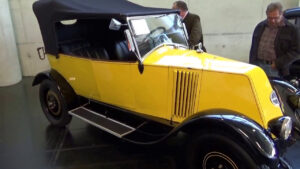
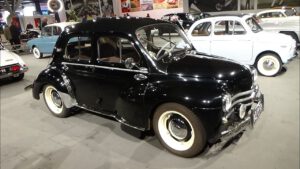
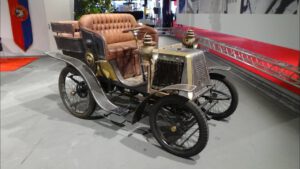
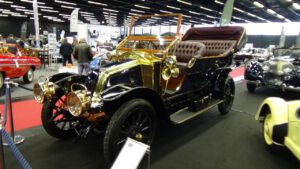
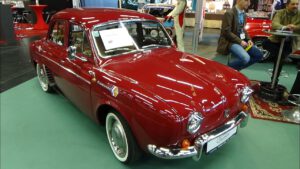
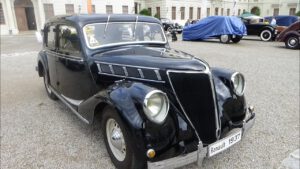
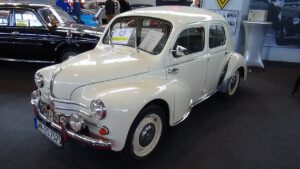
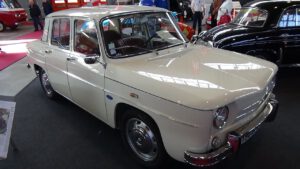
1912 Rauch & Lang – Classic Expo Salzburg 2021
Technical Details
The 1912 Rauch & Lang was a fully electric automobile designed primarily for urban transportation. Instead of a combustion engine, the vehicle was powered by an electric motor supplied by a rechargeable battery system. Early twentieth-century electric cars typically used lead-acid batteries, which were heavy but reliable and capable of providing steady power output.
The electric motor delivered smooth and immediate torque, allowing the car to accelerate without the need for a multi-speed transmission. In most cases, the motor was connected directly to the drivetrain through a simple reduction gear system that drove the rear wheels. This eliminated the need for the complex gearboxes, clutches, and engine starting mechanisms required by gasoline vehicles of the time.
Battery packs were mounted low in the chassis to help balance the weight of the vehicle. The capacity of these batteries determined the vehicle’s range, which for electric cars of this era typically varied between 50 and 100 kilometers depending on driving conditions and battery condition. Charging was accomplished through electrical mains, which meant the cars were best suited for urban use where charging facilities were available.
Electric cars such as the Rauch & Lang were also mechanically quieter and required less maintenance than their gasoline counterparts. However, the large battery packs increased the vehicle’s weight, which limited speed and efficiency. Typical top speeds for electric vehicles of this period were around 30 to 40 km/h, making them suitable for city streets but less practical for long-distance travel.
- Manufacturer: Rauch & Lang
- Model name: Rauch & Lang Electric
- Year of manufacturing: 1912
Design
The design of the 1912 Rauch & Lang reflected the transition from carriage-inspired vehicles to more purpose-built automobiles. While the structure still retained some elements of carriage construction, the body was more enclosed and refined than many earlier electric vehicles.
Many Rauch & Lang vehicles were built as enclosed town cars or brougham-style bodies. These body styles were especially popular among urban customers because they offered protection from weather and greater passenger comfort. Large windows and upright body panels gave the cars a formal and elegant appearance.
The driver’s position was typically located at the front of the vehicle, with passengers seated in a comfortable enclosed compartment behind. Early electric cars were often marketed as luxurious and convenient vehicles, appealing to buyers who valued quiet operation and ease of driving.
Externally, the vehicles featured large spoked wheels, narrow tires, and relatively tall bodies, reflecting the road conditions and design traditions of the time. Lighting systems were increasingly electric, a natural advantage for electric vehicles compared with gasoline cars that often relied on oil or acetylene lamps during the same period.
Inside, the cabin emphasized comfort rather than technical complexity. Controls were simple, with levers used to regulate speed and direction of the electric motor. Upholstered seating and polished wood interior elements reflected the craftsmanship standards typical of early luxury automobiles.
Historical Significance
Rauch & Lang was founded in Cleveland, Ohio, in the late nineteenth century and initially produced carriages before transitioning to electric automobiles. By the early 1900s, the company had established itself as one of the leading American manufacturers of electric cars.
During this period, electric vehicles were widely used in cities because they were easier to operate than gasoline cars, which required manual starting with a hand crank and careful management of engine controls. Electric cars offered a quieter and cleaner alternative, making them particularly attractive to urban drivers.
The company later became associated with Baker Motor Vehicle Company, another prominent electric vehicle manufacturer. The two firms eventually merged operations, strengthening their position within the electric car market during the early twentieth century.
However, the rapid development of gasoline-powered automobiles gradually reduced the popularity of electric vehicles. Improvements in internal combustion engines, the introduction of the electric starter motor in gasoline cars, and the expansion of road networks made gasoline vehicles more practical for long-distance travel. By the 1920s, most electric passenger cars had disappeared from mainstream production.
Despite this decline, companies like Rauch & Lang played an important role in demonstrating the practicality of electric propulsion during the early years of automotive development.
Quirks and Pop Culture
Electric cars of the early twentieth century developed a reputation for being particularly suitable for city driving. Their quiet operation and lack of vibration made them more comfortable than many gasoline cars of the same period.
Because electric vehicles required fewer mechanical skills to operate, they were sometimes marketed toward drivers who preferred simplicity and reliability. Advertisements often emphasized that electric cars did not require hand cranking, which could be physically demanding and occasionally dangerous.
Today, surviving Rauch & Lang electric vehicles are rare and are typically preserved in museums or historic automobile collections. They are frequently referenced in discussions about the long history of electric mobility, demonstrating that electric propulsion was an important part of automotive experimentation long before the modern revival of electric vehicles.
Display and preservation
The vehicle was exhibited at the Classic Expo Salzburg in 2021. As one of Austria’s premier classic car events, the show has established itself as a central meeting point for collectors, restorers, and enthusiasts from across Central Europe. The 2021 edition took place at Messezentrum Salzburg and featured more than 250 exhibitors, along with a strong turnout of over 20,000 visitors. Attendees could explore a broad range of offerings—from historical vehicles and motorcycles to automobilia, spare parts, and literature.Conclusion
The 1912 Rauch & Lang electric automobile represents a period when electric propulsion was still a competitive technology within the automotive industry. Powered by a battery-driven electric motor, the vehicle offered quiet operation, mechanical simplicity, and ease of use in urban environments. Its design reflected the transition from carriage construction to more sophisticated automobile bodies, while its historical context illustrates the early competition between electric and gasoline-powered transportation. Today, the Rauch & Lang stands as an important reminder that electric mobility has deep roots in the history of the automobile.