1908 – 1927 – Ford Model T Racer – Retro Classics Stuttgart 2015
The Ford Model T was never designed as a racing machine, yet it quickly found its way onto tracks, dirt ovals, and improvised courses. Lightweight modifications and mechanical ingenuity turned this everyday car into a surprisingly capable racer. In doing so, it helped introduce motorsport to a much broader audience.
Technical Details
The Ford Model T Racer retained the basic mechanical layout of the standard Ford Model T but was frequently modified to improve performance. At its core was a front-mounted inline four-cylinder engine with a displacement of 2.9 liters, producing around 20 horsepower in stock form. In racing configurations, output could be increased through higher compression, modified carburetion, and improved ignition timing, although exact figures varied widely depending on the build.
Power was transmitted to the rear wheels through Ford’s distinctive planetary transmission system. While unconventional compared to later manual gearboxes, it allowed relatively smooth operation once mastered. Many racers retained this system, although some heavily modified cars experimented with alternative setups.
Weight reduction was one of the most effective performance strategies. Standard bodies were stripped down or replaced entirely with minimal “speedster” bodies, significantly improving power-to-weight ratio. Chassis modifications were common, including reinforced frames and altered suspension setups to better handle higher speeds and rough racing surfaces.
Suspension remained based on rigid axles and transverse leaf springs, but adjustments were often made to lower ride height and improve stability. Braking, typically limited to the rear wheels, remained a constraint, requiring careful driving and anticipation. The simplicity of the Ford Model T’s engineering made it easy to repair and adapt, a key advantage in early racing environments.
- Manufacturer: Ford Motor Company
- Model name: Ford Model T Racer
- Year of manufacturing: 1908–1927
Design
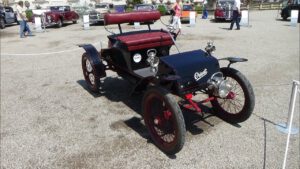
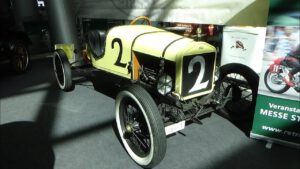
The design of the Ford Model T Racer was defined by reduction and improvisation. Standard touring bodies were often removed entirely, replaced with narrow, lightweight shells or left as open chassis. This resulted in a lean, purposeful appearance that contrasted sharply with the more upright and practical design of the original Ford Model T.
The driving position was typically lowered and set further back, improving weight distribution and giving the car a more aggressive stance. Large, exposed wheels and minimal bodywork emphasized the mechanical elements, while the absence of fenders, windshields, and other non-essential components reinforced its racing intent.
Each car reflected the choices of its builder. Some retained recognizable Ford Model T proportions, while others evolved into highly specialized machines with little visual connection to the original vehicle. Interiors were stripped to essentials, with basic controls and minimal instrumentation.
Historical Significance
The Ford Model T Racer played a significant role in the democratization of motorsport. Because the Ford Model T was widely available and relatively affordable, it allowed amateur drivers and mechanics to participate in racing without the need for expensive, purpose-built machines. This helped expand the reach of motorsport beyond elite circles.
Figures such as Henry Ford had not originally intended the Ford Model T for competition, but its adaptability quickly made it a common sight in local races and endurance events. The car’s durability and ease of repair were crucial advantages, particularly on early tracks where breakdowns were frequent.
Racing versions of the Ford Model T also contributed to the broader culture of automotive modification. Owners experimented with performance improvements, sharing knowledge and techniques that would later influence both amateur and professional racing. In this sense, the Ford Model T Racer represents an early form of grassroots motorsport.
Quirks and Pop Culture
One of the defining quirks of the Ford Model T Racer is its variability. Unlike factory-built race cars, these vehicles were often one-off creations, built in garages or small workshops. This led to a wide range of performance levels and design solutions, making each example unique.
The Ford Model T’s nickname, “Tin Lizzy,” carried over into its racing life, highlighting the contrast between its humble origins and its competitive use. In many cases, races featuring Ford Model T–based cars were as much about ingenuity and reliability as outright speed.
The car also became part of early American motorsport culture, appearing in county fair races, endurance runs, and informal competitions. These events helped establish racing as a popular form of entertainment and laid the groundwork for more organized motorsport in later decades.
Display and preservation
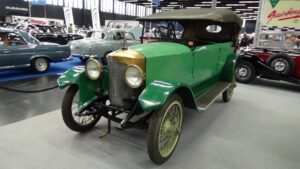
This car was filmed at the Retro Classics Stuttgart 2015, held from March 26 to 29. The show set new standards with an expanded 120,000 square meters of exhibition space. A total of 1,430 exhibitors and more than 87,000 visitors filled eight halls, creating a vibrant marketplace where nearly half of attendees made purchases. Strong presences from Mercedes-Benz and Porsche added prestige, with Porsche unveiling rare prototypes. Special displays ranged from BMW M5 anniversaries to American classics with roaring V8 engines.
Conclusion
The Ford Model T Racer illustrates how a mass-produced vehicle could be transformed into a competitive machine through creativity and mechanical adaptation. Technically simple but highly versatile, it combined a durable engine, lightweight modifications, and accessible engineering to create a new form of grassroots racing.
Its design reflects function over form, while its historical role highlights the expansion of motorsport beyond specialized manufacturers. As a bridge between everyday transportation and competitive driving, the Ford Model T Racer remains an important chapter in early automotive and racing history.