1903 Mercedes Simplex 40 PS – Retro Classics Stuttgart 2020
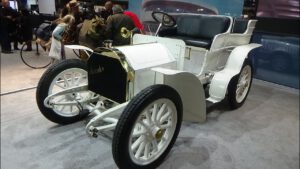
At a time when many early automobiles still resembled motorized carriages, the Mercedes Simplex 40 PS introduced a more purposeful and technically coherent approach. It was lower, more stable, and more powerful than most of its contemporaries, reflecting a shift toward cars designed as machines in their own right rather than adaptations of older forms.
Technical Details
The Mercedes Simplex 40 PS was powered by a large inline four-cylinder engine with a displacement of approximately 6.8 liters. It produced around 40 horsepower, a substantial figure for the early 1900s, allowing the car to reach speeds of up to 80 km/h under favorable conditions. The engine was mounted at the front, following a layout that would become standard in later automotive design.
Fuel delivery relied on early carburetor technology, while ignition systems used magneto-based solutions, improving reliability compared to earlier battery-dependent systems. Power was transmitted to the rear wheels via a manual gearbox and chain drive, typical of high-performance vehicles of the period.
The chassis was constructed from pressed steel, contributing to improved rigidity compared to earlier tubular frames. Suspension used semi-elliptical leaf springs, and braking systems were mechanically operated, primarily acting on the rear wheels. Compared to earlier vehicles, the Mercedes Simplex offered better weight distribution and a lower center of gravity, enhancing stability and control at higher speeds.
- Manufacturer: Daimler-Motoren-Gesellschaft
- Model name: Mercedes Simplex 40 PS
- Year of manufacturing: 1903
Design
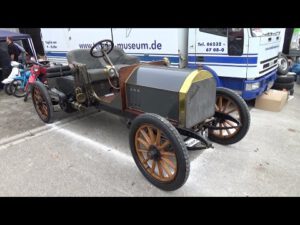
The design of the Mercedes Simplex marked a clear departure from carriage-based forms. Its lower profile was one of its defining characteristics, achieved by positioning the engine and chassis components closer to the ground. This gave the car a more balanced and purposeful stance.
The front end featured a distinct radiator, often described as honeycomb-shaped, which became a recognizable Mercedes design element. Large spoked wheels with pneumatic tires were fitted to handle higher speeds, while the elongated bonnet accommodated the sizeable engine.
The body was open and minimal, typically configured as a touring or racing vehicle. Seating was exposed, and there was little protection from the elements. Controls were more systematically arranged than in earlier cars, reflecting a growing understanding of driver ergonomics. Overall, the design conveyed functionality and mechanical clarity, with less reliance on decorative elements.
Historical Significance
The Mercedes Simplex 40 PS is closely linked to the work of Wilhelm Maybach, whose engineering philosophy emphasized performance, reliability, and integration. The Mercedes Simplex series itself was an evolution of earlier Mercedes models developed at Daimler-Motoren-Gesellschaft, incorporating lessons learned from both road use and competition.
The name “Simplex” reflected an effort to simplify operation and improve usability compared to earlier vehicles, which were often complex and difficult to manage. By lowering the chassis and refining the drivetrain layout, the Mercedes Simplex helped establish key principles of modern automotive engineering.
In the early 1900s, Mercedes vehicles were already associated with motorsport success, and the Mercedes Simplex models contributed to this reputation. The 40 PS variant, with its increased power and improved stability, reinforced the brand’s position as a leader in high-performance automobiles. It demonstrated that speed and control could be combined in a practical, repeatable design.
Quirks and Pop Culture
One of the notable aspects of the Mercedes Simplex is how modern it appears when compared to its predecessors. While still clearly an early automobile, its proportions and layout anticipate later developments, making it easier to recognize as a “car” in the contemporary sense.
The term Mercedes Simplex itself is somewhat ironic. While the vehicle was more refined than earlier designs, it remained mechanically complex by modern standards. However, for drivers at the time, the improvements in control and reliability were significant.
Unlike later iconic vehicles, the Mercedes Simplex is not widely represented in popular media. Its cultural presence is primarily within automotive history, where it is regarded as a key step in the transition from experimental machines to more standardized and performance-oriented cars.
Display and preservation
This car was filmed at the Retro Classics Stuttgart 2020. Held from February 27 to March 1, the show attracted around 65,000 visitors, including a notably high share of industry professionals from across Southern Germany, Switzerland, France, and Austria. Alongside shows and varied programs, the event featured an expanded parts market and a significantly enlarged vehicle sales area, complemented by the new “entry-level market.” Special highlights included an impressive Voisin exhibition and a Gulf-themed display showcasing the renowned ROFGO Collection.
Conclusion
The 1903 Mercedes Simplex 40 PS represents an important stage in the early evolution of the automobile. With its powerful four-cylinder engine, lower chassis, and improved stability, it moved beyond carriage-derived designs toward a more integrated automotive concept. Its design emphasized function and control, while its historical role helped establish engineering principles that would define future vehicles. As part of the early Mercedes lineage, it remains a clear example of how performance and usability began to converge in the first years of the 20th century.