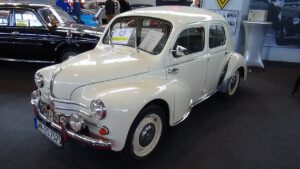
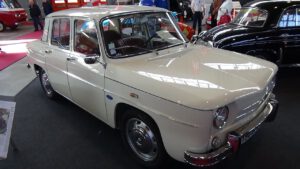
1963 NSU Fiat Neckar 600 Jagst Riviera – Exterior and interior – Classic Expo Salzburg 2021
It carried three names before you even reached the model badge. NSU Fiat. Neckar. Jagst Riviera. The 1963 Neckar 600 Jagst Riviera reflected the complexity of postwar European manufacturing, where licensing agreements and regional branding shaped the cars as much as engineering did.
Technical Details:
The 1963 NSU Fiat Neckar 600 Jagst Riviera was based on the Fiat 600 platform and retained its compact mechanical configuration. Power came from a 633 cc inline four-cylinder engine, mounted at the rear and producing approximately 21–25 horsepower, depending on specification.
The engine was water-cooled and employed an overhead valve (OHV) layout. Fuel delivery was handled by a single carburetor, and power was transmitted to the rear wheels through a four-speed manual transmission, with synchromesh on the upper gears.
The drivetrain followed a rear-engine, rear-wheel-drive layout, optimizing interior packaging within a small footprint. The car utilized a unitary (monocoque) body construction, contributing to structural rigidity and weight efficiency.
Independent front suspension and rear independent suspension with coil springs provided basic ride compliance. Hydraulic drum brakes were fitted on all four wheels. With a top speed of approximately 95–100 km/h, the Jagst Riviera was suited primarily to urban and regional driving conditions.
- Manufacturer: Neckar (licensed production of Fiat models)
- Model Name: Neckar 600 Jagst Riviera
- Year of Manufacturing: 1963
Design:
The Neckar 600 Jagst Riviera closely followed the visual identity of the Fiat 600, though branding and minor trim differences distinguished it for the German market.
The body featured compact proportions with rounded contours and short overhangs. The front incorporated small circular headlamps and a modest grille opening, while the rear deck housed the cooling system for the rear-mounted engine.
The “Riviera” designation referred to the folding fabric roof, which extended along much of the cabin’s length. This configuration provided increased ventilation and an open-air feel without compromising structural rigidity through fixed pillars.
Inside, the cabin was simple and functional. A centrally mounted speedometer cluster and minimal controls characterized the dashboard layout. Seating was compact but practical, capable of accommodating four passengers for short journeys.
Compared with larger German sedans of the period, the Jagst Riviera was visibly modest in scale but efficiently packaged.
Historical Significance:
The NSU Fiat collaboration emerged from licensing agreements that allowed Fiat designs to be produced in Germany. By the early 1960s, the Neckar brand replaced the NSU-Fiat name for these vehicles, though the engineering remained rooted in Fiat’s Italian designs.
The 600 Jagst Riviera played a role in expanding affordable car ownership in West Germany during a period of economic growth. While domestic manufacturers like Volkswagen dominated the segment, Neckar provided an alternative based on proven Fiat engineering.
The model’s hybrid identity—Italian design, German production—illustrates the interconnected nature of European automotive manufacturing in the postwar decades. It also reflects how smaller producers adapted international platforms to local markets.
Quirks and Pop Culture:
The Jagst name, like other Neckar models, was derived from German rivers, reinforcing regional identity despite Italian mechanical origins.
One notable quirk is the relative rarity of surviving examples compared to Fiat 600 models produced in Italy. Production volumes in Germany were smaller, making the Neckar variants less common today.
Although the model did not achieve broad international recognition, it remains of interest to collectors who appreciate the layered history of licensed production and cross-border automotive cooperation.
Display and preservation:
The vehicle was exhibited at the Classic Expo Salzburg in 2021. As one of Austria’s premier classic car events, the show has established itself as a central meeting point for collectors, restorers, and enthusiasts from across Central Europe. The 2021 edition took place at Messezentrum Salzburg and featured more than 250 exhibitors, along with a strong turnout of over 20,000 visitors. Attendees could explore a broad range of offerings—from historical vehicles and motorcycles to automobilia, spare parts, and literature.
Conclusion:
The 1963 NSU Fiat Neckar 600 Jagst Riviera represents a compact car shaped as much by industrial agreements as by engineering. With its rear-mounted 633 cc engine, monocoque construction, and folding roof, it offered practical mobility tailored to the German market. Its significance lies in illustrating how European manufacturers collaborated across borders to meet growing demand for affordable personal transportation during the early 1960s.